





Browse scalping screens for sale from McCloskey, Terex Finlay, Kleemann, Screen USA, Powerscreen, and other manufacturers. A scalping screen is a heavy-duty vibrating shaker screen designed to separate oversized material, debris, and contaminants from the material stream before it reaches a crusher, finer screen, or stockpile. Scalping screens handle the dirtiest, roughest feed material in any screening operation. GrinderCrusherScreen has been helping operators find the right screening equipment since 1973. Browse our inventory below or call 770-433-2670 for pricing and availability.
What Is a Scalping Screen?
A scalping screen is the first screen in a processing line. Its job is rough separation: strip out oversized rocks, stumps, rebar, concrete chunks, and other debris so the downstream equipment receives a cleaner, more consistent feed.
Scalping screens use heavy-duty construction, large screen openings, and aggressive vibration to move tough material without blinding or clogging. The decks are built to absorb impact from heavy, irregular feed material that would damage a standard vibrating screen.
Most scalping screens are portable. Track-mounted and wheel-mounted configurations let operators move the machine between job sites, quarry faces, and stockpile locations. Stationary scalping screens are used at fixed plants where raw material arrives by truck or conveyor.
Common Scalping Screen Applications
- Aggregate pre-screening: remove oversized rock and debris from raw quarry material before it enters the primary crusher. A scalping screen protects the crusher from tramp material and improves throughput
- C&D recycling: separate concrete, asphalt, brick, and mixed demolition debris by size before crushing. Scalping screens strip out rebar, wood, and other contaminants
- Land clearing and site prep: separate stumps, roots, and large debris from dirt and fill material
- Mining operations: pre-screen ROM (run-of-mine) material to remove oversized boulders and waste rock before processing
- Topsoil and fill processing: remove rocks and debris from raw topsoil and fill material for landscaping and construction supply
- Gravel pit operations: separate natural gravel deposits by size and remove oversized stone before further processing
Brands We Commonly See
Most major screening equipment manufacturers offer scalping screen configurations. Here is what we typically see:
- Screen USA: our own line of scalping screens. The Screen USA CD410 and CD516 are heavy-duty, track-mounted scalping screens designed for C&D, sand and gravel, landfill reclamation, and aggregate processing
- McCloskey: the R155 and R230 are popular track-mounted scalping screens used across aggregate, recycling, and construction operations. McCloskey scalping screens are known for large feed openings and high production rates
- Terex Finlay: the 883+ and other Finlay models are well-established scalping screens in the aggregate and recycling industries. Hardox steel feeders and heavy-duty construction handle tough material
- Kleemann: German-engineered mobile scalping screens with advanced screening technology. The MS series is used in quarry and recycling applications
- Powerscreen: the Warrior and Chieftain series offer high-capacity scalping for aggregate and waste processing operations
- Metso: track-mounted scalping screens built for quarry and mining pre-screening applications
- Astec/KPI-JCI: the GT series offers portable scalping screens for contractors and aggregate producers
We also see CEC, Screen Machine, Senya, and other brands from time to time. If you are looking for a specific make or model, call 770-433-2670 and we can check current availability or help locate one.
Scalping Screens vs. Box Screens
A scalping screen and a box screen serve different roles in a processing operation.
A scalping screen handles rough, dirty, oversized material at the front of the processing line. It strips out debris and contaminants so downstream equipment receives a cleaner feed. Scalping screens are built for punishment: heavy-gauge steel, reinforced decks, large openings, and aggressive vibration.
A box screen handles classification downstream. It takes pre-crushed or pre-screened material and sorts it into precise size fractions for finished product. Box screens use finer mesh and more controlled vibration for accurate sizing.
In most aggregate and recycling operations, the scalping screen feeds the crusher, and the box screen classifies the crusher output.
Scalping Screens vs. Trommel Screens
Both machines handle rough material separation, but they work differently.
A scalping screen uses a vibrating flat deck with large openings to separate oversized material at high speed. It excels at dry, rocky, and debris-heavy material. The flat deck design delivers high throughput on material that flows freely.
A trommel screen uses a rotating drum to tumble material through screen openings along the drum wall. Trommels handle wet, sticky, and clay-heavy material better than any flat-deck screen because the tumbling action prevents blinding.
For dry aggregate, rock, and C&D material, a scalping screen is faster. For wet soil, compost, and clay-contaminated material, a trommel is the better choice.
What to Check on a Scalping Screen Before You Buy
Scalping screens take more punishment than any other type of screening equipment. Inspecting a used scalper requires extra attention to structural components.
Start with the screen decks. Inspect the grizzly bars, punch plates, or screen panels for wear, cracking, and deformation. Scalping screen decks absorb direct impact from oversized material. Look for bent bars, broken welds, and worn-through panels.
Next, check the feed hopper and side walls. These components take constant abuse from loaded buckets and heavy feed material. Look for dents, cracks, and repair welds that indicate heavy use.
Inspect the vibrating mechanism. Scalping screens run under high excitation force to move heavy material. Check the vibrating motor, eccentric weights, and bearings for smooth, even operation.
For track-mounted units, inspect the undercarriage: tracks, sprockets, rollers, and idlers. For wheel-mounted units, check tires, axles, brakes, and hitch condition.
We help coordinate inspections so buyers can evaluate a machine before committing. Call 770-433-2670 and our team can walk you through what to look for.
Find the Right Scalping Screen
Browse our current scalping screen inventory below, or call 770-433-2670 to talk with our team. We can help match you to the right machine, arrange financing, and coordinate delivery anywhere in North America.
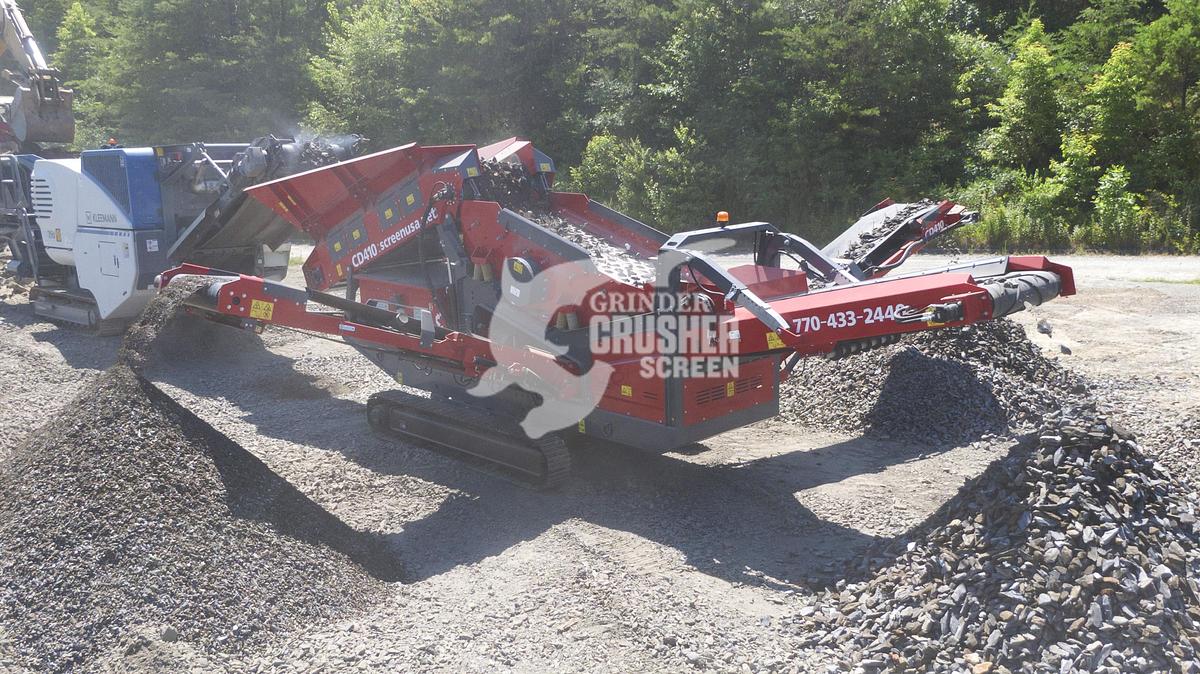
NEW SCREEN USA CD410 - SCALPING SCREEN
Heavy duty, track mounted screener for difficult materials such as C&D, sand & gravel, landfill r...

NEW SCREEN USA CD516
Heavy duty, track mounted screener for difficult materials such as C&D, sand & gravel, landfill r...