





Browse new and used shaker screens for sale from McCloskey, Metso, Sandvik, Terex, Screen Machine, Kleemann, and other manufacturers. A shaker screen is a vibrating screening machine that separates material by size. Material feeds onto a vibrating deck, undersized particles fall through the screen openings, and oversized material travels off the end for collection or recirculation. Shaker screens are the standard choice for aggregate classification, topsoil screening, sand and gravel processing, and crusher circuit sizing. GrinderCrusherScreen has been helping operators find the right screening equipment since 1973. Browse our inventory below or call 770-433-2670 for pricing and availability.
How Shaker Screens Work
A shaker screen uses a vibrating motor or eccentric shaft to drive rapid oscillation across one or more screen decks. Material spreads across the deck surface as it vibrates. Particles smaller than the screen openings fall through to the underside conveyor or collection area. Oversized material rides across the top of the deck and discharges off the end.
Single-deck screens produce two size fractions. Double and triple-deck configurations stack multiple screen surfaces to produce three or four product sizes in a single pass. Operators swap screen media panels to change the cut size for different jobs.
Shaker screens process dry, free-flowing material at high throughput rates. They handle aggregate, crushed stone, gravel, sand, dry topsoil, and recycled concrete and asphalt. Common applications include:
- Aggregate classification: sort crushed stone, gravel, and sand into spec-grade sizes for construction and road base
- Topsoil screening: remove rocks, roots, and debris from dry topsoil for landscaping supply
- Crusher circuit screening: classify crusher output and recirculate oversized material back to the crusher
- Sand and gravel processing: separate natural sand and gravel deposits by size grade
- Scalping: remove oversized debris before primary crushing to protect the crusher and improve feed consistency
- Recycled material sorting: classify recycled concrete, asphalt, and demolition debris by size
Types of Shaker Screens
We organize our shaker screen inventory by configuration so you can find the right machine for your operation.
Scalping screens are built for the roughest material. They separate oversized debris, rocks, and contaminants from the material stream before it reaches a crusher or finer screen. Heavy-duty decks with large openings and aggressive vibration handle dirty, mixed loads that would blind a standard screen.
Box screens (also called horizontal vibrating screens) use a flat or slightly inclined deck inside a rectangular frame. Material spreads across the full deck surface for maximum screening area in a compact footprint. Box screens are a standard fixture in quarries and aggregate plants.
Precision screens handle fine classification work where tight size control matters. These screens produce consistent, uniform particle sizes for applications like wood chip sizing, mulch grading, and fine aggregate separation.
Not sure which type fits your operation? Call 770-433-2670 and our team can help narrow it down.
Brands We Commonly See
The shaker screen market includes several well-known manufacturers. Here is what we typically see in our inventory:
- McCloskey: a global manufacturer with a full range of vibrating screens for aggregate, mining, and waste processing. McCloskey screeners are common on large production sites across North America
- Metso: reliable vibrating screens built for quarry and mining operations. Metso screening equipment is backed by one of the largest parts and service networks in the industry
- Sandvik: heavy-duty shaker screens designed for high-tonnage aggregate and mining applications. Sandvik machines are built for continuous production in demanding environments
- Screen Machine: purpose-built screening and crushing equipment for contractors and recycling operations. Screen Machine vibrating screens are designed for portability and production
- Terex Finlay: track-mounted and wheel-mounted vibrating screens for portable aggregate processing and scalping operations
- Kleemann: German-engineered mobile screening plants with advanced vibrating screen technology for aggregate and recycling applications
- Deister: a long-established name in vibrating screen manufacturing. Deister screens are found in quarries and mining operations across the country
- Screen USA: our own line of shaker screens built for durability and value. Screen USA scalping screens and box screens are designed for operators who want production performance without the premium price
- Evortle: another brand we distribute, offering precision screening equipment for a range of material types
We also see Powerscreen, Astec, CEC, and other brands from time to time. If you are looking for a specific make or model, call 770-433-2670 and we can check current availability or help locate one.
Shaker Screens vs. Trommel Screens
Both machines screen material by size, but they work differently and handle different material types.
A shaker screen uses a vibrating flat deck to separate material. It processes dry, free-flowing material faster than any other screening method. Shaker screens excel at aggregate classification, sand and gravel sizing, and topsoil screening where the material moves freely across the deck.
A trommel screen uses a rotating cylindrical drum. Material tumbles inside the drum as it rotates, and undersized particles fall through the screen openings along the drum wall. Trommels handle wet, sticky, and irregular material that would blind and clog a flat vibrating deck. Compost, wet topsoil, and clay-heavy material all run better through a trommel.
For dry aggregate, crushed stone, and gravel operations, a shaker screen is almost always the faster, more efficient choice. For wet material, compost, and sticky feeds, a trommel is the right machine.
What to Check on a Shaker Screen Before You Buy
Start with the screen decks and media. Inspect the screen panels for holes, wear, and warping. Check the deck frame, cross members, and mounting hardware for cracks or stress fractures. Screen media is a regular wear item, but damaged deck framing is an expensive repair.
Next, check the vibrating mechanism. Inspect the vibrating motor or eccentric shaft for smooth, even vibration. Listen for grinding, knocking, or irregular motion. Bearing failure in the vibrating drive is one of the most common and costly repairs on any shaker screen.
Inspect the feed hopper, conveyors, and discharge systems. Look for wear on conveyor belts, idlers, and return rollers. Check the hopper for structural damage from heavy loading.
For portable units, check the undercarriage. Track-mounted screens should have even track wear, functional sprockets, and proper tension. Wheel-mounted screens should have good tires, brakes, and hitch condition.
We help coordinate inspections so buyers can evaluate a machine before committing. Call 770-433-2670 and our team can walk you through what to look for on any specific make or model.
Find the Right Shaker Screen
Browse our current shaker screen inventory below, or call 770-433-2670 to talk with our team. We can help match you to the right machine, arrange financing, and coordinate delivery anywhere in North America.
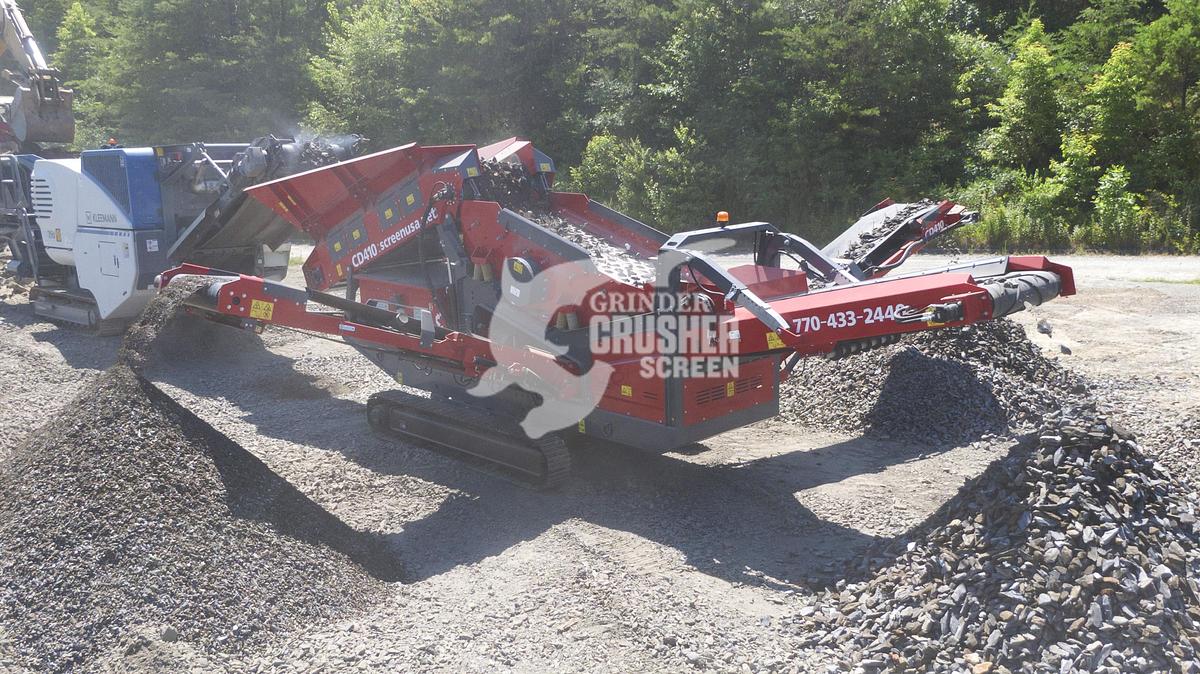
NEW SCREEN USA CD410 - SCALPING SCREEN
Heavy duty, track mounted screener for difficult materials such as C&D, sand & gravel, landfill r...

NEW SCREEN USA CD516
Heavy duty, track mounted screener for difficult materials such as C&D, sand & gravel, landfill r...

NEW EVORTLE SR2512 - SHAKER SCREEN
The Evortle SR2512 is ideal for use with the CT535 small crushers, or being the successor to the ...

NEW GCS 410DLX
4' x 10' double-deck mobile screen both fines and overs conveyors! - Road portable - Diesel/Hyd...

NEW GCS 408 MINI
4' x 8' double-deck mobile screen with built in discharge conveyor! - Road portable - Genset po...

NEW GCS 410
4' x 10' double-deck (+ 4' x 3' steel plate feeder) mobile screen with built in discharge conveyo...

NEW SCREEN USA RD100
The simple, compact, and reliable box screen for a wide variety of materials. Features: - 11' x...

NEW SCREEN USA RD100US-C
The heavy-duty box screen with conveyor for a variety of materials. Features: - 10' x 7' double...

NEW SCREEN USA RD100US
The heavy-duty box screen for a variety of materials. Features: - 10' x 7' double-deck screen ...