





Biochar Production Equipment: Air Curtain Burners vs. Kilns vs. Retorts
If you are looking at biochar production, the first question is what equipment to use. The answer depends on your scale, your location, your feedstock, and whether biochar is your primary product or a byproduct of another operation.
Here is a straightforward comparison of the four main equipment types.
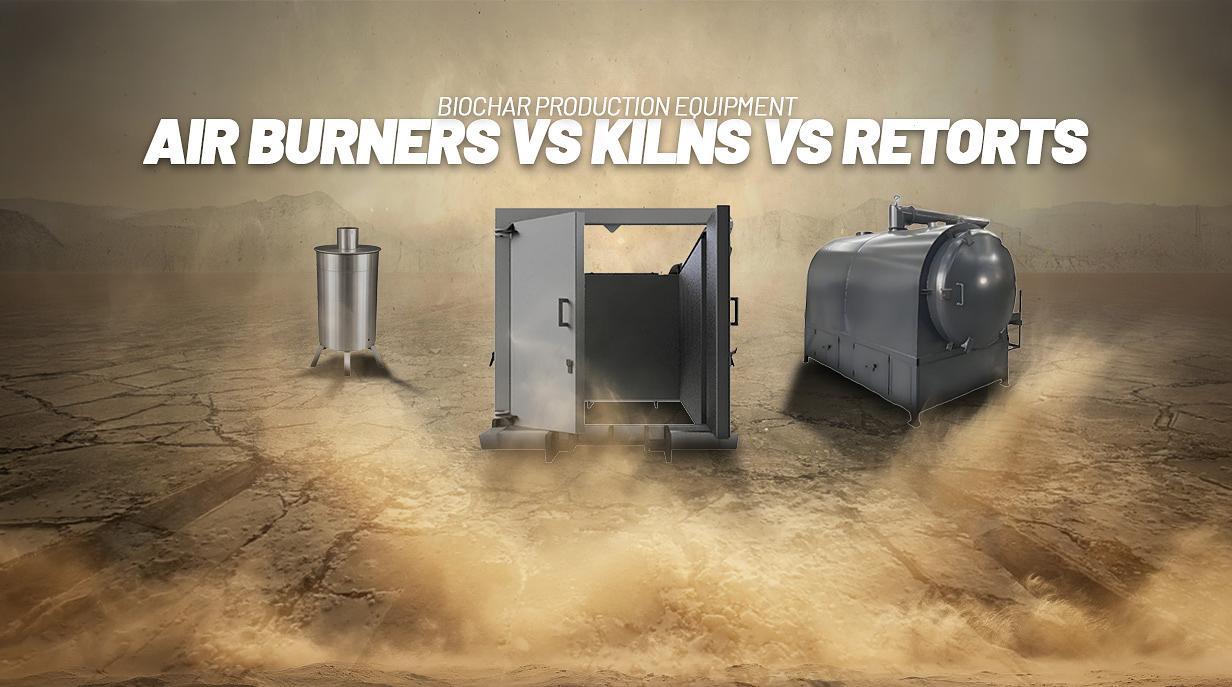
Air Curtain Burners
An air curtain burner is primarily a wood waste disposal tool that produces biochar as a natural byproduct. The bottom of the burn chamber becomes oxygen-starved during normal operation, creating conditions for pyrolysis while the air curtain handles emissions control at the top.
Best for: land clearing contractors, forestry crews, disaster debris operations, and anyone already processing clean wood waste who wants to capture additional revenue from biochar.
Advantages
- Dual purpose: eliminates wood waste AND produces biochar from the same operation
- Mobile: most units are track-mounted or towable, built for field use
- High throughput on the primary job (wood waste disposal)
- No separate feedstock preparation required — logs, limbs, brush, and stumps go in as-is
- Operates under EPA 40 CFR Part 60 for air quality
Limitations
- Biochar is a byproduct, not the primary output — yield is lower than a dedicated pyrolysis system
- Manual recovery required on standard units (raking, screening, quenching)
- Biochar quality can vary depending on burn management and feedstock
- Not designed for non-wood feedstock (crop residue, manure, etc.)
Typical biochar output: 10 to 15 cubic yards per day with manual recovery from a standard unit. Dedicated systems like the CharBoss from Air Burners Inc produce 300 to 500 pounds per hour continuously.
For the complete step-by-step production process, read our guide on how to produce biochar with an air curtain burner. For an overview of what air curtain burners are and how they work, see our article on what an air curtain burner is.
Browse current air curtain burner inventory or call 770-433-2670 for pricing.
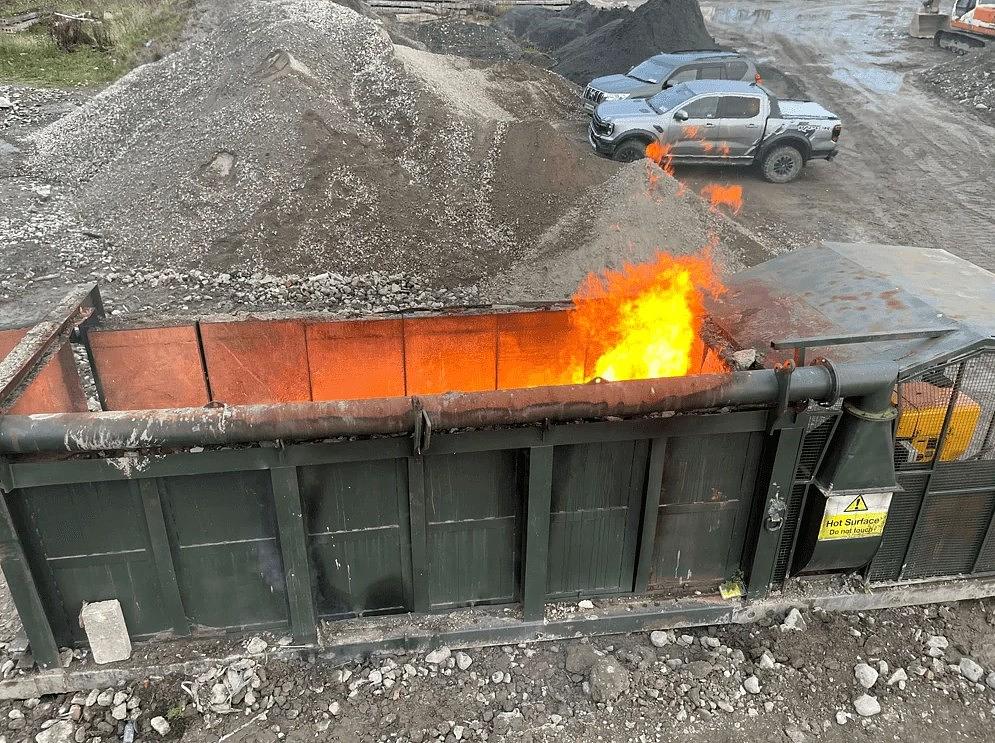
Air Burner: Merris WX-5
Pyrolysis Kilns
A pyrolysis kiln heats biomass in a sealed or semi-sealed chamber with limited oxygen. The material decomposes into biochar, syngas, and bio-oil. Most commercial pyrolysis systems are continuous-feed, meaning feedstock goes in one end and biochar comes out the other.
Best for: dedicated biochar production facilities, waste-to-energy operations, and businesses where biochar is the primary product.
Advantages
- Highest and most consistent biochar yield (typically 25 to 35 percent of feedstock by weight)
- Continuous operation with automated feed and discharge
- Biochar quality is highly controllable (temperature, residence time, atmosphere)
- Can process a wide range of feedstock: wood waste, crop residue, manure, food waste, sewage sludge
- Better alignment with carbon credit certification programs due to process consistency
Limitations
- Stationary installation — not practical for field operations
- High capital cost (commercial continuous systems run well into six figures)
- Feedstock must be chipped or shredded to uniform size before processing
- Requires a dedicated facility, utilities, and trained operators
- Not a disposal tool — you need a separate system to handle oversized or irregular material
Typical biochar output: varies widely by system size. Small batch kilns produce a few cubic yards per cycle. Large continuous systems produce several tons per hour.
Retorts
A retort is a batch pyrolysis vessel. Feedstock is loaded into a sealed container, heated externally or by burning gases released during pyrolysis, and the biochar is removed after cooling. Retorts range from small farm-scale units to larger commercial systems.
Best for: small to mid-scale biochar producers, farms, and operations that process moderate volumes of consistent feedstock.
Advantages
- Simpler and less expensive than continuous pyrolysis systems
- Good biochar quality with relatively consistent results
- Can be built at various scales
- Some designs are portable or semi-portable
Limitations
- Batch process means loading, heating, cooling, and unloading in cycles — lower daily throughput than continuous systems
- Still requires chipped or sized feedstock
- Not a disposal tool for raw clearing debris or large wood waste
Typical biochar output: depends on retort size. Small units produce a few cubic yards per batch. Cycle times limit daily output compared to continuous systems.
Flame Curtain Kilns (Kon-Tiki)
A flame curtain kiln is an open-top, cone-shaped or trench-shaped kiln. Biomass burns at the top, creating a flame curtain that prevents oxygen from reaching lower layers. The material below the flame undergoes pyrolysis. After the kiln is full, the biochar is quenched with water.
Best for: small-scale and low-budget biochar production. Farms, gardens, research plots, and community projects.
Advantages
- Very low cost (some designs are built from repurposed steel tanks or excavated pits)
- Simple operation with no engine or fuel requirements
- Yield of 20 to 26 percent by weight is competitive with more expensive systems
- No feedstock sizing required for larger designs
Limitations
- Small scale — not practical for commercial-volume production
- Manual operation throughout
- Emissions are not contained as effectively as an air curtain burner or sealed kiln
- Permitting may be more complicated in areas with open burn restrictions
Side-by-Side Comparison
Factor Air Curtain Burner Pyrolysis Kiln Retort Flame Curtain Primary job Wood waste disposal + biochar Biochar production Biochar production Biochar production Mobility High (field units) Low (stationary) Low to moderate Moderate Feedstock prep None (whole logs, brush, stumps) Chipping required Chipping required Minimal Biochar yield 11-25% of feedstock 25-35% of feedstock 20-30% of feedstock 20-26% of feedstock Daily output 10-15 CY/day (manual) Varies by system size Batch-limited Small scale Capital cost Moderate High Low to moderate Very low Best scale Large field operations Dedicated facilities Small to mid operations Small/hobby scale
Which One Fits Your Operation?
If you are already processing wood waste in the field and want to add biochar revenue without buying dedicated production equipment, an air curtain burner is the most practical path. The machine pays for itself on the disposal job, and the biochar is additional income. For the revenue math, read our guide on how to turn burn piles into revenue.
If biochar is your primary business and you have a fixed facility with consistent feedstock supply, a continuous pyrolysis kiln will give you the highest yield and most consistent product — and the best alignment with carbon credit certification programs.
If you want to start small and test the biochar market before investing in larger equipment, a retort or flame curtain kiln gets you started at lower cost.
GrinderCrusherScreen carries new Merris air curtain burners and handles used Air Burners Inc equipment. Call 770-433-2670 or email Sales@grindercrusherscreen.com to discuss which setup fits your biochar production goals.