





Wood Ash in the Garden and Soil: What It Does, How to Use It, and Where It Comes From
Wood ash is one of the oldest soil amendments on earth. Farmers have been spreading it on fields for thousands of years because it works. It raises pH, adds potassium and calcium, and costs nothing if you already burn wood. The question is not whether wood ash is good for the garden. The question is how much to apply, when to skip it, and where to get clean ash in bulk.
We have been selling heavy equipment at GrinderCrusherScreen since 1973. We carry air curtain burners from Merris and Air Burners Inc that land clearing crews and site prep contractors run every day. Those machines produce tons of clean wood ash as a byproduct of burning brush, logs, and stumps. That ash has real value for gardeners, farmers, and landscapers who understand how to apply it correctly.
This guide covers what wood ash contains, how it changes soil, application rates, best uses in the garden, when to avoid it, and how commercial-scale ash production connects back to the equipment we sell.
What Wood Ash Contains
Wood ash is the powdery mineral residue left after burning wood. All of the organic carbon burns away during combustion. What remains are the minerals the tree absorbed from the soil during its lifetime.
Nutrient Content of Wood Ash
Nutrient Typical Content Primary Function Calcium (as CaCO₃ equiv.) 25-50% Raises soil pH, strengthens cell walls Potassium (K₂O) 5-7% Supports flowering, fruiting, root growth Magnesium (MgO) 1-3% Central atom in chlorophyll, aids photosynthesis Phosphorus (P₂O₅) 1-2% Root development, energy transfer Sulfur 0.5-1% Protein synthesis, enzyme function Manganese 0.3-1% Enzyme activation, photosynthesis support Boron Trace Flower and fruit set Zinc Trace Growth hormone regulation Iron Trace Chlorophyll production The calcium content is the dominant component. This is what makes wood ash behave like a liming agent. At 25-50% calcium carbonate equivalent, wood ash is roughly half as strong as agricultural lime on a pound-for-pound basis.
The potassium level at 5-7% makes wood ash a meaningful potash source. For comparison, a bag of 0-0-60 muriate of potash contains 60% K₂O. You need more ash to deliver the same potassium, but the ash also brings calcium, magnesium, and micronutrients that the synthetic product does not.
Wood ash contains no nitrogen. Nitrogen burns off as a gas during combustion. If your soil needs nitrogen, you will need compost, manure, or a synthetic fertilizer in addition to wood ash.
How Wood Ash Affects Soil pH
The single biggest effect of wood ash on soil is raising pH. Wood ash is alkaline. Its pH typically falls between 10 and 12. When mixed into soil, it neutralizes acidity the same way agricultural lime does.
Most garden vegetables grow best in soil between pH 6.0 and 7.0. When soil drops below 5.5, nutrients like phosphorus and molybdenum become locked up. Aluminum and manganese become toxic.
A single application of wood ash at 5-10 lbs per 100 square feet will typically raise pH by 0.5 to 1.0 points. The effect is not instant — it takes 2 to 4 weeks for the calcium carbonate to react with soil acids and shift the pH.
Always test your soil pH before applying wood ash. If your soil is already at 6.5 or above, adding ash can push the pH too high and create new problems. A soil test costs $15 to $25 at most extension service labs and tells you exactly where you stand.
How Much Wood Ash to Apply
Application Rate Timing Garden beds and raised beds 5-10 lbs per 100 sq ft Fall or early spring, once per year Lawns 10-15 lbs per 1,000 sq ft Broadcast evenly, water in Agricultural fields 1-2 tons per acre Equivalent to roughly half the lime rate Compost piles 1 cup per 25 cubic feet Sprinkle between layers Established fruit trees 5-10 lbs per tree per year Spread in a ring at the drip line Start low. Apply at the lower end of the range, wait 6 to 8 weeks, then retest soil pH. You can always add more. You cannot remove excess ash once it is in the ground.
Spread evenly. Dumping a thick pile of ash in one spot will create a high-pH dead zone. Broadcast thinly and work it into the top 4 to 6 inches of soil.
Timing matters. Fall is the best time to apply wood ash. The winter rain and snow give the ash months to react with the soil before spring planting.
Do not apply wood ash and nitrogen fertilizer at the same time. The high pH of ash can convert ammonium nitrogen into ammonia gas. Apply them at least two weeks apart.
Best Uses for Wood Ash in the Garden
Natural Liming Agent
This is the primary use. If your soil test shows a pH below 6.0, wood ash raises it. It works faster than pelletized lime because the fine particle size reacts quickly with soil acids.
Potassium Source for Fruiting Crops
Tomatoes, peppers, squash, and fruit trees are heavy potassium feeders. Potassium drives flower set, fruit development, and disease resistance. Wood ash at 5-7% K₂O delivers potassium along with calcium and micronutrients.
Pest Deterrent
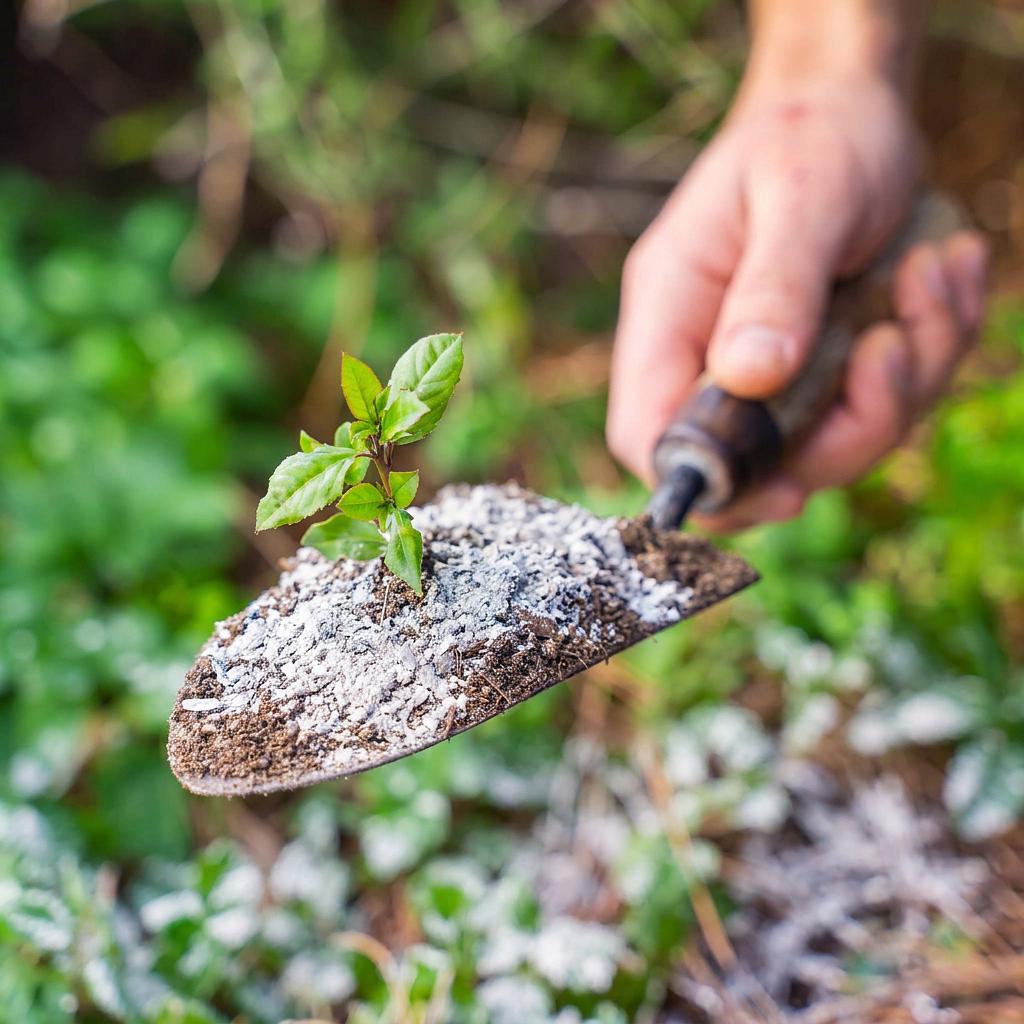
A thin ring of dry wood ash around plant stems deters slugs, snails, and soft-bodied insects. The alkaline powder irritates their skin. This works as long as the ash stays dry — reapply after storms.
Compost Activator
Adding small amounts of wood ash between compost layers raises the pH of acidic compost and provides calcium and potassium for microbial activity. Use sparingly — one cup per 25 cubic feet of material is the general guideline. Too much ash in compost will drive the pH above 8.0 and slow decomposition.
De-Icing and Traction on Paths
In winter, wood ash provides traction on icy garden paths and walkways. It has mild ice-melting properties from the potassium salts. Unlike rock salt, it does not damage soil or plants when it washes off in spring.
Lawn Care
Broadcasting wood ash on lawns in fall replaces the annual lime application that many cool-climate lawns need. It also adds potassium, which supports root development heading into winter dormancy.
Plants That Benefit vs Plants to Avoid
Plants That Benefit From Wood Ash
Tomatoes, peppers, beans and peas, brassicas (cabbage, broccoli, kale), asparagus, garlic and onions, stone fruit trees (cherry, peach, plum), lavender, lilacs, and cool-season lawn grasses all respond well to wood ash applications.
Plants to Avoid Treating With Wood Ash
Keep wood ash away from blueberries (pH 4.5-5.5), azaleas and rhododendrons (pH 4.5-6.0), blue hydrangeas, potatoes, raspberries, holly, camellias, and ferns. If a plant is labeled "acid-loving" at the nursery, keep wood ash away from it.
When Not to Use Wood Ash
Your soil pH is already 6.5 or higher. Adding ash to neutral or alkaline soil will push the pH into a range where iron, manganese, and zinc become unavailable to plants.
You have not tested your soil. Spreading ash without knowing your current pH is guessing. A $15 soil test from your county extension office eliminates the guesswork.
Your soil is high in potassium. Excess potassium can block magnesium and calcium uptake. If your soil test shows potassium levels above 250 ppm, you do not need more.
You are growing acid-loving plants. See the list above.
The ash came from treated, painted, or pressure-treated wood. Ash from construction lumber, painted furniture, plywood, or pressure-treated decking can contain arsenic, chromium, lead, and other heavy metals. Never put this ash in a garden.
The ash came from burning trash, cardboard, or mixed waste. Inks, plastics, and adhesives leave contaminants in the ash that are not safe for food production.
Fireplace Ash vs Clean Wood Ash From Land Clearing
Fireplace and wood stove ash is what most homeowners have access to. It works fine in the garden as long as you only burned untreated firewood. The downside is volume — a typical fireplace produces a few buckets of ash per winter.
Fireplace ash may contain partially burned charcoal chunks, nails from pallets, or bits of paper and cardboard. Sift out the debris before applying to garden beds.
Clean wood ash from land clearing operations is a different product entirely. When a land clearing crew runs an air curtain burner on a job site, they process hundreds of tons of trees, brush, stumps, and root balls. The volume of ash produced in a single week of clearing can exceed what a homeowner generates in a lifetime.
This ash is clean because the fuel source is clean. An air curtain burner achieves burn temperatures above 1,800 degrees Fahrenheit, which produces a finer, more completely combusted ash with higher mineral concentration than a fireplace that burns at 800 to 1,000 degrees.
The result is a high-quality soil amendment available in bulk. Land clearing contractors, tree service companies, and site prep crews produce this ash whether they want it or not. For most of them, it is a waste product they have to manage. For gardeners and farmers, it is a free or low-cost source of calcium and potassium.
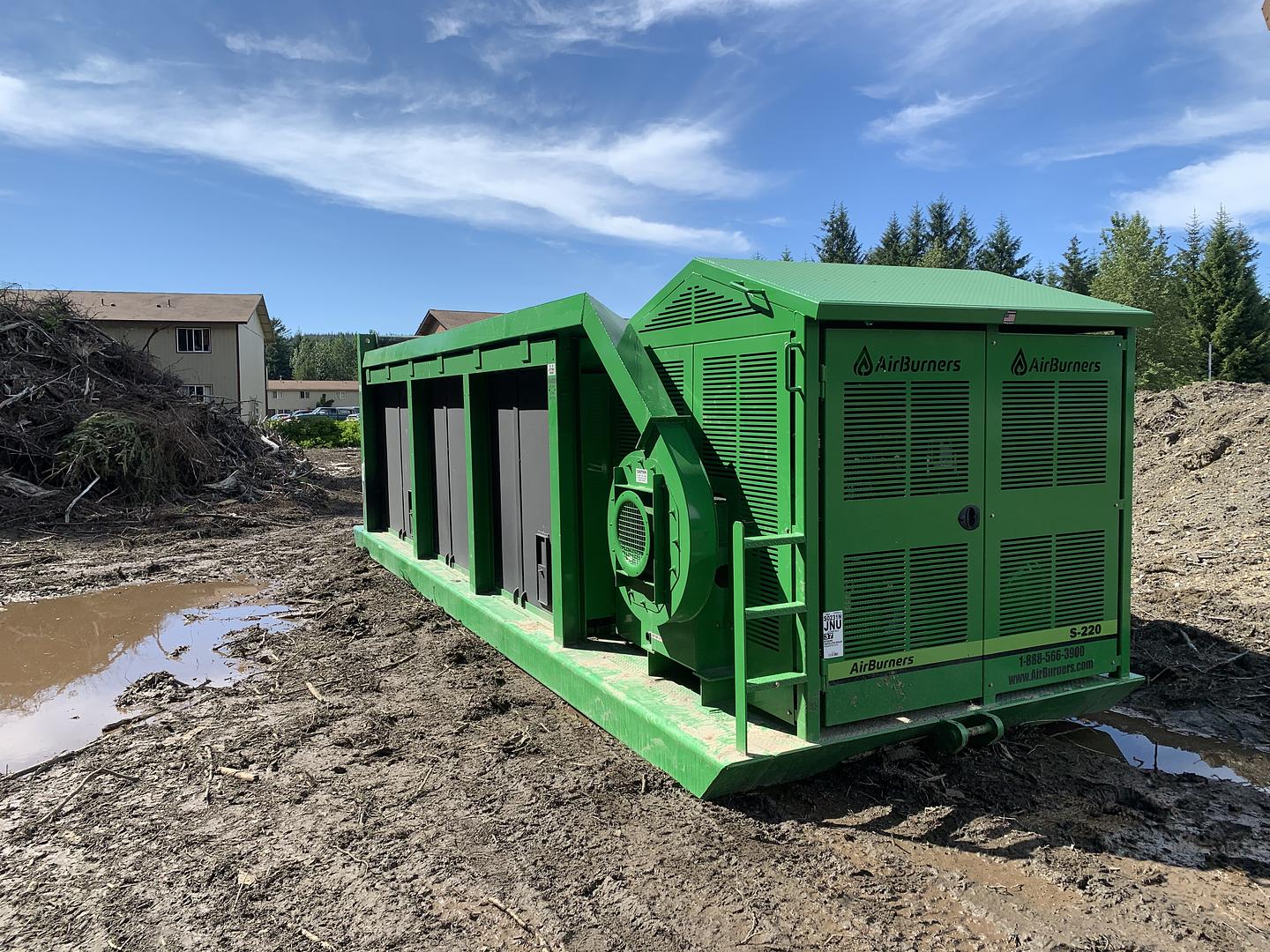
Air Burner: 2020 Air Burner S-220
Commercial-Scale Ash Production From Air Curtain Burners
Air curtain burners are the equipment that produces most commercial-scale clean wood ash. Two brands dominate the market. Merris manufactures the WX series of above-ground air curtain burners. Air Burners Inc manufactures the S-Series and the T-Series, along with the CharBoss system designed for biochar recovery.
A standard Merris WX-8 can burn 10 to 15 tons of wood waste per day. Each ton of wood produces roughly 1 to 3% of its weight in ash, depending on species and moisture content. Over a multi-week land clearing job, ash production adds up significantly.
The connection for gardeners and farmers is straightforward: talk to land clearing contractors, tree service companies, and site prep crews in your area who run air curtain burners. Many of them will give the ash away or sell it at a fraction of what bagged lime costs.
For contractors who want to turn ash into a revenue stream, read our guide on how to produce biochar with an air curtain burner. For a complete overview of how these machines work, see our article on what an air curtain burner is.
If you are producing biochar alongside ash with your air curtain burner, biochar and wood ash are related products but function differently. Biochar adds carbon structure and microbial habitat. Ash adds minerals and pH adjustment. Many growers use both together.
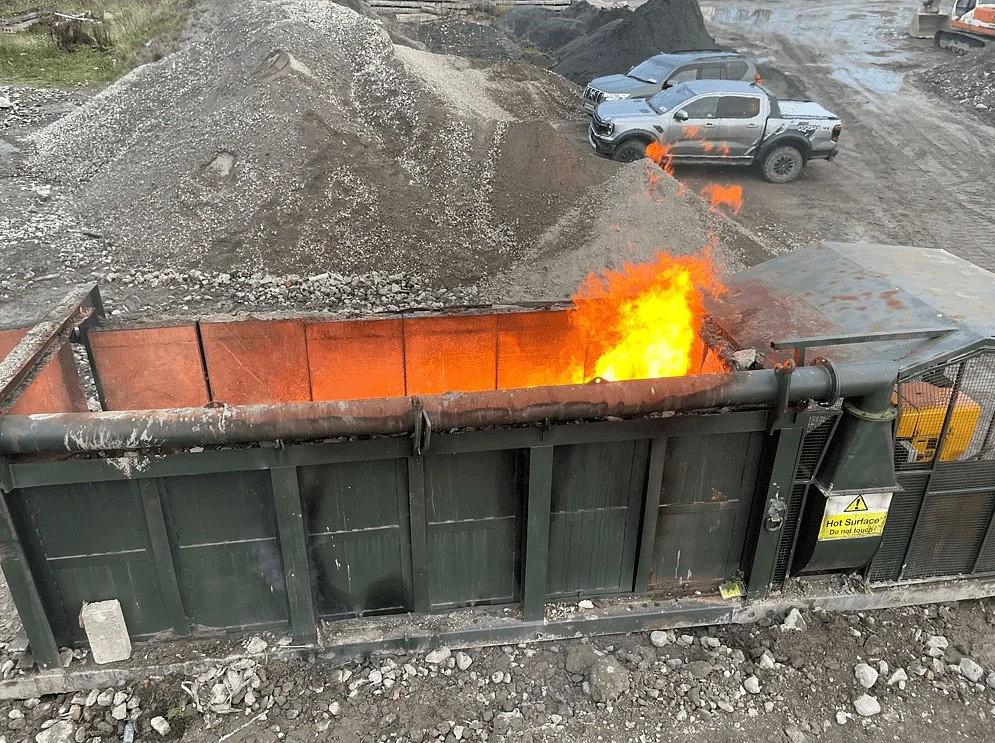
Air burners: New Merris WX-8
Screening Ash for Uniform Application
Raw wood ash from an air curtain burner often contains charcoal chunks, small rocks, nails, wire, and other debris from the burn pile. Before selling or applying ash to garden soil, it needs to be screened.
For backyard gardeners, a simple 1/4-inch mesh hand screen works. Shovel ash onto the screen and shake it over a wheelbarrow. The fine ash passes through. Charcoal chunks and debris stay on top.
For commercial operations selling bulk ash as a soil amendment, a small trommel screen or shaker screen does the job quickly. A compact trommel with 1/4-inch screen mesh processes ash at several cubic yards per hour and produces a clean, consistent product ready for bagging or bulk sale.
Screened wood ash is easier to spread evenly, dissolves faster in soil, and looks more professional if you are selling it.
Storing Wood Ash
Wood ash absorbs moisture from the air. Once it gets wet, the calcium and potassium begin to leach out and the material turns into a hard, chalky lump that is difficult to spread.
Store ash in covered metal or plastic containers with lids. Keep ash containers away from wooden structures — fresh ash can retain heat for 24 to 48 hours after removal from a burn. Let it cool completely before storing in any enclosed container.
Ash stored dry retains its nutrient value for years. There is no expiration date on mineral content as long as you keep it dry.
Frequently Asked Questions
Is wood ash good for a garden?
Yes. Wood ash adds calcium, potassium, and micronutrients to garden soil. It also raises soil pH, which benefits most vegetables and flowers. Apply 5 to 10 lbs per 100 square feet and test your soil pH first to confirm your garden needs it.
Is wood ash good for soil?
Wood ash improves soil by raising pH in acidic conditions and supplying potassium (5-7% K₂O), calcium (25-50% CaCO₃ equivalent), and trace minerals. It is most beneficial in soils with a pH below 6.0 that need liming.
Can I put charcoal ash in my garden?
Charcoal ash from natural lump charcoal (made from pure wood) is safe for the garden and works like wood ash. Do not use ash from charcoal briquettes, as they may contain binders, coal dust, and additives.
How often should I apply wood ash to my garden?
Once per year is the standard recommendation. Apply in fall or early spring. Test soil pH after each growing season. If the pH is already at 6.5 to 7.0, skip the application that year.
Does wood ash keep pests away?
A dry ring of wood ash around plants deters slugs, snails, and soft-bodied insects. The fine alkaline particles irritate their skin on contact. Reapply after rain because wet ash loses this effect.
Can I use wood ash around tomatoes?
Tomatoes respond well to wood ash. They are heavy potassium feeders, and the calcium in ash helps prevent blossom end rot. Apply 1 to 2 lbs around each plant at the beginning of the season and work it into the top few inches of soil.
Where can I get wood ash in bulk?
Contact land clearing contractors, tree service companies, and site prep crews in your area who run air curtain burners. They produce large volumes of clean wood ash and often give it away or sell it cheaply. Municipal yard waste facilities that burn brush are another source.
What is the difference between wood ash and biochar?
Wood ash is the mineral residue left after complete combustion. It contains calcium, potassium, and micronutrients but no carbon. Biochar is charred wood produced by incomplete combustion in low-oxygen conditions. It is mostly carbon and works as a soil structure amendment rather than a fertilizer. Read our biochar production guide for the full explanation.
Talk to GCS About Air Curtain Burners and Screening Equipment
Whether you are a contractor producing wood ash on every job site or a grower looking for screening equipment to process ash into a sellable product, we can help.
We carry new Merris and Air Burners air curtain burners for land clearing and wood waste disposal. We also carry trommel screens, shaker screens, and star screens for processing ash, topsoil, compost, and other bulk materials. We have been matching operators with the right equipment since 1973.
Call us at 770-433-2670 or email Sales@grindercrusherscreen.com to talk about your operation.