





What Is Biochar and Why Is It Worth Money?
If you work in land clearing, forestry, or wood waste processing, you have probably started hearing the word biochar. It is showing up in trade publications, at industry conferences, and in conversations about carbon credits and soil health. Here is what it actually is and why it matters to equipment operators.
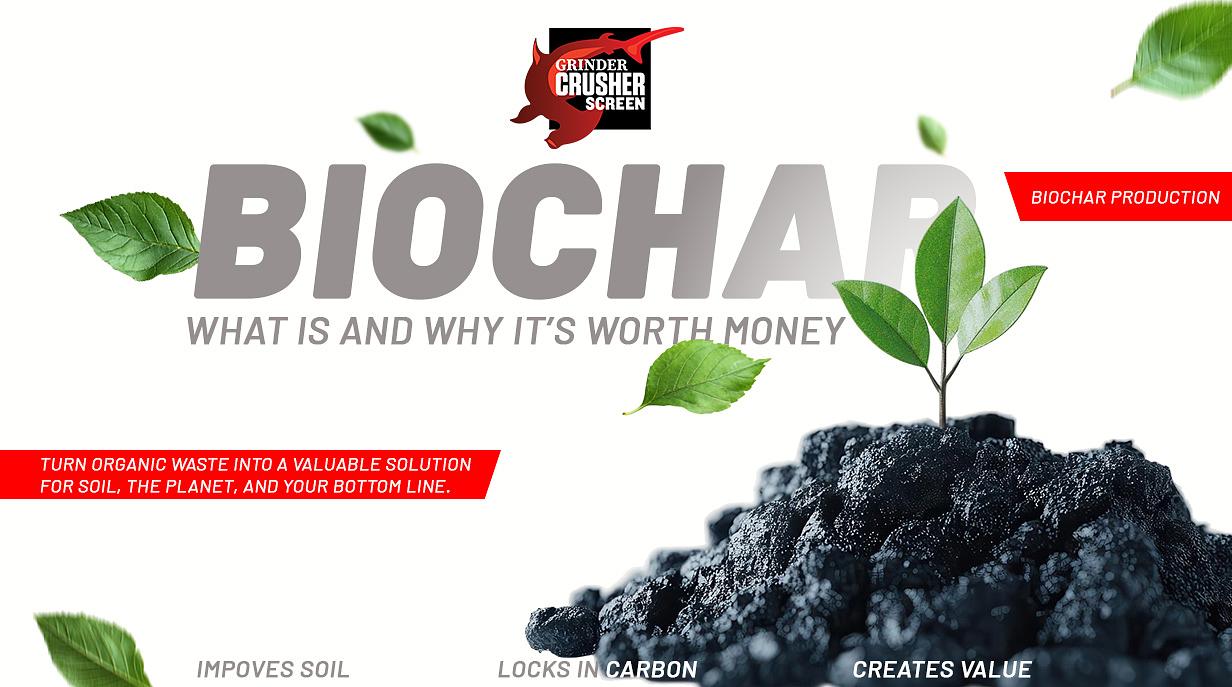
What Is Biochar?
Biochar is a lightweight, carbon-rich material produced by burning organic matter (wood waste, brush, agricultural residue) at high temperatures in a low-oxygen or oxygen-limited environment. This process is called pyrolysis. Instead of turning the material to ash, pyrolysis drives off gases and moisture while leaving behind a porous, stable carbon structure.
The result looks similar to charcoal, but the purpose is different. Charcoal is made to be burned as fuel. Biochar is made to be added to soil, used in composting, or sold as a carbon removal product.
Biochar is not a new concept. Indigenous farmers in the Amazon created "terra preta" (dark earth) thousands of years ago by working charred material into their soil. Modern biochar production scales that same principle using controlled equipment.
Why Biochar Has Value
Biochar has value for three reasons, and each one represents a different market.
Soil amendment. Biochar improves soil structure, water retention, and nutrient availability. It gives beneficial soil microbes a place to colonize. Farmers, landscapers, nurseries, and garden suppliers buy biochar to mix into soil and compost. The agricultural biochar market is growing steadily as more growers look for ways to improve poor or depleted soils.
Carbon sequestration. Biochar locks carbon into a stable form that persists in soil for hundreds to thousands of years. When you burn wood waste completely, the carbon returns to the atmosphere as CO2. When you convert it to biochar and put it in the ground, that carbon stays sequestered. This makes biochar one of a small number of verified carbon removal methods.
Carbon credits. Companies like Microsoft, Google, and JPMorgan Chase are buying biochar carbon credits to offset their emissions. A certified biochar carbon credit currently trades in the range of $150 to $200 per tonne of CO2 equivalent. The biochar carbon credit market is projected to grow significantly over the next several years as more corporations commit to carbon removal targets.
What Biochar Sells For
Operators selling biochar as a bulk soil amendment typically get $120 to $125 per cubic yard. Bagged retail biochar sells for significantly more. Carbon credit revenue is on top of direct product sales, though certification requirements add complexity.
The key point for equipment operators: biochar turns a disposal cost into a revenue stream. Instead of paying to haul wood waste to a landfill or burning it to ash with no residual value, you can convert it to a product that people will buy.
How Biochar Is Made
Biochar production requires heat and limited oxygen. There are several ways to achieve this at different scales:
Air curtain burners produce biochar as a natural byproduct of their burning process. The bottom of the burn chamber becomes oxygen-starved as ash accumulates, creating conditions for pyrolysis while the air curtain handles emissions at the top. Some operators produce 10 to 15 cubic yards of biochar per day from a standard unit. Dedicated systems like the CharBoss automate the extraction process for continuous production.
Pyrolysis kilns and retorts are purpose-built systems that heat biomass in a sealed or semi-sealed chamber with controlled airflow. These range from small batch kilns to large continuous-feed industrial systems.
Flame curtain kilns use an open-top design where a flame across the top prevents oxygen from reaching the lower layers of material. These are lower-cost options for smaller operations.
For a detailed comparison of production methods, read our guide to biochar production equipment.
How This Connects to What We Do
GrinderCrusherScreen carries air curtain burners that can produce biochar as part of normal operations. The Merris WX-5 and WX-8 are built for clean wood waste disposal and support biochar recovery. For operators in land clearing, forestry, and wood waste processing, this means the machine you use to eliminate debris can also generate a sellable product.
We also carry horizontal grinders for operations where the goal is mulch, biomass fuel, or compost feedstock rather than biochar.
Call 770-433-2670 to talk with our team about which approach fits your operation.