





Most people think of an air curtain burner as a disposal tool. Load wood waste, burn it down, haul away the ash. But operators across land clearing, forestry, and disaster debris are discovering that the same machine can produce biochar, a carbon-rich material worth $120 or more per cubic yard.
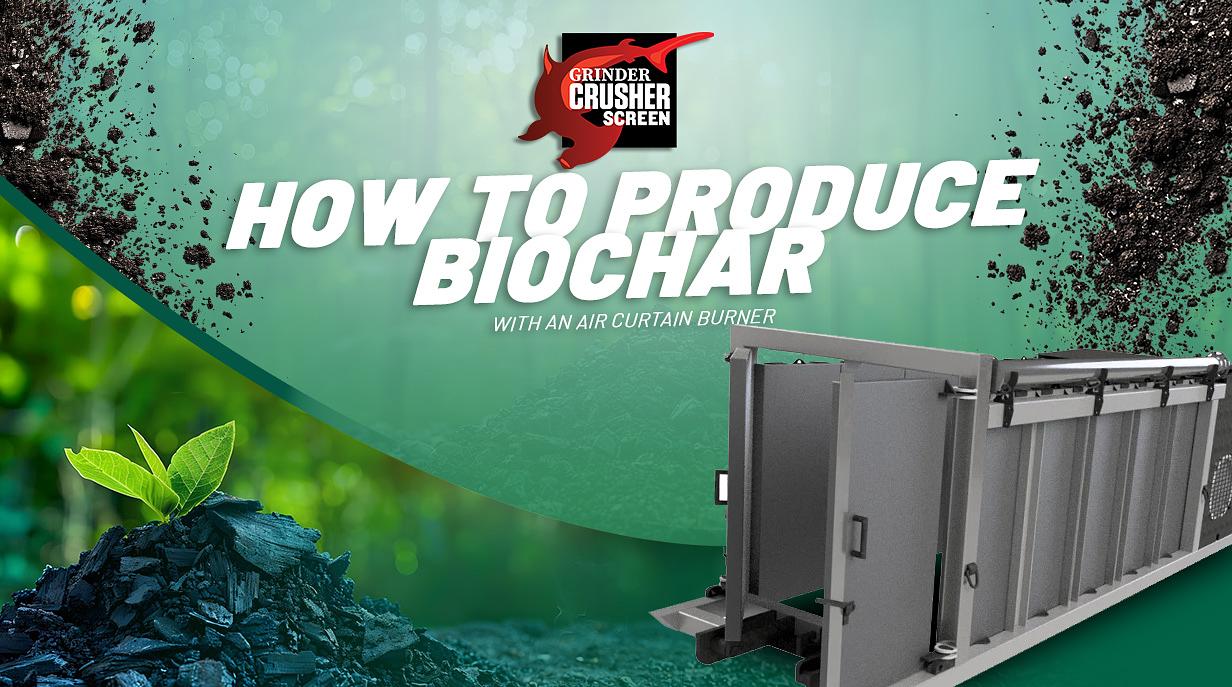
This is not a hack or a workaround. Air curtain burner manufacturers including Air Burners Inc and Merris actively market biochar production as a feature of their equipment. The US Forest Service co-developed a dedicated biochar production system (the CharBoss) with Air Burners Inc through a formal research agreement.
Here is how it works.
The Science: Two Zones in One Machine
The key to understanding biochar production in an air curtain burner is recognizing that the machine creates two distinct environments inside the burn chamber.
The top zone is high-oxygen combustion. The diesel-powered fan pushes a high-velocity curtain of air across the top of the chamber. This air curtain traps smoke and particulate matter, forcing it back into the fire for more complete burning. Temperatures exceed 1,800 degrees Fahrenheit. This is what makes air curtain burners burn cleaner than open fires.
The bottom zone is where biochar forms. As material burns and collapses, ash accumulates at the bottom of the chamber. Material buried under that accumulating ash layer becomes starved of oxygen. Without oxygen, it cannot combust completely. Instead, it undergoes pyrolysis: heat drives off gases and moisture, leaving behind a porous, carbon-rich solid structure.
This is the same fundamental principle behind any pyrolysis system. The difference is that an air curtain burner creates these conditions naturally during normal operation, without a sealed chamber or separate equipment.
Method 1: Manual Recovery from a Standard Unit
Any standard air curtain burner, whether a FireBox, Merris, or other manufacturer, can produce biochar using this process:
- Operate the burner normally, loading clean wood waste throughout the day
- At the end of the burn cycle, stop loading material and let the fire burn down
- Rake through the ash bed at the bottom of the chamber. Solid coals and partially charred wood chunks will be mixed in with fine ash
- Separate the solid char from the powdery ash using a rake or screen (a half-inch screen works for most applications)
- Quench the char with water to stop any further combustion
- Spread the quenched material to dry
Some operators report recovering 10 to 15 cubic yards of biochar per day using this method. The yield depends on the size of the unit, the type of wood being burned, and how the fire is managed. Slower burns with less aggressive loading tend to produce more char.
Method 2: Smothering
An alternative approach uses the firebox itself as a pyrolysis chamber:
- Operate the burner and load material normally
- At the end of the day, shut down the air curtain fan
- Cover the top of the burn chamber with approximately 10 inches of dirt or sand
- The dirt cuts off oxygen to the remaining material, halting combustion
- The trapped heat continues to drive off gases and moisture from the buried material, converting it to char through pyrolysis
- After cooling (typically overnight), remove the dirt and recover the biochar
This method can produce larger volumes of char per cycle because the entire remaining fuel bed converts rather than just the material at the bottom.
Method 3: Dedicated Automated Systems
Air Burners Inc manufactures the CharBoss, a purpose-built mobile biochar production system developed in partnership with the US Forest Service. The CharBoss uses an internal grate and conveyor system to mechanically separate char from the bottom of the burn chamber during operation. The char drops onto the conveyor, moves through a water-conserving quenching system, and exits the machine as finished biochar, all continuously while the unit is burning.
CharBoss specifications:
- Throughput: approximately 1 ton of feedstock per hour
- Biochar output: 300 to 500 pounds per hour
- Fuel consumption: approximately 1.1 gallons of diesel per hour
- Water consumption: approximately 12 gallons per hour for quenching
- Towable: street-legal with ball or pintle hitch
The CharBoss represents the most advanced approach to air curtain burner biochar production. It removes the manual labor of raking and screening and produces a more consistent product.
Biochar Quality from Air Curtain Burners
US Forest Service research on air curtain burner biochar production found:
- Mass yield: 11 to 25 percent of dry feedstock weight is retained as biochar
- Carbon content: 70 to 90 percent (comparable to many dedicated pyrolysis systems)
- Structure: lightweight and porous, suitable for soil amendment and composting applications
- Minimum selling price: $580 per tonne, making it economically viable among portable biochar production systems
The quality is sufficient for direct sale as a soil amendment and for composting operations. Carbon credit certification requires additional testing and chain-of-custody documentation, but the underlying material meets the standards.
The Revenue Math
A simple example for a standard air curtain burner producing 10 cubic yards of biochar per day:
- 10 cubic yards per day at $120 per cubic yard = $1,200 per day in biochar revenue
- Over a 5-day work week: $6,000 per week
- Over a 20-day month: $24,000 per month
That revenue comes on top of the primary value of the machine, which is disposing of wood waste on site without hauling or landfill fees. The biochar is a second income stream from the same operation, using the same equipment, with the same crew.
Carbon credit revenue can add another layer, though the certification process adds complexity and cost.
Which Air Curtain Burners Support Biochar Production?
Any air curtain burner that processes clean wood waste will produce some biochar as a natural byproduct. The question is whether you want to recover it manually or invest in a dedicated system.
Merris WX-5 and WX-8 are air curtain burners we carry new. Merris markets biochar recovery as a feature across their product line. The WX-5 handles 3 to 6 tons per hour and the WX-8 handles 6 to 9 tons per hour. Both support manual biochar recovery.
Air Burners Inc equipment appears regularly in our used inventory. Their FireBox line, S-Series, and BurnBoss units all support manual biochar recovery. The CharBoss is their dedicated automated biochar system.
Browse our current air curtain burner inventory or call 770-433-2670 to discuss which setup makes sense for your operation and biochar goals.