





What Is an Air Curtain Burner and How Does It Work?
If you work in land clearing, forestry, disaster cleanup, or waste management, you have probably heard the term air curtain burner. You may have also seen them called air curtain incinerators, air curtain destructors, or FireBox units. They all refer to the same type of machine.
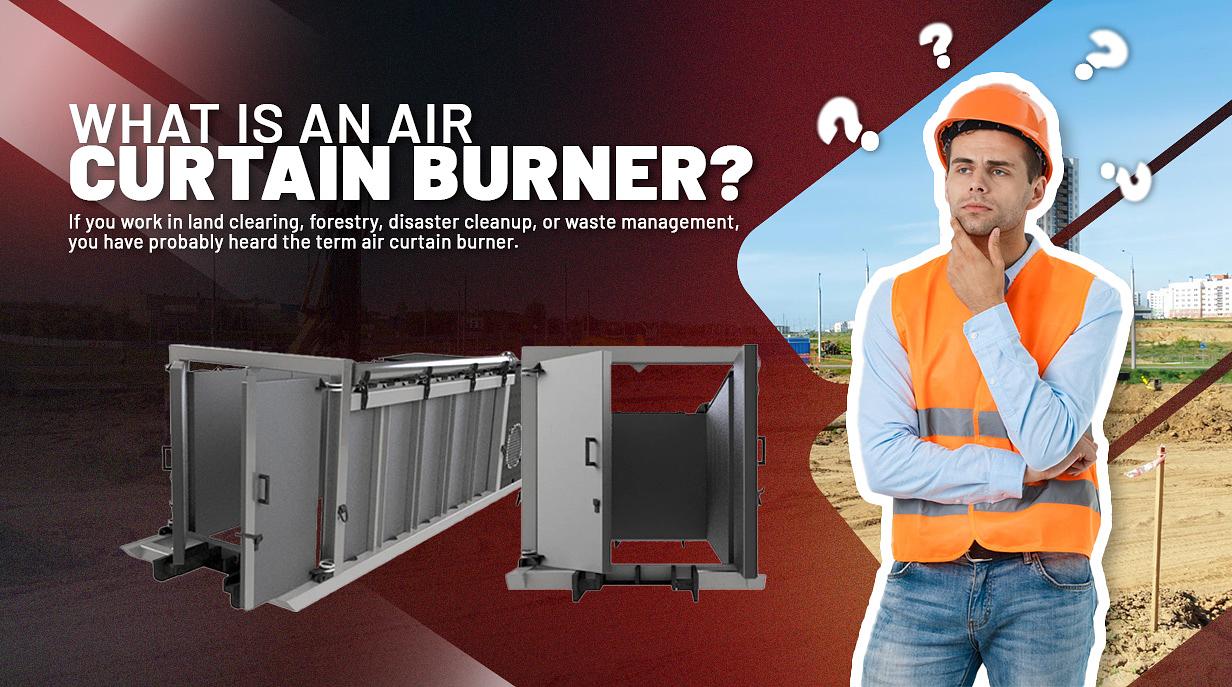
An air curtain burner is a controlled combustion system designed to burn clean wood waste and vegetative debris quickly, with minimal smoke and particulate emissions. Unlike open burning, which releases large amounts of smoke into the air, an air curtain burner contains the combustion process so that material burns hotter, cleaner, and faster.
How an Air Curtain Burner Works
The concept is straightforward. A diesel-powered fan pushes a high-velocity wall of air across the top of a burn chamber. This curtain of air acts as a lid. It traps smoke, ash, and particulate matter inside the combustion zone and forces it back down into the fire.
The result is a high-temperature burn that reaches 1,800 degrees Fahrenheit or higher. At those temperatures, wood waste and organic debris are almost completely consumed. The remaining ash is typically just 1 to 5 percent of the original material volume.
Here is the basic sequence:
- Material is loaded into the burn chamber (by excavator, loader, or by hand for smaller units)
- The fire is ignited and the air curtain fan is started
- The air curtain seals the top of the chamber, containing smoke and pushing it back into the fire
- Material burns at high temperature with minimal visible emissions
- Ash accumulates at the bottom and is periodically removed
Most air curtain burners run on diesel fuel to power the fan system and controls. Fuel consumption varies by unit size, typically ranging from 1 gallon per hour on smaller portable units to 3 gallons per hour on large above-ground models.
Three Main Types of Air Curtain Burners
Above-Ground Units (FireBox Style)
These are self-contained, refractory-lined steel containers with the air curtain manifold built into the top. Material loads from the top or through doors on the end. The refractory lining protects the steel walls from the extreme heat inside the burn chamber.
Above-ground units are the most common type. They sit on the ground surface and can be moved by crane or lowboy trailer. Sizes range from compact units that handle 1 to 3 tons per hour up to large models that process 6 to 9 tons per hour or more.
These are the go-to choice for land clearing contractors, forestry operations, and disaster debris removal. The contained design offers the most controlled burn environment and the easiest permitting path in most states.
Trench Burners
A trench burner mounts the air curtain manifold on a steel frame that spans a trench or pit dug on site. The operator excavates the trench using a standard excavator, and the air curtain system sits across the top.
The advantage of a trench burner is capacity. The trench can be sized to the job, and it can accept very large material that would never fit in a box-style unit: full-length logs, entire root balls, oversized stumps, and large volumes of brush.
The trade-off is site preparation. You need suitable ground conditions for digging, and it takes time to excavate the trench before burning can start. Trench burners are most common on large land clearing projects, utility corridor work, and disaster debris operations where the volume of material justifies the setup.
Portable and Towable Units
Compact, trailer-mounted air curtain burners are built for smaller jobs and frequent moves between sites. These units tow behind a standard truck and can be set up quickly without cranes or heavy transport.
Portable units handle lower throughput than full-size models, typically 1 to 3 tons per hour. They are popular with municipal crews, utility companies, tree services, and contractors who need to burn debris at multiple locations over the course of a week or month.
What Air Curtain Burners Are Used For
Air curtain burners show up anywhere clean wood waste or vegetative debris needs to be eliminated rather than hauled or processed. The most common applications include:
Land clearing and site prep. Burn stumps, brush, logs, and clearing debris on site instead of trucking it to a landfill. An air curtain burner can reduce a full day's worth of clearing debris to a small pile of ash, eliminating hauling costs and disposal fees.
Forestry and timber operations. Logging slash, damaged timber, and forest management debris can be burned in the field. Many state and federal land management agencies use air curtain burners for prescribed burn alternatives and post-harvest cleanup.
Disaster debris removal. After hurricanes, tornadoes, ice storms, and wildfires, massive volumes of woody debris need to be cleared quickly. Air curtain burners are a standard tool in FEMA emergency response plans. They can process debris faster than grinding operations in many disaster scenarios because they eliminate the material entirely rather than creating a product that still needs to be managed.
Agriculture. Orchard removals, crop residue, and agricultural waste can be burned in areas where open burning is restricted or prohibited. The air curtain contains emissions and reduces material to ash quickly.
Landfill volume reduction. Some landfill operators use air curtain burners to reduce the volume of incoming wood waste and green waste before it takes up cell space. This can extend the operating life of a landfill significantly.
Right-of-way and utility clearing. Power line corridors, pipeline routes, and road construction projects generate large quantities of brush and woody debris. Portable air curtain burners allow crews to burn as they go rather than staging material for later hauling.
Air Curtain Burners vs. Open Burning
Open burning is the simplest way to dispose of wood waste, but it comes with serious drawbacks. Uncontrolled open burns produce heavy smoke, create air quality complaints, and are increasingly restricted or banned by state and local regulations.
An air curtain burner solves the smoke problem. The high-velocity air curtain forces particulate matter back into the fire for more complete combustion. A properly operated air curtain burner produces very little visible smoke after the initial startup period.
The regulatory difference matters. Most states that restrict or ban open burning still allow air curtain burners under EPA regulation 40 CFR Part 60. This federal regulation covers air curtain incinerators used for burning clean wood waste and establishes opacity limits (how much visible smoke is allowed). Operating under this regulation gives contractors a legal path to burn debris in areas where open burning is off the table.
Air Curtain Burners vs. Grinding
Both machines handle wood waste and land clearing debris, but they produce very different outcomes.
A horizontal grinder turns wood waste into a reusable product: mulch, biomass fuel, compost feedstock, or erosion control material. If the end product has value or a market, grinding makes more sense. Grinders can also handle contaminated or mixed material that cannot be legally burned.
An air curtain burner eliminates material completely. There is no end product to haul, stockpile, or sell. If the goal is total disposal and the material is clean wood or vegetative debris, burning is faster and simpler.
Many large clearing operations use both. The grinder processes merchantable material into product, and the air curtain burner disposes of the rest.
Regulations and Permitting
Air curtain burner regulations vary by state, but the framework is consistent. Most states allow air curtain burners under one of two paths:
EPA 40 CFR Part 60. This federal regulation governs air curtain incinerators used for clean wood waste. It sets opacity limits (the amount of visible smoke allowed) and operating requirements. Most air curtain burner manufacturers design their equipment to comply with this regulation.
State general permits or exemptions. Many states issue a general operating permit for air curtain burners or exempt them from standard air quality permitting requirements, as long as the operator follows specific conditions (clean wood only, minimum distance from structures, notification requirements, etc.).
Before purchasing or operating an air curtain burner, check with your state environmental agency or local air quality district. Requirements for notification, permitting, and operating conditions vary. If you are not sure where to start, call us at 770-433-2670 and we can help point you in the right direction.
Looking for an Air Curtain Burner?
GrinderCrusherScreen carries new Merris air curtain burners and handles used units from Air Burners Inc and other manufacturers. We have been in the equipment business since 1973 and can help you find the right machine for your operation.
Browse our air curtain burner inventory, or call 770-433-2670 to talk with our team. We can help with equipment selection, financing, and delivery anywhere in North America.