





Land clearing generates massive volumes of wood waste. Stumps, logs, brush, root balls, and vegetation all need to go somewhere. The traditional options are hauling to a landfill (expensive), grinding into mulch (requires a market), or burning on site (fast but produces only ash).
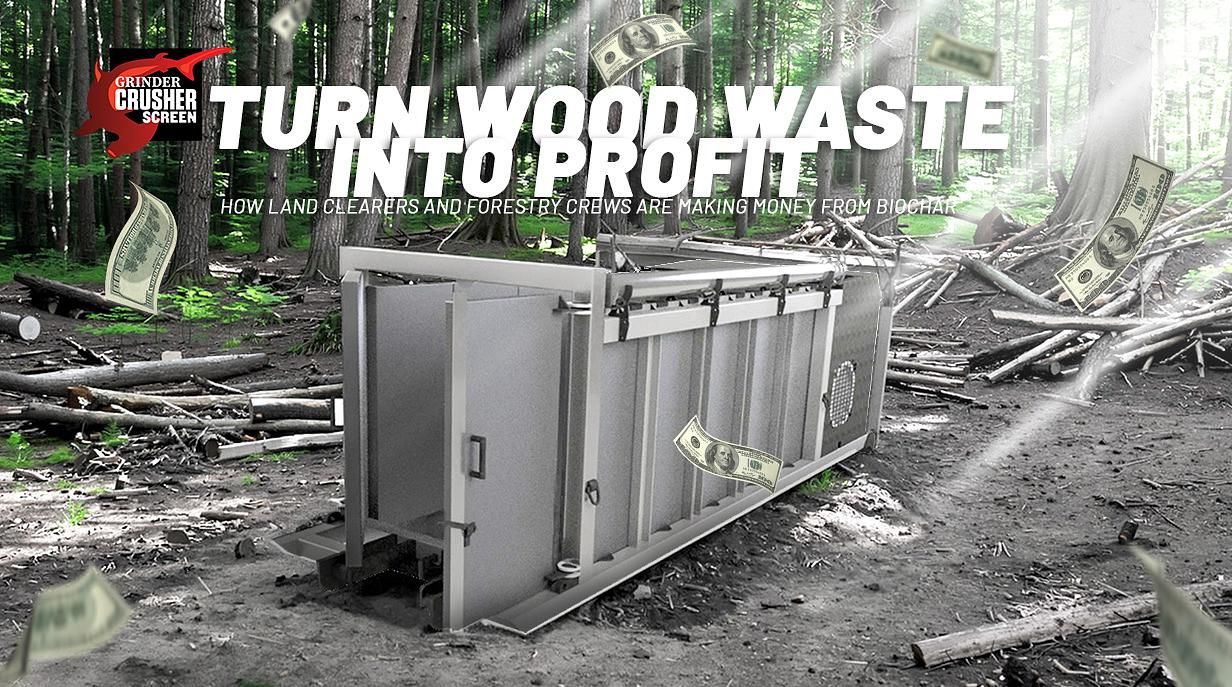
A growing number of operators are choosing a fourth option: converting that wood waste into biochar using air curtain burners and selling it.
The Basic Economics
Here is the math on a typical land clearing operation using an air curtain burner with manual biochar recovery:
Daily biochar production: 10 to 15 cubic yards (from a standard above-ground air curtain burner running a full day)
Selling price: $120 to $125 per cubic yard for bulk biochar sold as a soil amendment
Daily revenue: $1,200 to $1,875
Monthly revenue (20 work days): $24,000 to $37,500
This revenue comes on top of the primary value the machine provides, which is eliminating wood waste on site without trucking, tipping fees, or landfill costs. The biochar is a second income stream from the same equipment, same crew, same operation.
Compare that to burning without biochar recovery, where the end product is worthless ash that still needs to be managed.
Who Is Buying Biochar?
The customer base for biochar is broader than most equipment operators expect:
Farms and agricultural operations. Biochar improves water retention, nutrient holding capacity, and soil structure. Farmers working with poor, sandy, or depleted soils use biochar to improve productivity. The agricultural biochar market is growing as more growers adopt regenerative soil practices.
Landscaping and nursery suppliers. Biochar is blended into potting mixes, garden soils, and compost products. Landscapers and garden centers buy it in bulk for retail and commercial projects.
Composting operations. Adding biochar to compost accelerates the composting process, reduces odor, and improves the nutrient profile of the finished product. Compost facilities buy biochar as a feedstock additive.
Municipal and government programs. Some municipalities use biochar in stormwater management, urban soil remediation, and public land restoration projects.
Carbon credit buyers. Corporate buyers purchase certified biochar carbon credits to meet emissions reduction commitments. Carbon credit pricing currently ranges from $150 to $200 per tonne of CO2 equivalent, with projections for continued growth.
The Carbon Credit Angle
Biochar locks carbon into a stable form that persists in soil for hundreds to thousands of years. This makes it a verified carbon removal method, and it opens the door to carbon credit revenue.
Major buyers like Microsoft and Google have purchased large-volume biochar carbon removal contracts. The market is real and growing, though still early.
The important caveat: earning carbon credits from biochar requires third-party certification. You need to demonstrate the source of your feedstock, the production process, the carbon content of your biochar, and where it ends up. Certification programs like Puro.earth and the European Biochar Certificate set the standards. This adds administrative work and cost, but the revenue per tonne makes it worth exploring for operators producing consistent volume.
For operators just starting out, direct biochar sales as a soil amendment are the simpler and more immediate revenue path. Carbon credits can come later as production scales and the certification process becomes more familiar.
What Equipment You Need
An air curtain burner is the most practical entry point for land clearing and forestry crews. The machine handles your primary job (wood waste disposal) and produces biochar as a byproduct. No separate equipment purchase required.
For manual biochar recovery: any standard air curtain burner works. Operate the burner normally, rake out the char at the end of the day, screen it, quench it, and stockpile it for sale. The Merris WX-5 and WX-8, which we carry new, both support biochar recovery.
For automated biochar production: the Air Burners Inc CharBoss is a dedicated mobile biochar system that continuously extracts and quenches biochar during operation. It produces 300 to 500 pounds of biochar per hour without manual intervention.
Read our full guide on how to produce biochar with an air curtain burner for step-by-step details on both methods.
Getting Started
The lowest-risk way to start is with equipment you already own or plan to buy for wood waste disposal. If you are purchasing an air curtain burner for land clearing work, start recovering biochar from day one. Test local demand by contacting farms, landscapers, composting facilities, and garden centers in your area.
The biochar market is growing fast. Equipment operators who start building production capability and customer relationships now will have an advantage as demand continues to increase.
Browse our air curtain burner inventory or call 770-433-2670 to talk about which machine fits both your disposal needs and your biochar goals.