





Best Topsoil Screener: A Buyer's Guide by Equipment Type
Buying a topsoil screener is a significant equipment decision. The right machine depends on your material, your volume, your budget, and how often you move between job sites.
We have been selling screening equipment since 1973. In that time, we have seen every type of dirt screener and soil screener on the market, and we have watched buyers make great decisions and expensive mistakes. This guide breaks down each equipment type honestly so you can match the machine to your operation.
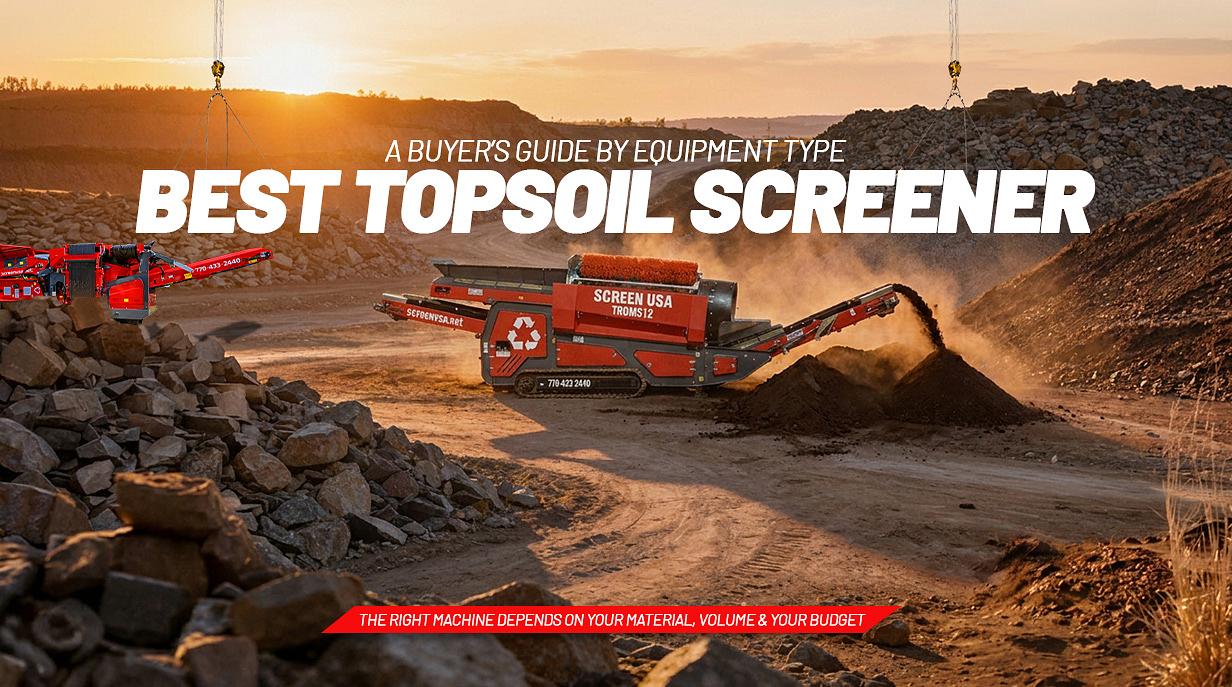
Trommel Screens: The Standard Choice for Topsoil
A trommel screen is a rotating drum with perforated panels or mesh. Material is fed into one end of the drum. As the drum rotates, topsoil tumbles through the screen openings and falls onto a discharge conveyor below. Oversized material (rocks, roots, debris) travels out the far end.
The tumbling action is what makes trommels the go-to topsoil screener. As material rolls inside the drum, it breaks apart clumps and separates fines from debris naturally. That tumbling motion also keeps the screen panels clear. Wet, sticky topsoil that would blind a flat deck screener stays moving inside a trommel.
Best for: wet or sticky topsoil, material with roots and organic debris, compost screening, and operations running 50 to 300+ tons per hour.
We carry new Screen USA trommels (our own line), CZ Screens, and used trommels from McCloskey, Vermeer, EZ-Screen, and Screen Machine. Browse our full trommel screen inventory.
Track-Mounted Trommels
A track-mounted trommel drives on its own tracks between positions on a job site and loads onto a trailer for transport between sites. If you screen topsoil at multiple locations throughout the year, tracks give you the mobility to move without a crane or lowboy every time.
Track-mounted models are the most popular portable topsoil screener for contractors and materials producers who split time between yards, construction sites, and stockpile locations.
Wheel-Mounted Trommels
Wheel-mounted trommels tow behind a truck. They are highway-legal and can move between sites without hiring heavy haul. For a contractor who screens topsoil on customer sites or rotates between two or three locations, a towable trommel keeps transport costs low.
Stationary Trommels
Stationary trommels are designed for permanent yard installations. They offer the highest throughput because they do not carry the weight of tracks, axles, or an onboard engine. A stationary trommel fed by a stacking conveyor and a loader can process topsoil all day at maximum capacity.
If you run a materials yard and screen hundreds of yards per day in one location, a stationary setup will give you the most production per dollar.
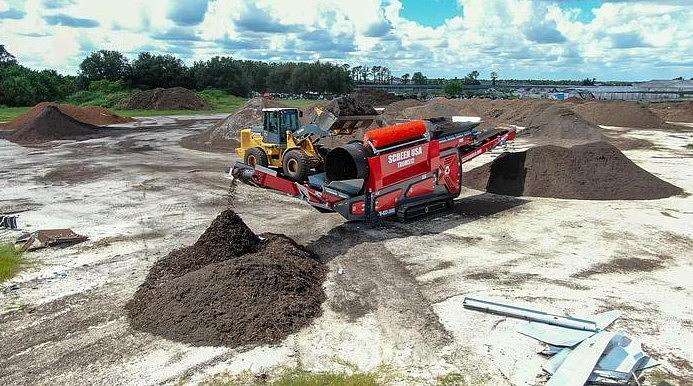
Trommel Screen: Screen USA TROM512
Shaker Screens (Vibrating Screens): Best for Dry Material
A shaker screen uses a vibrating flat deck with wire mesh or perforated panels. Material is fed onto the top deck and vibrated across the screen surface. Fines fall through. Oversize material rides off the end.
Best for: dry, sandy topsoil, material without heavy organic content, and operations that also screen aggregate and gravel.
Shaker screens are fast and efficient on dry, free-flowing dirt. A properly sized vibrating screen can match or exceed the throughput of a similarly priced trommel on clean, dry material.
The honest limitation: shaker screens blind up on wet topsoil. Clay-heavy soil, damp material with roots, and anything sticky will clog the mesh and shut down production. Some manufacturers build "severe duty" shaker screens with aggressive vibration patterns that handle sticky material better — but a trommel is still the better choice if your topsoil is consistently wet or full of organic debris.
Compare screener types for topsoil in our shaker vs. trommel guide, or call us at 770-433-2670 to talk through your material.
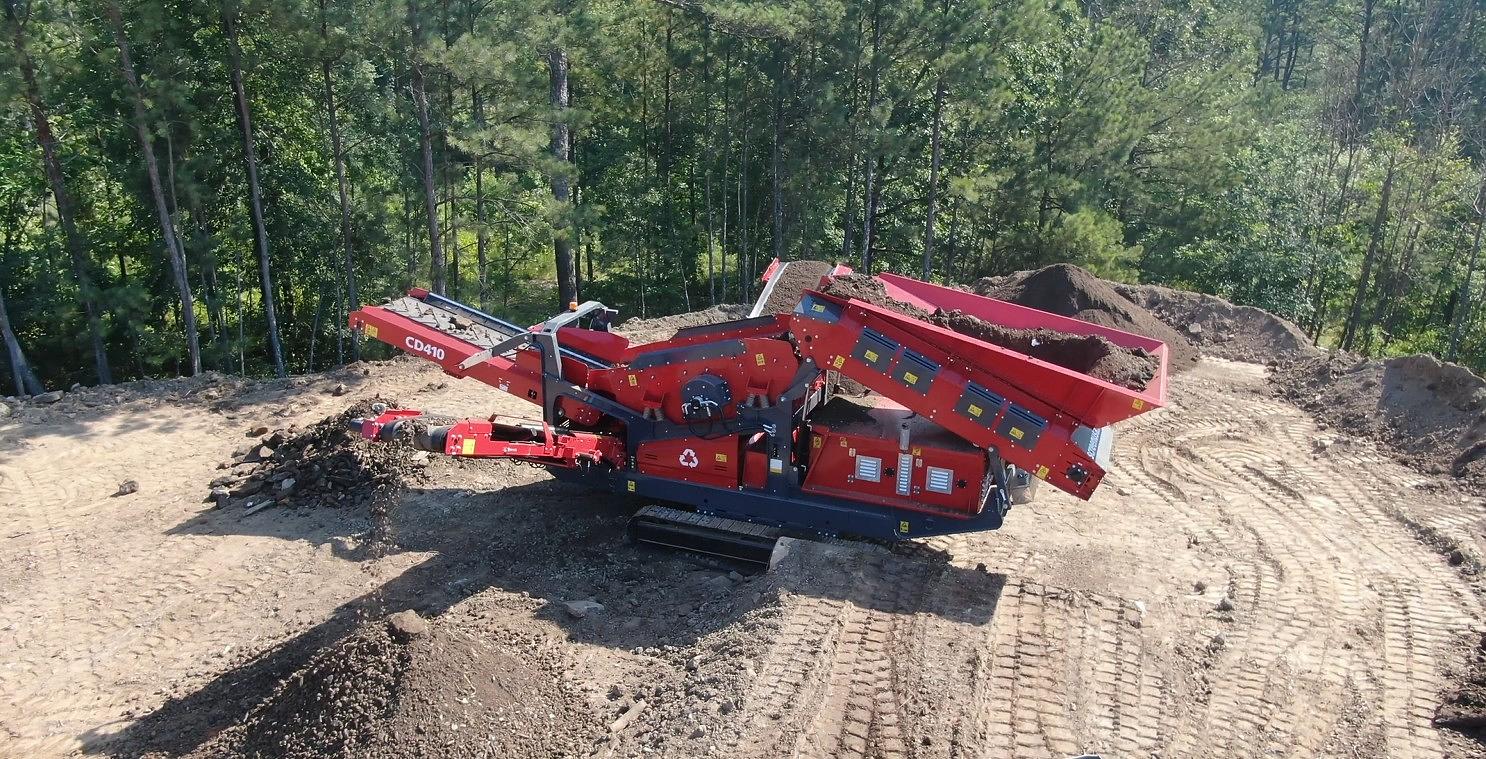
Scalping Screen: Screen USA CD410
Screening Buckets: Low-Cost Entry Point
A screening bucket is an excavator attachment. It replaces the digging bucket, scoops up raw topsoil, and screens it through a rotating drum or vibrating mesh built into the bucket body.
Best for: small contractors, occasional screening, tight job sites with limited space, and operations under 30 tons per hour.
Screening buckets are the lowest-cost way to start screening topsoil. Prices typically range from $8,000 to $30,000 depending on size and brand. If you already own an excavator, the bucket is the only investment.
A landscaper who screens 20 to 50 yards per week can make a screening bucket work. You are limited to what the excavator can cycle, so throughput is low compared to a standalone soil screener. But for occasional use on small jobs, the math works.
The honest limitation: a screening bucket will not keep up with a materials yard that moves hundreds of yards per day. The throughput ceiling is set by the excavator's reach and cycle time. If you outgrow the bucket, you will need a standalone machine.
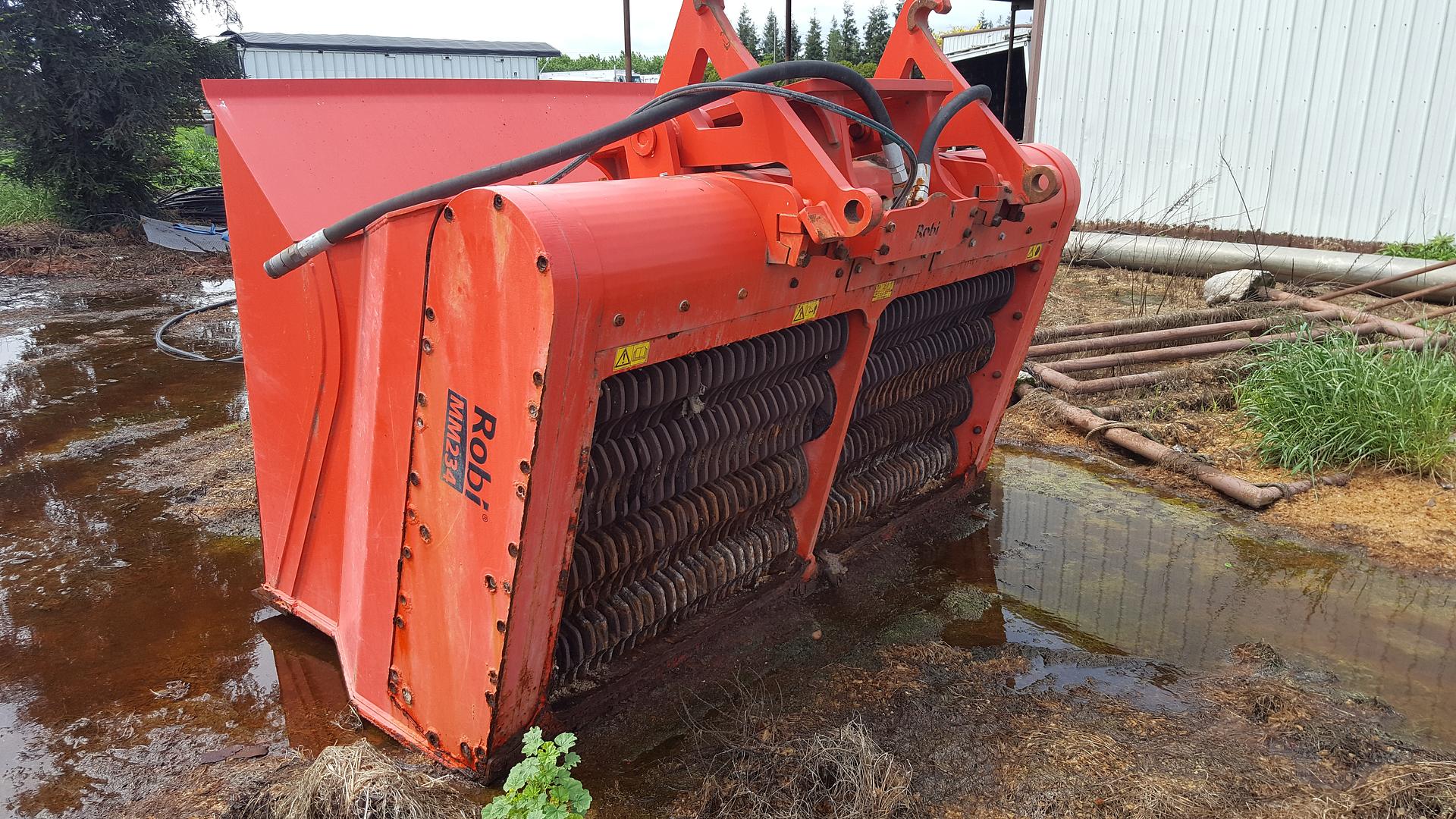
Screening Bucket: ROBI MM234
Box Screens: The Mid-Range Option
A box screen (also called a screen box or portable screener) is a self-contained screening unit, usually skid-steer fed or loader fed. The screen deck sits inside a compact, portable frame. Most box screens are towable or fit on a small trailer.
Best for: contractors who need more capacity than a screening bucket but are not ready for a full trommel. Typical throughput is 20 to 80 tons per hour depending on size and material.
Box screens are popular with landscapers, small earthwork contractors, and municipal crews. They set up quickly, take up less space than a trommel, and cost less than a comparable trommel screen.
The honest limitation: product quality from a box screen is not as consistent as what you get from a trommel on fine topsoil. The screening action is less aggressive, and you may see more fines variation in the finished product. For premium screened topsoil that needs to look clean and consistent, a trommel still has the edge.
Star Screens: High-Volume Consistency
A star screen uses rows of rotating rubber or polyurethane stars (discs) mounted on shafts. Material is fed across the rotating stars. Fines fall between the discs. Oversize material rides across the top and off the end.
Best for: high-volume topsoil and compost operations where product consistency matters. Star screens produce a very uniform finished product.
The rotating disc design resists blinding better than flat mesh screens and handles moisture reasonably well. Large star screens can process 100 to 200+ tons per hour of topsoil or compost.
The honest limitation: star screens carry a high capital cost. They are a serious investment for serious production. If you process compost and topsoil at high volume, the finished product quality justifies the price. For a small business screening topsoil a few days per week, a star screen is more machine than you need.
How to Choose: A Simple Decision Framework
Operation Size Throughput Best Equipment Small, occasional use Under 30 TPH Screening bucket Regular, multi-site 30-80 TPH Box screen or small trommel Daily production 80-200 TPH Mid-size trommel or severe-duty shaker Permanent yard 200+ TPH Large trommel or multi-deck shaker plant If your topsoil is wet, sticky, or full of roots and organic debris, lean toward a trommel at every level. If your material is dry and sandy, a shaker screen or box screen may give you equal performance at a lower price.
New vs. Used Topsoil Screening Equipment
New machines come with a manufacturer warranty and a known maintenance history of zero. You pick the specs, the screen size, the configuration. The machine shows up ready to work.
Used topsoil screening equipment costs 40 to 60 percent less than new. That savings matters, especially for a small business entering the topsoil market. The trade-off is that used machines carry wear and unknown history.
We carry both new and used screeners. On the new side, we sell Screen USA (our own line), CZ Screens, Evortle, and CAMS USA equipment. On the used side, we handle machines from McCloskey, Vermeer, EZ-Screen, Screen Machine, and others. Browse our trommel screen inventory or shaker screen listings to see current availability.
For used equipment, we help buyers by coordinating inspections before purchase. We also help line up financing and arrange transportation. If you are looking at a topsoil screener for sale, call 770-433-2670 and we will walk you through what is available.
How to Screen Topsoil: Tips for Better Results
We put together a separate in-depth guide on which screen is better for topsoil — shaker or trommel that covers material prep, screen sizing, moisture management, and common mistakes. If you already own a screener and want to improve your finished product, start there.
The short version: screen size selection matters as much as the machine itself. Most topsoil producers screen through 1/2-inch to 3/4-inch openings. Going finer slows production. Going coarser lets through debris that customers notice.
Frequently Asked Questions
What is the best screener for wet topsoil?
A trommel screen. The rotating drum keeps wet, sticky material moving instead of letting it pack against a flat screen surface. Trommels handle moisture, roots, and organic debris better than any other screener type for topsoil.
How much does a topsoil screener cost?
It depends on the type and size. Screening buckets start around $8,000 to $30,000. Box screens run $20,000 to $80,000. Mid-size trommels range from $80,000 to $250,000 new. Large production trommels and star screens can exceed $300,000. Used equipment typically costs 40 to 60 percent less.
Can I use a trommel screen for compost and topsoil?
Yes. Trommels are one of the most common machines for screening both compost and topsoil. You may need to swap screen panels to change the opening size between materials. Many operations run compost at 3/8-inch and topsoil at 1/2-inch to 3/4-inch.
What throughput should I expect from a portable topsoil screener?
Throughput varies by machine type, size, and material condition. A screening bucket produces 10 to 30 tons per hour. A portable box screen handles 20 to 80 tons per hour. A track-mounted or towable trommel processes 50 to 200+ tons per hour. Wet, heavy material reduces throughput on all machines.
Is a screening bucket good enough for topsoil?
For small volumes, yes. A screening bucket works well for a landscaper or small contractor screening 20 to 50 yards per week. It will not keep pace with a dedicated materials yard or a contractor screening hundreds of yards per day. If you are growing your topsoil business, plan to move up to a standalone screener as volume increases.
Find the Right Topsoil Screener
We have been helping buyers choose the right screening equipment since 1973. Whether you need a new Screen USA trommel, a used portable screener, or just honest advice on what machine fits your operation, we are here to help.
Call 770-433-2670 or email Sales@grindercrusherscreen.com. We handle financing, coordinate inspections on used equipment, and arrange transportation anywhere in North America.