





Shaker Screen vs Trommel for Topsoil: Which Screens Better?
This is the most common equipment question we hear from operators screening topsoil. Both shaker screens and trommel screens can produce clean, sellable topsoil. Both come in portable and stationary configurations. Both are available new and used.
So which one is the right choice?
It depends on your material, your volume, and how much moisture you are dealing with. We have been selling and supporting both types of screening equipment at GrinderCrusherScreen since 1973, and we have seen what works and what does not across thousands of operations. This guide breaks down the real differences so you can pick the right machine the first time.
For a broader look at topsoil screening equipment, mesh sizes, and the full process, see our complete topsoil screener buyer's guide.
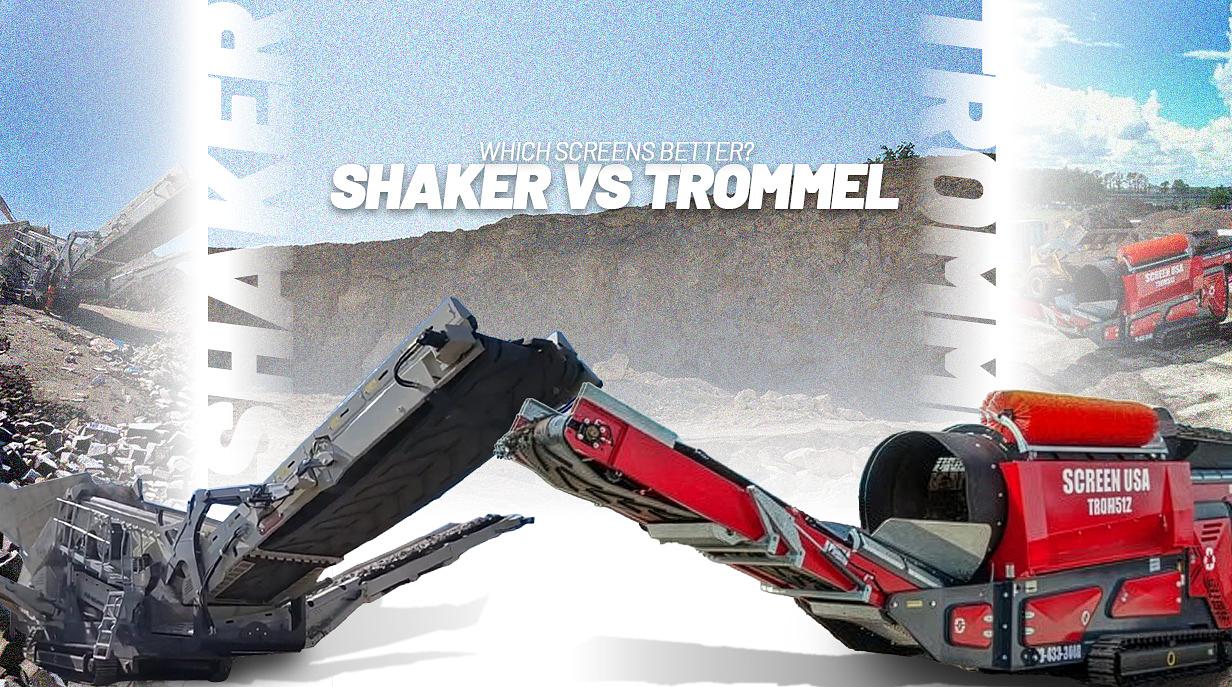
How Shaker Screens Work for Topsoil
A shaker screen uses a flat or inclined vibrating deck to separate material by size. Raw topsoil is fed onto the top of the deck. The vibration moves material across the surface and forces undersized particles through the mesh openings. Oversize material (rocks, roots, debris) travels off the end of the deck.
There are three main types of shaker screens used for topsoil, and they perform very differently depending on the material.
Sand and Gravel Screeners
These are the most common vibrating screens on the market. They use a relatively gentle vibration to separate dry, granular material. The screen deck oscillates at high speed with a short throw.
Sand and gravel screeners work well on dry, sandy loam that is relatively free of roots and clay. The material flows across the deck quickly, and throughput is high.
The limitation is sticky material. Wet topsoil, clay-heavy soil, or anything with significant organic content will plug the mesh openings. This is called blinding. Once the screen blinds, throughput drops to a fraction of the rated capacity. You end up spending more time cleaning the screen than screening soil.
Severe-Duty Shaker Screens
Severe-duty shaker screens are built for tougher material. They use a longer throw — typically 3/8" to 3/4" — compared to the shorter throw of a standard screener. The longer throw generates more force at the screen surface, which helps dislodge material from the mesh openings and move heavy, irregular pieces across the deck.
This matters for topsoil because the increased throw does a better job breaking up clumps and keeping the screen from blinding on moderately damp material. A severe-duty shaker can handle bony topsoil with larger rocks, heavy gravel content, or chunks of sod that a standard screener would choke on.
However, a severe-duty shaker still has limits. On consistently wet, clay-heavy topsoil, even the longer throw cannot keep the screen clear.
High-Frequency Screeners
High-frequency screeners use a rapid, fine vibration to separate material at high speed. They excel at making precise size separations on dry, clean material. For raw topsoil with any moisture or clay content, high-frequency screeners are not the right choice.
When Shaker Screens Beat Trommels for Topsoil
Shaker screens are the better choice in specific conditions:
- Dry, sandy loam with little clay or organic debris. The material flows freely, and a shaker will push more tons per hour than a trommel of the same size.
- Mixed operations where you screen aggregate and topsoil with the same machine. Shaker screens handle gravel, crushed stone, and sand as well as dry soil.
- High throughput on clean material. On dry, cooperative material, shaker screens can process 100 to 600+ tons per hour.
- Tight spaces. Shaker screens typically have a smaller footprint than a trommel of the same capacity.
The Honest Limitation of Shaker Screens
Standard shaker screens blind up on wet, clay-heavy, or rooty topsoil. The mesh clogs, throughput drops, and the operator spends time clearing plugged openings. Severe-duty shakers push this limit further, but no flat-deck vibrating screen handles truly sticky material as well as a trommel.
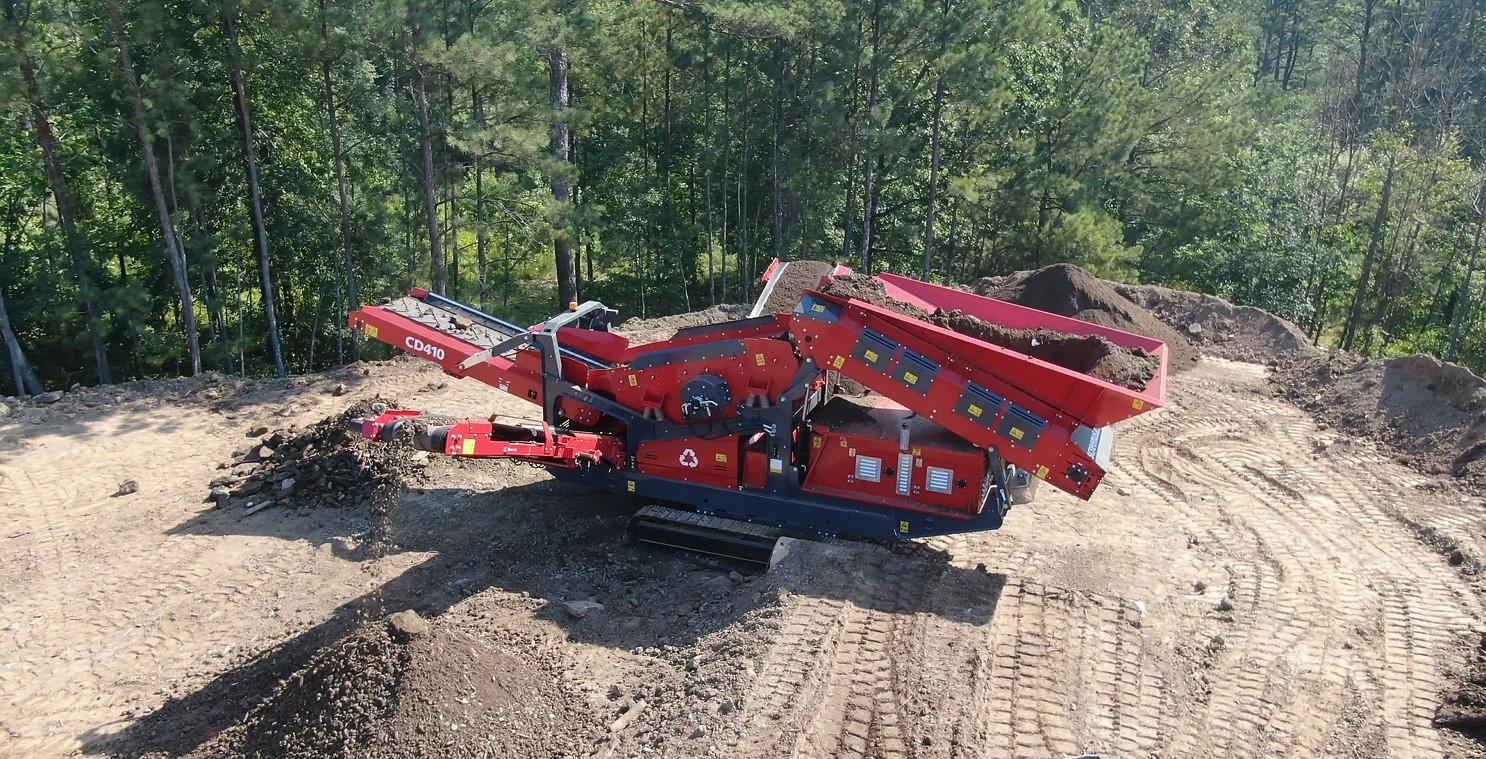
Shaker Screen: Screen USA CD410
How Trommel Screens Work for Topsoil
A trommel screen uses a rotating drum with screen panels mounted around the inside surface. Raw topsoil enters one end of the drum. As the drum rotates, the material tumbles and rolls along the length of the drum. Undersized material falls through the screen openings. Oversize material exits the far end.
The tumbling action is what makes trommels different from shaker screens. Instead of vibrating material across a flat surface, a trommel lifts and drops the material repeatedly. This breaks up clumps, separates sticky particles from each other, and continuously clears the screen openings from the inside.
Lifting Bar Drums
Lifting bar drums have steel bars welded to the inside of the drum. As the drum rotates, the bars catch material, lift it to the top of the rotation, and drop it. This aggressive tumbling action breaks up compacted soil, clay clumps, and matted root balls.
Lifting bar drums are the better choice for general topsoil screening, especially material with moderate to high clay content.
Helix Drums
Helix drums use a spiral design on the inside of the drum instead of straight lifting bars. The spiral moves material through the drum in a more controlled, less aggressive path.
Helix drums work well for rooty, organic-heavy topsoil and compost screening. The less aggressive action reduces the chance of pushing soft organic material through the screen openings, which keeps the finished product cleaner.
Why Trommels Handle Wet Material
The tumbling action inside a trommel drum continuously clears the screen openings from the inside. Wet clay and sticky soil that would blind a flat-deck shaker screen gets knocked free with every rotation.
Some trommel models also use external brushes or scrapers that contact the outside of the drum as it rotates, adding a second layer of blinding prevention.
This is why trommels dominate topsoil screening in regions with heavy clay soils or frequent rain. The machine keeps working in conditions that would shut down a shaker screen.
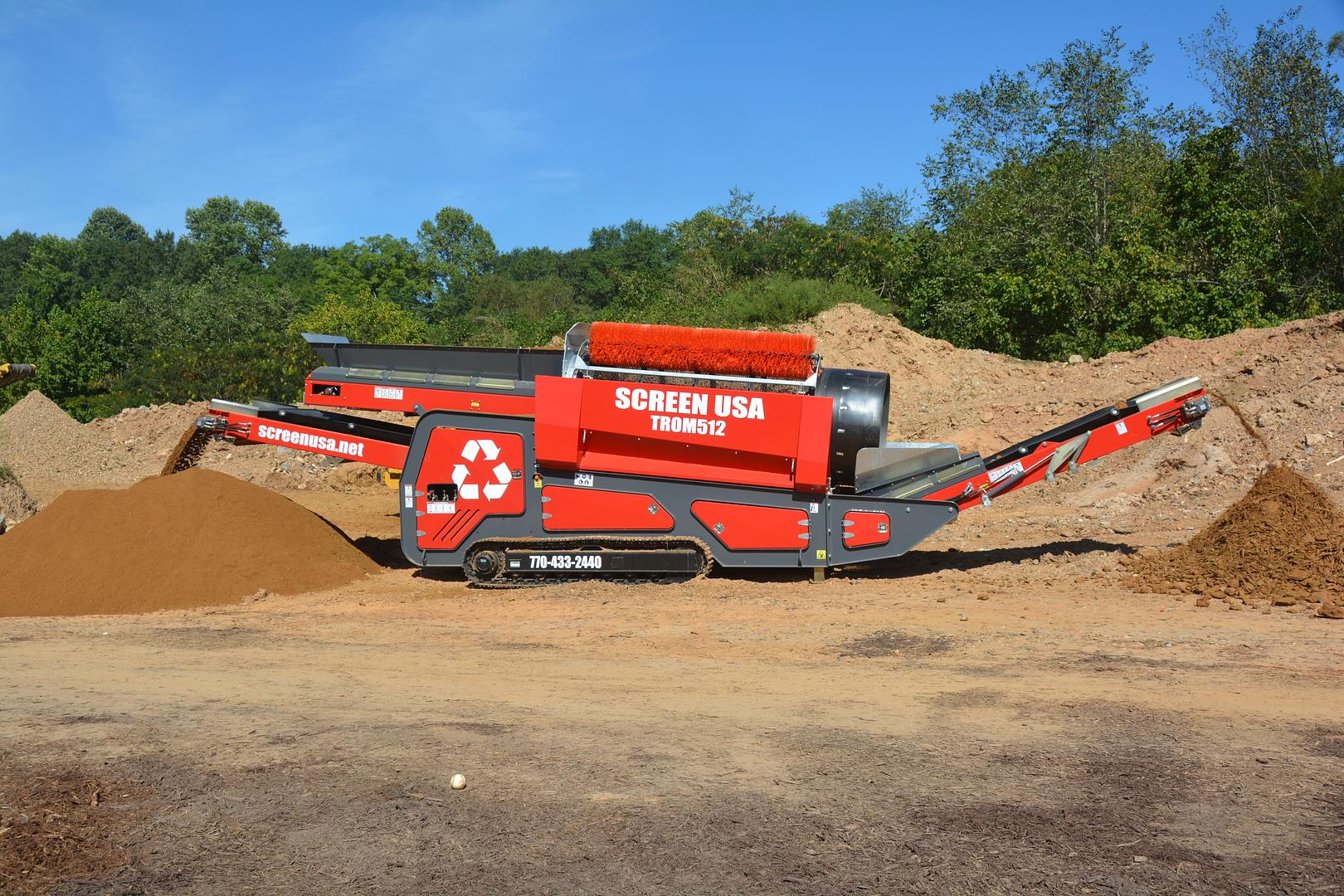
Trommel Screen: Screen USA TROM512
Head-to-Head Comparison: Shaker Screen vs Trommel for Topsoil
Factor Shaker Screen Trommel Screen Dry, sandy topsoil Excellent Good Wet, clay-heavy topsoil Struggles (blinds) Excellent Rooty/organic material Poor (clogs mesh) Good (helix drum best) Throughput on dry material High (100-600+ TPH) Moderate to high (30-300+ TPH) Screen changes Faster (bolt-on panels) Slower (drum panels) Moving parts More (vibration mechanism, springs) Fewer (drum on bearings) Footprint Smaller Larger Best crossover use Topsoil + aggregate Topsoil + compost Both machine types can produce the same finished product sizes. The difference is how they handle the material getting there.
Which One for Your Specific Situation
Topsoil with small rocks and sand (dry). A shaker screen is the faster, more efficient choice. The material separates easily on a vibrating deck, and throughput will be higher than a trommel of the same size.
Topsoil with roots, sticks, and organic debris. A trommel with a helix drum. The less aggressive spiral action keeps organic material from being forced through the mesh, producing a cleaner finished product.
Topsoil that is wet or clay-heavy. A trommel with lifting bars. The aggressive tumbling action breaks up clay clumps and keeps the screen clear. No shaker screen handles this material as well.
Mixed operation (topsoil and aggregate). A shaker screen gives you more versatility. You can switch between screening dry topsoil, gravel, crushed stone, and sand without changing machines.
Compost and topsoil. A trommel. The tumbling action handles the moisture and irregular particle shapes found in compost better than a vibrating deck.
Bony material with large wood and rocks. A severe-duty shaker screen. The longer throw moves heavy, irregular material across the deck and keeps the screen from plugging on oversized pieces.
Cost Comparison
Pricing varies by size, brand, and condition (new vs used). As a general range:
Equipment New Price Range Small portable shaker screen $30,000-$60,000 Mid-size shaker plant with conveyors/hopper $80,000-$200,000+ Small portable trommel $40,000-$80,000 Mid-size to large trommel $100,000-$300,000+ Used equipment can cut these numbers significantly. We broker used shaker screens and trommel screens from operations across North America. The right used machine at the right price can get you into production faster than waiting on a new build.
For a deeper comparison of screener options and pricing, see our topsoil screener buyer's guide. We also help line up financing for both new and used equipment.
Frequently Asked Questions
Which screens topsoil better, a shaker or trommel?
It depends on the material. Shaker screens produce excellent results on dry, sandy, or granular topsoil and typically run at higher throughput in those conditions. Trommel screens produce better results on wet, clay-heavy, or organic-rich topsoil because the tumbling action keeps the screen clear. For most topsoil operations that deal with varying moisture levels, a trommel is the safer all-around choice.
Can a shaker screen handle wet topsoil?
Barely. Standard shaker screens blind up quickly on wet or clay-heavy topsoil. Severe-duty shaker screens handle moderately damp material better, but no vibrating screen matches a trommel on consistently wet, sticky soil. If your topsoil is regularly damp, a trommel is the better investment.
What is the difference between a lifting bar drum and a helix drum?
A lifting bar drum has straight steel bars welded inside the drum that catch material, lift it, and drop it aggressively. This breaks up clumps and works well on clay-heavy topsoil. A helix drum uses a spiral design that moves material through the drum more gently. The helix is better for rooty, organic-heavy topsoil and compost because it processes material without forcing soft organic pieces through the screen openings.
Which is easier to maintain, a shaker or trommel?
Both require regular maintenance, but the work is different. Shaker screens have more moving parts (vibration mechanism, springs, eccentric shafts) that need inspection and replacement. Screen panel changes are faster on a shaker because the panels bolt on and off the flat deck. Trommels have fewer moving parts overall, but replacing drum screen panels takes more time and labor.
Can I screen both topsoil and aggregate with the same machine?
Yes. Shaker screens are the more common choice for mixed operations because they handle dry aggregate and dry topsoil equally well. Trommels can also screen aggregate, but they are less common in aggregate-only operations. If you split time evenly between topsoil and aggregate, a shaker screen gives you more flexibility.
Talk to Us About Screening Equipment
We carry both shaker screens and trommel screens, new and used. We have been matching operators with the right screening equipment since 1973, and we can help you figure out which machine type fits your material, your volume, and your budget.
Call 770-433-2670 or email Sales@grindercrusherscreen.com to talk with our team.