





DIY Topsoil Screening: When to Build Your Own vs. Buy a Machine
If you have a pile of dirt in your yard and you want clean topsoil, building a simple screen is a reasonable place to start. We sell screening equipment for a living, and we have been doing it since 1973. So we are going to be straight with you about where DIY works and where it does not.
A homemade topsoil screener is a real tool. At small volumes, it does real work. But there is a threshold where DIY stops making sense, and it is important to know where that line is before you burn a weekend building something that will not get the job done.
The Simple DIY Topsoil Screener: Materials and Build
The most basic DIY soil screener is a wooden frame with wire mesh stretched across it. Set it at an angle or rest it over a wheelbarrow. Shovel dirt onto it. Rocks, roots, and debris stay on top. Clean soil falls through.
Frame: 2x4 lumber cut to a rectangle. A 3-foot by 5-foot frame is a good starting size. A 4-foot by 6-foot frame gives you more surface area but gets heavy. Screw the corners together with lag bolts or deck screws.
Mesh: 1/2-inch hardware cloth works for general topsoil screening. If you need fine garden soil for raised beds or seed starting, drop to 1/4-inch mesh. Staple the mesh to the frame and reinforce the edges with a second layer of 1x2 or thin furring strips to keep it from pulling loose.
Support: Set the frame on sawhorses at a 30 to 45 degree angle. Some people rest it directly on the wheelbarrow rim. Others build angled legs right into the frame.
Cost: Under $50 in materials from any hardware store. Build time is an afternoon.
This is the homemade topsoil screening approach that has been around for generations. It works. For a small garden project, it is all you need.
Powered DIY Screeners: Adding Vibration or Rotation
Once you build a static frame, the next thought is usually: how do I make this faster?
DIY Vibrating Soil Screener
Mount a small electric motor with an offset weight to the frame. The vibration shakes material through the mesh faster than gravity alone. You need a motor mount, a flexible connection to the frame (rubber bushings or springs), and a power source. A 1/4 HP motor works for a small frame. Mounting it securely without cracking the frame is the hard part.
DIY Trommel Screen
Some people build a rotating drum from a steel barrel or heavy wire mesh wrapped around a circular frame. The drum sits at a slight angle and rotates slowly. Material tumbles inside, fines fall through the mesh, and oversized material rolls out the low end. Building one that actually works requires bearings, a drive motor, and a sturdy base frame. It is a real fabrication project.
A powered homemade topsoil screener can process 1 to 3 cubic yards per hour depending on build quality, mesh size, and how wet the material is. But powered DIY screeners introduce real complexity. Motors burn out. Bearings seize. Welds crack. If you are handy with metal fabrication, a DIY trommel screen is a satisfying project. If you are not, you may spend more time fixing the machine than using it.
What DIY Topsoil Screening Is Good For
A homemade soil screener is the right tool in several situations:
Garden projects. You are screening a few cubic yards for raised beds, planters, or a vegetable garden. A static screen and a shovel will get it done in a day or two.
Small property cleanups. You cleared some brush, pulled some stumps, and now you have a pile of mixed dirt and debris. A simple soil screener cleans it up without renting anything.
Hobby farming. You need a few yards of screened compost or topsoil a couple of times a year — not enough volume to justify equipment.
One-time jobs. You have more time than money, and the job only needs to happen once. That is a perfectly good reason to build instead of buy.
Learning how screening works. If you are thinking about buying equipment down the road, building a homemade topsoil screener first gives you hands-on understanding of mesh sizes, material flow, and throughput. That knowledge helps you buy smarter when the time comes.
Where DIY Stops Working
Here is where the limits show up:
Volume. If you need more than 5 to 10 cubic yards, manual screening becomes brutal. At 1 to 3 yards per hour on a powered DIY screener (and less than 1 yard per hour on a static frame), a 50-yard job takes weeks of part-time work.
Consistency. Hand-screened topsoil is never as uniform as machine-screened material. If you are selling screened topsoil or compost, customers expect a consistent product. A topsoil sifter built from 2x4s and hardware cloth cannot deliver that.
Wet material. A static screen clogs almost instantly on wet clay or organic-heavy soil. Even vibrating screens struggle with sticky material unless they have enough force behind them. A powered DIY soil screener with a small motor does not generate enough energy to clear wet buildup.
Time. Time has a cost even when you are not paying someone else. A weekend spent shoveling dirt through a screen is a weekend not spent on other work. Multiply that across multiple weekends and the real cost of DIY screening adds up fast.
Physical toll. Shoveling material through a screen all day is hard labor. If you are doing this regularly, the wear on your body is a real consideration.
None of this means DIY is a bad idea. It means DIY has a ceiling, and it is lower than most people expect going in.
The Upgrade Threshold: When to Step Up to Real Equipment
Here are the signals that it is time to start looking at commercial screening equipment:
- You are screening more than 10 cubic yards per week on a regular basis
- You are selling screened topsoil or compost as a product
- You are spending more on labor than equipment would cost
- Your customers need consistent grading you cannot achieve with a homemade soil screener
- You are losing time on other jobs because screening is eating your schedule
The math is straightforward. A screening bucket attachment costs roughly $8,000 to $30,000 depending on size. If it saves you 20 hours per week of manual labor at $25 per hour, that is $500 per week. A $10,000 unit pays for itself in 20 weeks.
If you are running a landscaping business, a small excavation company, or a topsoil operation, equipment almost always beats DIY on the numbers.
Entry-Level Commercial Screening Equipment
You do not have to jump straight to a $200,000 plant. There are real options at every price point.
Screening buckets ($8,000 to $30,000). These attach to any excavator or skid steer you already own. Scoop material, the bucket vibrates or rotates, screened soil falls through. No separate machine to trailer around. If you have an excavator, this is the cheapest path to machine-quality screening.
Small portable trommels ($50,000 to $150,000). A portable trommel screen is serious production equipment that still fits on a trailer. Feed material with a loader, screened product comes out in sized piles. Throughput ranges from 20 to 100+ cubic yards per hour. For topsoil and compost operations, a trommel is the standard.
Shaker screens. Vibratory screening decks are another option, especially for operations that need multiple product sizes from one pass. For a detailed comparison of when each type wins, read our shaker vs. trommel guide.
Used equipment. We carry used trommels and shaker screens at 40 to 60 percent of new price. A used machine in good condition does the same work as a new one. Browse current used inventory or call us and we will tell you what is available.
For a full breakdown of screening machines by type, size, and price range, read our topsoil screener buyer's guide.
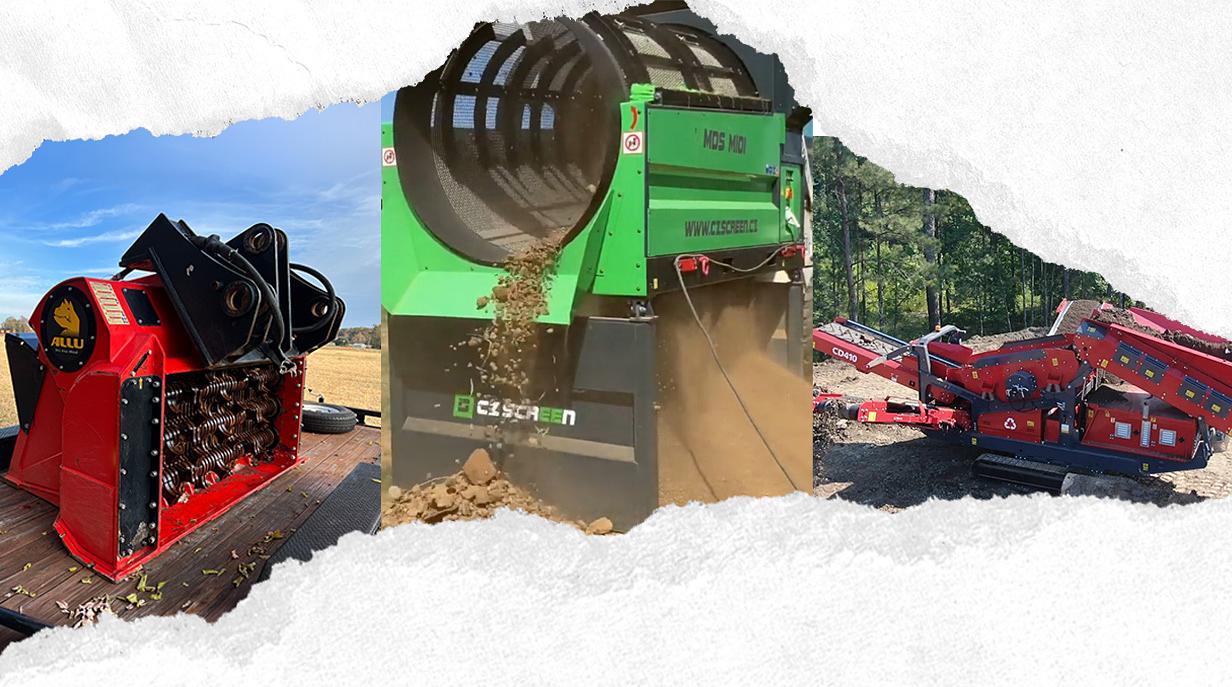
Screening Bucket (left): 2019 Allu DH3-17 Trommel Screen (Middle): CZ Screen MDS MIDI Shaker Screen (right): Screen USA CD410
Frequently Asked Questions
What mesh size should I use for a DIY topsoil screener?
For general topsoil, 1/2-inch hardware cloth works well. It removes rocks, roots, and large debris while letting soil pass through quickly. For fine garden soil or seed-starting mix, use 1/4-inch mesh. Finer mesh screens more slowly and clogs more easily, so only go smaller if you actually need a finer product.
How many cubic yards can I screen by hand per hour?
With a static frame screen and a shovel, expect about 1/2 to 1 cubic yard per hour. A powered DIY vibrating soil screener can push that to 1 to 3 cubic yards per hour. The actual number depends on mesh size, material moisture, and how much debris is in the material. Wet or clay-heavy soil is significantly slower.
Can I build a trommel screen myself?
You can, but it is a real metalworking project. A DIY trommel screen requires a cylindrical drum, bearings, a drive motor, and a support frame. If you are comfortable with welding and fabrication, plans are available online. If you are not, the build will likely cost more in time and frustration than buying a used machine. We carry used trommel screens that are ready to work.
How much does a basic topsoil screener cost?
A homemade static frame screener costs under $50 in materials. A powered DIY screener with a motor and vibration setup runs $150 to $400. On the commercial side, screening bucket attachments start around $8,000, small portable trommels start around $50,000 new (less for used), and larger plants go up from there.
Is screening topsoil worth it for a small garden?
Yes. Even a small garden benefits from screened topsoil. Removing rocks, roots, and clumps gives plant roots an easier path and improves drainage. For a small garden, a simple homemade topsoil screener and a few hours of work is all it takes. You do not need a machine for a backyard project.
Ready to Move Past the Wheelbarrow?
When you are ready to move past the wheelbarrow and shovel, we can help. We carry screening equipment at every price point, from screening bucket attachments to full-scale portable trommels, new and used. We have been in the business since 1973, and we will tell you straight if a smaller machine is all you need.
Call 770-433-2670 or email Sales@grindercrusherscreen.com.