





How to Start a Composting Business: Equipment, Permits, and Operations
Starting a composting business is one of the most practical ways to turn organic waste into steady revenue. Landfill diversion mandates are tightening across the country. Municipalities and private haulers are looking for permitted facilities to take their organics. If you can build the right site and run the right equipment, the demand is already there.
We have been selling composting equipment since 1973. We have helped operators across the country set up facilities from scratch and scale existing yards into full commercial operations. This guide covers everything you need to know: business models, equipment, permits, site design, operations, and selling your finished product.
Startup costs range from $100,000 for a small farm-scale operation to $1 million or more for a fully permitted commercial facility. The investment is real, but the margins are strong when you run it right.
Composting Business Models
Not all composting businesses look the same. The feedstock you accept determines your regulatory burden, equipment needs, and revenue structure. Here are the four most common models.
Yard Waste Composting
Yard waste is the easiest entry point. Grass clippings, leaves, brush, and tree trimmings are clean, consistent feedstocks. Most states classify yard waste composting under the least restrictive permit tier. Many operators start here and expand later.
Revenue comes from two streams: tipping fees ($15 to $35 per ton for incoming material) and finished compost sales. A well-run yard waste facility can process 10,000 to 50,000 cubic yards per year with modest equipment.
Food Waste Composting
Food waste composting carries higher regulatory requirements but commands higher tipping fees. Restaurants, grocery stores, and food processors pay $40 to $80 per ton to divert food waste from landfills. Several states now ban commercial food waste from landfills, which creates guaranteed demand.
Food waste is wet and heavy. It requires more frequent turning, careful carbon-to-nitrogen balancing, and odor management. You need a well-designed site with leachate collection and buffer distances from neighbors.
Manure Composting
Agricultural manure composting serves dairy farms, poultry operations, horse farms, and feedlots. Many farms generate more manure than they can land-apply. A composting business that accepts and processes manure fills a real need.
Manure composting produces high-nutrient finished products. The compost commands premium prices from garden centers and landscape suppliers. Poultry litter compost and dairy manure compost are both in strong demand for organic farming.
Biosolids Composting
Biosolids (treated wastewater sludge) composting sits at the top of the complexity scale. Regulations are strict. But tipping fees are the highest in the industry, often $50 to $100+ per ton.
Biosolids composting requires Class A pathogen reduction, which means maintaining temperatures above 131 degrees Fahrenheit for 15 consecutive days in windrow systems. Monitoring and record-keeping requirements are extensive. This model is best suited for experienced operators with strong regulatory relationships.
Required Equipment List
The equipment you need depends on your scale and business model. Here is what a fully equipped commercial composting operation requires.
Core Equipment List
Equipment New Price Range Used Price Range Windrow compost turner $150,000-$600,000+ $40,000-$250,000 Trommel screen $80,000-$350,000+ $30,000-$150,000 Wheel loader (3-5 CY bucket) $120,000-$300,000 $40,000-$120,000 Horizontal grinder $200,000-$500,000+ $60,000-$200,000 Dump truck or roll-off $60,000-$150,000 $25,000-$75,000 Temperature probes $200-$2,000 N/A Scale system (optional) $30,000-$80,000 $15,000-$40,000 A small farm-scale operation can start with a PTO-driven pull-behind turner and a used loader for under $100,000 in equipment. A full commercial facility with a self-propelled turner, trommel screen, grinder, and loader will run $500,000 to $1 million+ in equipment alone.
Compost Turners
The turner is the heart of the operation. It aerates windrows, mixes materials, and controls the composting process. We carry compost turners from Vermeer, SCARAB, Wildcat, Frontier, Komptech, and Brown Bear.
Small operations (under 10,000 CY/year): A pull-behind PTO turner like a Brown Bear or small Frontier unit handles the job. These cost $25,000 to $80,000 and run off your existing tractor.
Mid-size operations (10,000 to 50,000 CY/year): A self-propelled windrow turner from Vermeer, SCARAB, or Wildcat gives you the throughput and consistency you need. Expect to spend $150,000 to $350,000 new or $40,000 to $150,000 used.
Large operations (50,000+ CY/year): High-capacity straddle turners from Komptech or large SCARAB units process thousands of cubic yards per hour. These machines start at $350,000 and go well above $600,000.
Read our compost turner buying guide and windrow compost turner guide for detailed equipment comparisons. Browse our full compost turner inventory to see current availability.
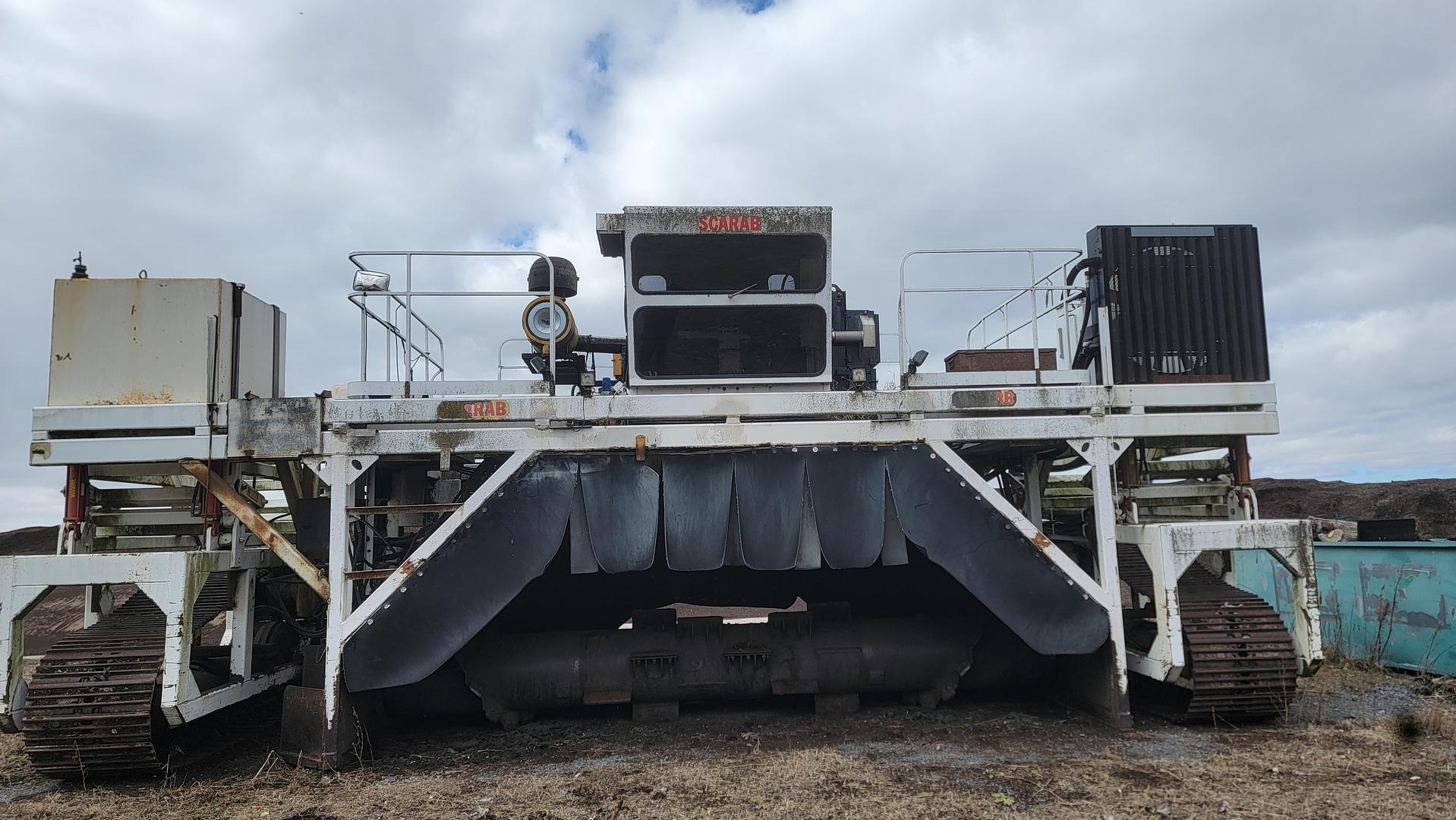
Machine above: 2006 Scarab 18 - Straddle Compost Turner
Screening Equipment
Screening is what turns raw compost into a saleable product. A trommel screen is the most common choice for compost operations. Trommels handle wet, sticky compost better than vibrating screens. They accept a range of screen panel sizes so you can produce multiple product grades from one machine.
We carry trommel screens from major manufacturers in both portable and stationary configurations.
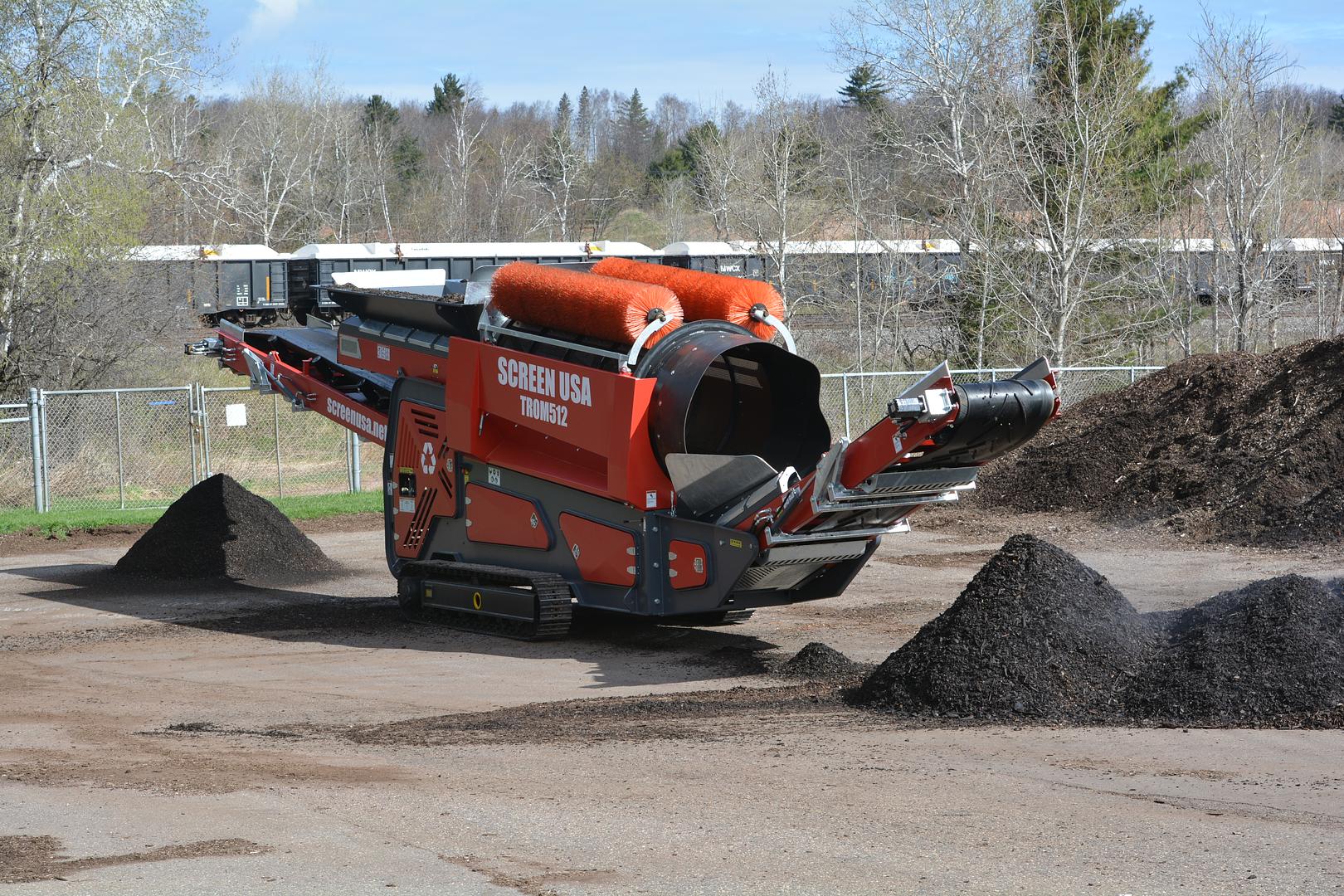
Machine above: Screen USA TROM512 - Trommel Screen
Permit and Regulatory Requirements
Composting permits vary widely by state. Some states regulate composting under solid waste rules. Others have separate composting-specific regulations.
General Permit Tiers
Tier 1 (Exempt or Registration): Small-scale yard waste composting, typically under 5,000 to 10,000 cubic yards per year. Minimal paperwork. No engineering plans required. Some states allow this by right on agricultural land.
Tier 2 (General Permit or Notification): Larger yard waste operations and some clean wood waste facilities. Requires a facility plan, setback compliance, and basic record-keeping. Approval timelines run 30 to 90 days in most states.
Tier 3 (Individual Permit): Food waste, manure, and biosolids composting. Requires engineering plans, environmental assessments, public notice periods, and detailed operational plans. Approval timelines run 6 to 18 months. Some states require groundwater monitoring.
State-by-State Considerations
States with clear composting regulations: California, Oregon, Washington, Massachusetts, Vermont, Maryland, Ohio, and Texas all have well-defined composting rules. Permit pathways are established.
States with stricter requirements: California's CalRecycle program requires detailed odor management plans. Massachusetts requires approved compost facility site assignment from the local board of health. New York's DEC process can take 12+ months for food waste facilities.
States with more flexible rules: Many Southern and Midwestern states have lighter regulatory frameworks for yard waste composting. Agricultural composting exemptions are common.
Key Permit Requirements to Plan For
Regardless of your state, plan for these common requirements:
- Setback distances: 200 to 1,000 feet from property lines, wells, waterways, and residences
- Stormwater management: Containment and treatment of site runoff and leachate
- Odor control plan: Required for food waste and biosolids; good practice for any operation
- Groundwater protection: Lined pads or monitoring wells for higher-tier facilities
- Fire prevention plan: Compost piles can self-ignite; agencies want to see prevention measures
- Record-keeping: Temperature logs, incoming material records, and outgoing product tracking
Budget 6 to 18 months and $10,000 to $50,000+ for the full permitting process on a commercial facility. Hire a consultant experienced with composting permits in your state.
Site Layout and Pad Design
A good site layout makes operations efficient, keeps you in compliance, and reduces costs over the life of the facility.
Pad Surface Options
Concrete pad: The gold standard for commercial facilities. Prevents groundwater contamination, supports heavy equipment, and satisfies regulators. Costs $8 to $15 per square foot installed. Required for biosolids and recommended for food waste.
Asphalt pad: Less expensive than concrete at $4 to $8 per square foot. Works well for yard waste and some manure operations. Degrades faster under compost acids and heavy loader traffic.
Compacted gravel or soil: Acceptable for small yard waste operations and agricultural composting under Tier 1 permits. Lowest cost but highest environmental risk. Not suitable for food waste or biosolids.
Layout Principles
Design your site with material flow in mind. Raw feedstock enters on one end. It moves through grinding, mixing, active composting, curing, and screening in a logical sequence. Finished product ships from the opposite end.
Keep windrows oriented to prevailing winds to promote natural airflow. Space windrows 12 to 15 feet apart for turner access. Allow turning room for loaders and trucks at each end of the windrows.
A typical 5-acre site can hold 20 to 30 windrows at 150 feet long each. That supports annual throughput of 20,000 to 40,000 cubic yards depending on your feedstock and cycle time.
Plan for these functional areas:
- Receiving and tipping area with scale if needed
- Grinding and mixing area for feedstock preparation
- Active composting pad with windrow space
- Curing area for finished but unscreened compost
- Screening area with space for finished product stockpiles
- Leachate collection pond or tank (if required)
- Stormwater diversion channels around the perimeter
Turning Schedules and Temperature Management
Proper turning is what separates quality compost from a rotting pile. The turning schedule controls oxygen levels, temperature, and decomposition speed.
Temperature Targets
Active composting should reach 131 to 160 degrees Fahrenheit within the first week. Temperatures above 131 degrees kill weed seeds and pathogens. Temperatures above 170 degrees can kill beneficial microorganisms and should be avoided.
Use 36-inch or 48-inch probe thermometers to check core temperatures at multiple points in each windrow. Record temperatures at least three times per week during active composting. Many state permits require daily temperature logs.
Turning Frequency
Weeks 1-4 (Active Phase): Turn every 3 to 5 days. This is the hottest period. Oxygen gets consumed fast. Frequent turning keeps aerobic conditions and prevents the pile from going anaerobic. Anaerobic conditions create odors that bring complaints and regulatory attention.
Weeks 5-8 (Stabilization Phase): Turn every 7 to 10 days. Temperatures begin to drop as easily decomposed materials are consumed.
Weeks 9-12+ (Curing Phase): Turn every 2 to 4 weeks or move material to a curing pile with no turning. The compost is maturing. Curing typically takes 30 to 60 additional days.
Total Cycle Time
Yard waste compost takes 90 to 180 days from raw feedstock to finished product. Food waste blended with bulking agent takes 90 to 120 days. Manure-based compost takes 90 to 150 days. Biosolids compost takes 90 to 120 days but requires strict time-temperature documentation.
Plan your site capacity around these cycle times. If your compost takes 120 days and you receive 500 cubic yards per week, you need pad space for 60,000 cubic yards of material in various stages at any given time.
Selling Finished Compost: Grades, Pricing, and Markets
The composting process makes the product. The screening and marketing process makes the money.
Product Grades and Pricing
Product Screen Size Primary Use Price Range Bulk landscape compost 1/2"-3/4" Topdressing, garden beds, landscaping $18-$30/CY Premium screened compost 3/8" Potting mixes, raised beds, turf programs $25-$40/CY Compost/soil blend (50/50) 1/2" Fill, grading, lawn establishment $20-$35/CY Agricultural compost 1" or unscreened Field spreading, erosion control $15-$25/CY Bagged compost (1 CF bags) 3/8" Retail garden centers, box stores $3-$6/bag Mulch/overs Screen overs Ground cover, erosion control, regrind $8-$15/CY Key Markets
Landscape contractors: Your largest volume buyers. They need consistent product in bulk quantities. Delivery within a 30-mile radius is standard. Build relationships with the top 10 to 20 landscape companies in your area.
Garden centers and nurseries: They buy premium screened compost and blends. Some want bagged product. Smaller volumes but higher per-yard prices.
Municipalities and DOTs: State departments of transportation buy compost for erosion control, roadside plantings, and stormwater management. These are contract-based, high-volume opportunities. Meeting USCC STA (Seal of Testing Assurance) standards opens this market.
Farmers and growers: Organic farmers pay premiums for OMRI-listed or NOP-compliant compost. Conventional farmers buy in bulk at lower prices for soil health programs.
Topsoil producers: Compost blended with sand and soil becomes manufactured topsoil. This is a high-margin product line that pairs well with a composting operation.
Homeowners: Direct-to-consumer sales from your yard. Lower volume but good margins ($30 to $45 per cubic yard picked up).
Revenue Stacking
The strongest composting businesses stack revenue from multiple sources:
- Tipping fees on incoming feedstock (often 40-60% of total revenue)
- Finished product sales in multiple grades
- Delivery charges ($50 to $150 per load depending on distance)
- Soil blend sales using compost as the base ingredient
- Carbon credits (emerging market for verified compost operations)
A well-run facility processing 20,000 cubic yards per year can generate $400,000 to $800,000 in combined revenue from tipping fees and product sales.
Scaling from Small to Commercial
You do not need to build a $1 million facility on day one. Many successful composting businesses started small and scaled up as demand grew.
Phase 1: Farm or Yard-Scale ($50,000 - $150,000)
Start with a pull-behind PTO compost turner, an existing tractor, and a small loader. Accept yard waste under a Tier 1 permit or agricultural exemption. Process 3,000 to 10,000 cubic yards per year. Screen with a rented or used trommel. Sell compost locally.
This phase proves your market, builds your customer base, and generates cash flow. Operating costs are low. Most of the work is part-time.
Phase 2: Mid-Scale Commercial ($250,000 - $500,000)
Upgrade to a self-propelled windrow turner. Buy or lease a dedicated trommel screen. Expand your pad and apply for a Tier 2 permit. Increase volume to 15,000 to 30,000 cubic yards per year. Add food waste or manure feedstocks for higher tipping fees.
At this scale, you need at least one full-time operator and a part-time office person. Equipment maintenance becomes a real line item. But revenue from tipping fees and product sales supports the overhead.
Phase 3: Full Commercial ($500,000 - $1,000,000+)
Build out a fully engineered site with concrete or asphalt pad, leachate management, and all required infrastructure. Run a high-capacity straddle compost turner. Accept multiple feedstock types. Process 30,000 to 75,000+ cubic yards per year.
This is a full-time business with multiple employees, dedicated equipment, and structured sales and delivery operations.
What to Consider When Adding Biochar
If you are composting wood waste or land-clearing debris, biochar production is a natural companion operation. Biochar made from clean wood waste sells for $200 to $600 per ton and can be blended into your compost products to increase their value. Learn more in our guide on how to produce biochar with an air curtain burner.
Frequently Asked Questions
How much does it cost to start a composting business?
A small farm-scale operation starts at $50,000 to $150,000 for basic equipment and site prep. A fully permitted mid-size commercial facility runs $250,000 to $500,000. Large commercial operations with engineered pads, high-capacity compost turners, and screening equipment cost $500,000 to $1 million or more. Land cost is additional.
What permits do I need to compost commercially?
Requirements vary by state. Most states require at least a registration or general permit for commercial composting. Yard waste operations face the lightest rules. Food waste, manure, and biosolids composting require individual permits with engineering plans, environmental assessments, and public notice periods. Contact your state environmental agency for current requirements.
How long does it take to make finished compost?
Yard waste compost takes 90 to 180 days. Food waste blended with bulking agent takes 90 to 120 days. Manure compost takes 90 to 150 days. Total time depends on feedstock, turning frequency, climate, and target quality. Curing after active composting adds another 30 to 60 days.
How much money can a composting business make?
A small operation processing 5,000 cubic yards per year might generate $75,000 to $150,000 in revenue from tipping fees and product sales. A mid-size facility processing 20,000 cubic yards can generate $400,000 to $800,000. Profit margins range from 20% to 40% for well-managed operations after equipment and labor costs.
What is the best compost turner for a startup?
For most startups, a pull-behind PTO-driven compost turner is the right first machine. Brands like Brown Bear and Frontier make reliable units that run off your existing tractor. These cost $25,000 to $80,000 and handle 3,000 to 10,000 cubic yards per year. Upgrade to a self-propelled unit from Vermeer, SCARAB, or Wildcat when volume justifies the investment. Our compost turner buying guide covers the full decision process.
Do I need to screen my compost before selling it?
Yes, if you want to command market prices. Unscreened compost sells for $10 to $18 per cubic yard. Screened compost sells for $18 to $40 per cubic yard depending on grade. The screening step doubles or triples your product value. A trommel screen is the most common screening machine for compost operations.
How much land do I need for a composting operation?
A small operation can run on 1 to 2 acres. A mid-size commercial facility needs 5 to 10 acres. Large operations processing 50,000+ cubic yards per year need 10 to 20+ acres. Account for windrow pad space, curing area, screening area, stockpile storage, stormwater management, and buffer distances from property lines and neighbors.
Can I compost food waste on my existing yard waste site?
In most states, adding food waste requires a permit upgrade. Food waste composting triggers higher-tier regulations due to odor, vector control, and leachate concerns. You will need to submit an amended facility plan, demonstrate odor management capability, and potentially add leachate collection. The permit upgrade process takes 3 to 12 months depending on your state.
Get Started with the Right Equipment
We have helped composting operations get off the ground for over 50 years. Whether you need a starter pull-behind turner or a high-capacity self-propelled machine, we can match you with the right equipment at the right price. We carry new and used compost turners from Vermeer, SCARAB, Wildcat, Frontier, Komptech, and Brown Bear. We also stock trommel screens for producing screened, saleable compost.
Call us at 770-433-2670 or email Sales@grindercrusherscreen.com to discuss your operation. Tell us your feedstock, target volume, and budget. We will help you find the right setup.