





Used Compost Turner Buying Guide: What to Inspect Before You Buy
A used compost turner can save you 30 to 70 percent compared to buying new. But a bad purchase puts you on the hook for expensive repairs, lost production, and equipment that sits idle. Knowing what to inspect before you commit separates a smart deal from a costly mistake.
We have been selling and brokering compost turners since 1973. We have seen machines that looked great on the surface but hid serious problems underneath. We have also helped buyers find used turners that ran for years with minimal issues. This guide covers every inspection point, pricing benchmark, and red flag you need to know before buying a used compost turner for sale.
If you are still deciding between new and used, start with our compost turner buying guide first. If you already know used is the right move, keep reading.

Pre-Purchase Inspection Checklist
Every used compost turner needs a hands-on inspection before money changes hands. Do not rely on photos, video calls, or the seller's word alone. Get boots on the ground or hire someone who will.
1. Paddles, Flails, and Drum Teeth
The turning drum and its attachments do the hardest work on the machine. They hit dense, abrasive material thousands of times per hour.
Check every paddle, flail, or tooth on the drum. Look for cracks, bending, missing tips, and uneven wear. Count how many have been replaced versus how many are original. Replacements with mismatched parts suggest the previous owner cut corners on maintenance.
Measure the remaining material on wear items and compare to factory specs. Paddles worn past 50 percent will need replacement soon. Budget $2,000 to $8,000 or more for a full set depending on the machine size and brand.
2. Bearings
Bearing failure is the single most common problem on used compost turners. The main drum bearings carry heavy loads while exposed to moisture, dust, and corrosive compost gases.
If the machine can run during inspection, listen for grinding, rumbling, or knocking from the drum ends. Healthy bearings produce a steady, smooth sound. Use an infrared thermometer to check bearing housing temperatures during operation. Any bearing running significantly hotter than the others needs investigation.
Ask for bearing replacement records. Recently replaced bearings from a reputable supplier are a positive sign. Unknown bearing history on a high-hour machine is a risk. Drum bearing replacement on a self-propelled turner can cost $5,000 to $15,000 in parts and labor.
3. Drive System (Hydraulic or Belt)
The drive system powers the drum, the ground drive, and auxiliary functions. Problems here mean downtime and big repair bills.
Hydraulic drive: Check all hoses, fittings, cylinders, and motors for leaks. Inspect the hydraulic fluid. Dark, burnt-smelling fluid signals overheating or neglected maintenance. Ask when the hydraulic filters and fluid were last changed. Test all functions at full speed under load if possible.
Belt drive: Inspect all belts for cracking, glazing, fraying, and proper tension. Check the pulleys for groove wear. Worn pulleys destroy new belts quickly. Verify belt alignment by sighting down the pulley faces.
On self-propelled units, test the ground drive in forward and reverse. Listen for whining or hesitation. Drive motors on self-propelled turners cost $3,000 to $10,000 each to replace.
4. PTO Shaft and Gearbox (Pull-Behind Models)
PTO-driven compost turners depend on the tractor connection. A worn PTO shaft or damaged gearbox makes the machine useless.
Inspect the PTO shaft for play, worn splines, and damaged U-joints. Grab the shaft and check for lateral movement. Any looseness means worn splines or bearings. Check the slip clutch or shear bolt protection system. This safety feature protects the gearbox from overload damage.
Open the gearbox inspection port if accessible. Look for metal shavings in the oil. Check the oil level and condition. Dark, gritty oil with metal particles indicates internal wear. A gearbox rebuild can run $4,000 to $12,000 depending on the model.
5. Tires, Tracks, and Undercarriage
The travel system takes constant abuse from rough composting pad surfaces, corrosive leachate, and heavy loads.
Wheeled units: Check tire tread depth, sidewall condition, and bead seating. Look for dry rot and cracking. Inspect wheel bearings by grabbing the top and bottom of each tire and rocking it. Any play means worn bearings. Check brake function on road-legal units.
Track units: Measure track pad thickness and compare to new specs. Inspect track pins and bushings for wear. Check the sprockets for hooked or worn teeth. Examine the rollers and idlers for leaks and flat spots. A full undercarriage rebuild on a tracked turner can cost $15,000 to $40,000.
6. Frame and Structural Integrity
The frame ties everything together. A cracked or bent frame is often a dealbreaker.
Walk the entire frame looking for cracks, especially at weld joints and high-stress mounting points. Pay close attention to the drum support structure, the engine or motor mounts, and any areas where the frame transitions from one section to another. Hairline cracks hidden under paint are common. Run your hand along welds to feel for irregularities.
Check for signs of previous repair work. Ground-down welds, mismatched paint, and filler material all indicate past damage. A repaired frame is not automatically disqualifying, but the quality of the repair matters. Ask what happened and who did the work.
Hours vs. Condition: What Actually Matters
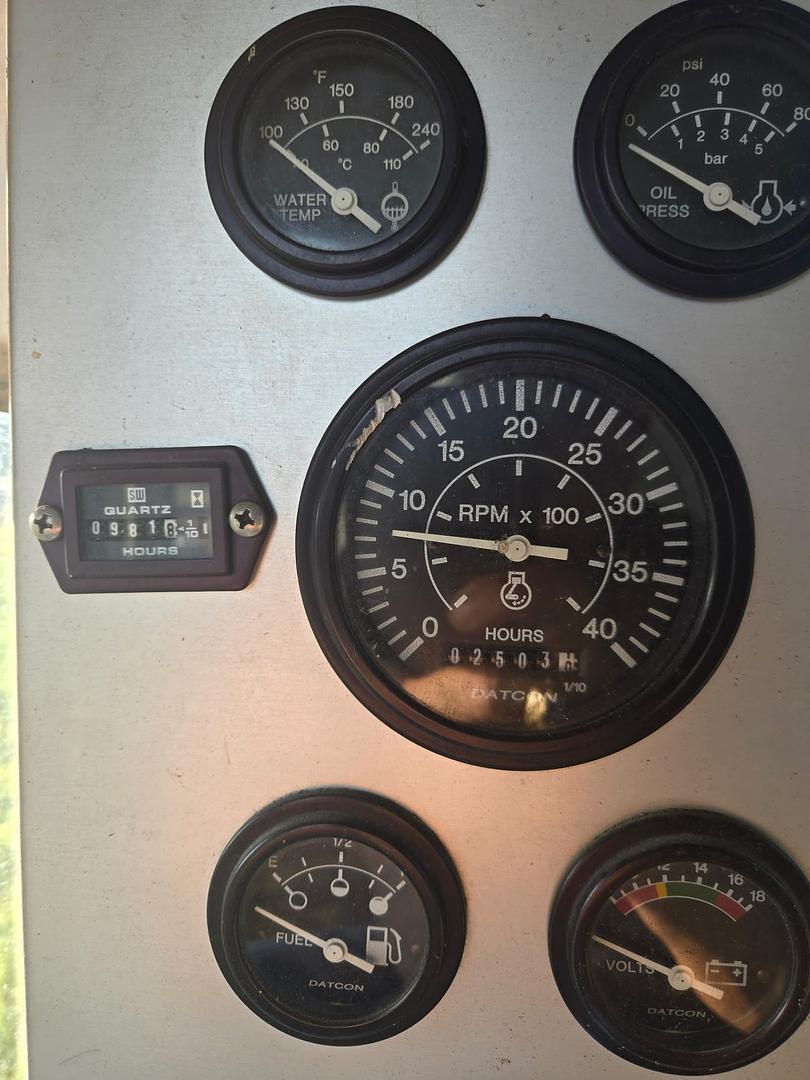
Hour meter readings are useful, but they do not tell the full story. A 3,000-hour turner that processed clean yard waste with regular maintenance can be in better shape than a 1,500-hour machine that ran heavy biosolids with neglected service intervals.
Ask for complete maintenance records. Service logs, oil change receipts, bearing replacement dates, and repair invoices tell you more than the hour meter. A well-documented machine with higher hours is often a better buy than a low-hour machine with no records.
Context matters. Compost turners working food waste and biosolids face more corrosive conditions than those processing yard waste. Salt air at coastal facilities accelerates corrosion. Machines that ran on concrete pads wear differently than those on gravel or dirt.
Ask the seller what materials the machine processed, how many hours per week it ran, and whether it stayed at one site or moved between locations. These details help you evaluate whether the hours are light duty or hard duty.
Red Flags That Should Stop the Deal
Walk away or negotiate aggressively if you see any of these warning signs on a used compost turner.
No maintenance records. A machine with zero documentation has unknown history. You are gambling on condition.
Replaced or disconnected hour meter. If the hour meter was swapped without recording the previous reading, the true hours are unknown.
Frame cracks near the drum mounting area. This is the highest-stress zone on the machine. Frame cracks here are expensive to repair and may recur.
Hydraulic fluid that is black or smells burnt. This indicates chronic overheating. Internal hydraulic component damage is likely.
Excessive play in the drum bearings. You can feel this by grabbing the drum and pushing side to side. Any noticeable movement means the bearings are worn.
Welded drum teeth or paddles. Factory teeth bolt on for easy replacement. Welded-on teeth suggest the mounting points are damaged or the owner avoided proper parts.
Fresh paint everywhere with no explanation. New paint on a used machine sometimes hides cracks, corrosion, or previous damage. Ask why it was painted.
Seller will not allow a running inspection. If the machine cannot be started and operated during your visit, assume there is a reason.
What Affects Compost Turner Resale Value
If you plan to resell the machine eventually, understanding what holds value helps you buy smarter now.
Brand recognition. Vermeer, SCARAB, Wildcat, and Backhus hold resale value well because parts are available and buyers trust them. Lesser-known brands or discontinued models lose value faster. Read our compost turner brands comparison for details on each manufacturer.
Maintenance documentation. A machine with full service records sells faster and for more money than an identical machine with no history.
Condition of high-wear items. New drum teeth, recent bearing replacements, and fresh hydraulic hoses add real value. Buyers pay more for a machine that is ready to work immediately.
Market demand. Self-propelled windrow turners in the mid-size range (10- to 14-foot turning width) have the strongest resale market. PTO-driven turners and very large straddle turners have smaller buyer pools.
Where to Find Used Compost Turners for Sale
The used compost turner market is smaller than the used crusher or screener market. Fewer machines are manufactured each year, so quality used units sell quickly. Here is where to look.
Equipment dealers like GCS. We list used compost turners regularly and inspect or verify condition before listing. Buying through a dealer gives you a point of contact if issues arise. Browse our current compost turners for sale.
Manufacturer dealer networks. Vermeer, SCARAB, and other brands sometimes have used or demo units available through their dealer networks. Ask about certified pre-owned programs.
Equipment auctions. Auctions can produce good deals, but inspection time is limited. Know what you are looking at before you bid. You typically buy as-is with no warranty.
Direct from composting facilities. Municipalities and large composting operations sometimes sell equipment directly when upgrading. These machines often have full maintenance records. Check government surplus sites and contact facilities in your region.
Online marketplaces. Sites like Machinio and Equipment Trader list used compost turners. Listings vary in quality. Always verify condition in person before committing.
Pricing Guide: Used Compost Turner Prices by Type and Age
Used compost turner price depends on the type, age, brand, condition, and hours. The table below shows typical market ranges. Actual prices vary based on specific condition and regional demand.
PTO-Driven Pull-Behind
Age % of New Price Typical Used Price Range 0-5 years old 50-70% of new $15,000-$30,000 5-10 years old 30-50% of new $10,000-$20,000 10+ years old 15-35% of new $8,000-$15,000 Self-Propelled Small/Mid (up to 12 ft)
Age % of New Price Typical Used Price Range 0-5 years old 50-70% of new $80,000-$150,000 5-10 years old 30-50% of new $55,000-$100,000 10+ years old 15-35% of new $40,000-$65,000 Self-Propelled Large (14+ ft)
Age % of New Price Typical Used Price Range 0-5 years old 50-70% of new $150,000-$300,000+ 5-10 years old 30-50% of new $100,000-$200,000 10+ years old 15-35% of new $75,000-$130,000 Brand premiums apply. Vermeer, SCARAB, Wildcat, and Komptech machines typically sell at the higher end of these ranges. Frontier and Brown Bear units often fall mid-range. Lesser-known or discontinued brands sell at the lower end.
Condition overrides age. A 12-year-old Vermeer with new bearings, fresh teeth, and full records can sell for more than a 6-year-old machine with no documentation and visible wear. Do not buy on age alone.
Call us at 770-433-2670 for current pricing on specific makes and models. We track the used compost turner market daily and can tell you whether a price is fair.
Frequently Asked Questions
How much does a used compost turner cost?
Prices range from $8,000 for older PTO-driven models to $300,000 or more for late-model, large self-propelled turners. The most common used compost turners on the market — mid-size self-propelled windrow turners — typically sell between $55,000 and $150,000 depending on age and condition. Call us at 770-433-2670 for pricing on a specific machine.
What brands hold their value best on the used market?
Vermeer, SCARAB, Wildcat, and Backhus hold resale value well. These brands have strong parts availability and buyer trust. Komptech and Brown Bear also maintain solid resale. Check our compost turner brand comparison guide for detailed information on each manufacturer.
How many hours is too many on a used compost turner?
There is no single cutoff number. Condition and maintenance history matter more than hours. A 5,000-hour turner with full service records and recent wear-part replacements can be a better buy than a 2,000-hour machine with no documentation. Always inspect the machine in person regardless of the hour reading.
Should I buy a PTO-driven or self-propelled used compost turner?
PTO-driven turners cost less and make sense for small operations under 5,000 cubic yards per year that already own a suitable tractor. Self-propelled turners are independent machines with more turning capacity and better control. If you process more than 5,000 cubic yards per year, a self-propelled compost turner is usually the better investment.
Can I get financing on a used compost turner?
Yes. Equipment lenders who specialize in heavy machinery regularly finance used compost turners. Terms depend on the machine's age, condition, value, and your credit profile. Visit our financing page or call 770-433-2670 to discuss your options.
What is the most common problem with used compost turners?
Bearing failure is the most frequent issue. The drum bearings handle heavy loads in a corrosive environment full of moisture, dust, and compost gases. Hydraulic system problems rank second, especially on machines where fluid changes were neglected. Ask for bearing and hydraulic service records on any compost turner you consider.
Is it worth buying a used compost turner with high hours if the price is low?
It can be, but only if the maintenance history supports the condition. High-hour machines with full documentation, recent bearing replacements, and new wear parts can deliver years of additional service. High-hour machines with no records are a gamble. Factor in the cost of a full inspection and potential repairs before deciding.
What should I budget for repairs after buying a used compost turner?
Set aside 10 to 15 percent of the purchase price for immediate wear items and deferred maintenance. Common first-year expenses include new drum teeth or paddles ($2,000-$8,000), hydraulic hoses and fittings ($1,000-$3,000), and filters and fluids for a full service ($500-$1,500). Machines in poor condition may need bearing replacement ($5,000-$15,000) or undercarriage work ($15,000-$40,000 for tracked units).
Ready to Find the Right Used Compost Turner?
We have been matching buyers with quality used compost equipment since 1973. We coordinate inspections and verify machine details before listing them. We know the market, we know the brands, and we can tell you whether a deal is fair.
Browse our current inventory of compost turners for sale. Or call us at 770-433-2670 and email Sales@grindercrusherscreen.com to tell us what you need. We will help you find the right used compost turner for your operation, your volume, and your budget.