





Biochar as a Soil Amendment: Benefits, Application Rates, and How It Is Made
Most soil amendment conversations end with compost and lime. Biochar deserves a seat at that table. It holds water, feeds microbes, and locks carbon underground for centuries. And unlike most amendments, it does not break down.
We have been selling heavy equipment since 1973. Over the last several years, we have watched biochar go from a niche curiosity to a mainstream soil improvement product. Our customers in land clearing and forestry produce it daily with the air curtain burners we sell. This guide covers what biochar does in soil, how much to apply, and why it matters for anyone working with dirt.
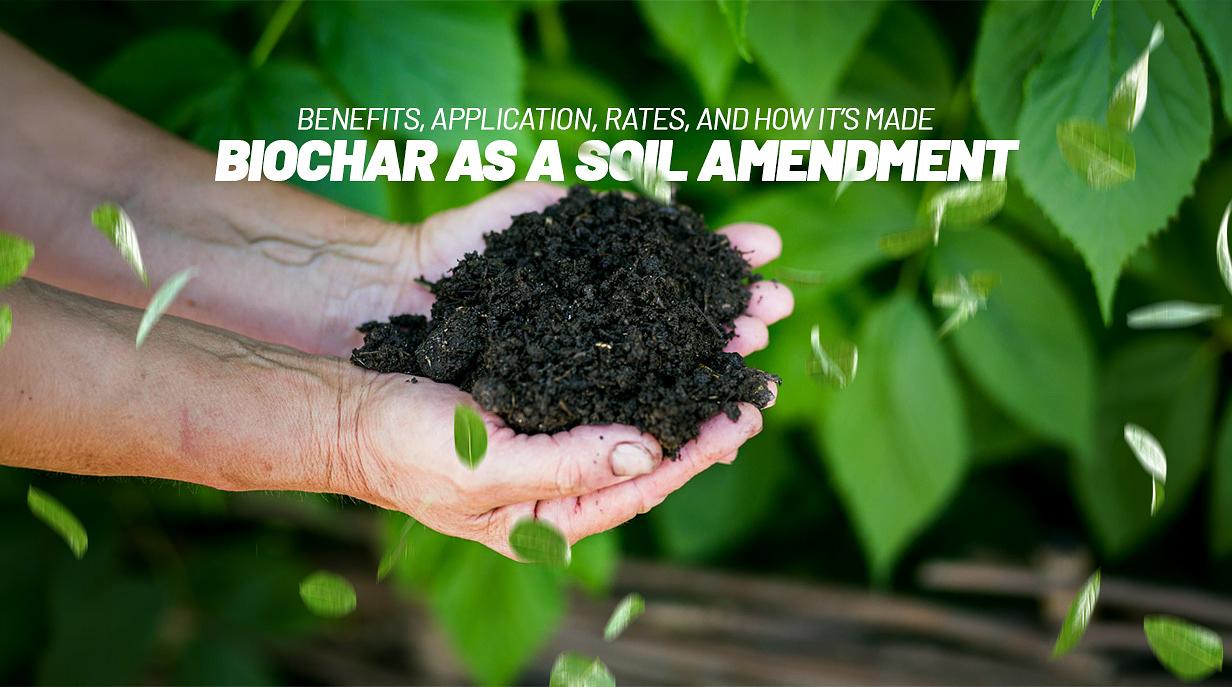
Biochar vs. Wood Ash vs. Charcoal: Key Differences
People confuse these three materials constantly. They all come from burning wood. They do very different things in soil.
Factor Biochar Wood Ash Charcoal How it's made Pyrolysis (low-oxygen, high-heat) Complete combustion (full burn with oxygen) Partial combustion in a kiln for fuel Carbon content 70-90% Less than 5% 75-90% pH Slightly alkaline (7-9) Highly alkaline (10-13) Neutral to slightly alkaline Primary purpose Soil amendment, carbon storage Liming agent, potassium source Fuel — not intended for soil Persistence in soil Hundreds to thousands of years Dissolves within weeks N/A — consumed as fuel Water retention Holds up to 5x its weight Minimal N/A Pore structure Highly porous, microbial habitat Powdery mineral ash, no pores Porous but consumed as fuel Safe application rate 5-10% of soil volume 10-20 lbs per 1,000 sq ft max Not used as soil amendment Biochar is made through pyrolysis — burning organic material at temperatures between 400 and 700 degrees Fahrenheit with little or no oxygen. The heat drives off gases and moisture while preserving the carbon structure. The result is a porous, stable material that resists decomposition.
Wood ash is what remains after a complete burn. It is mostly calcium carbonate and potassium with trace minerals. Wood ash raises soil pH fast, which can help acidic soils but can easily overshoot into excess alkalinity. For detailed guidance on using wood ash in gardens, see our wood ash garden soil guide.
The bottom line: biochar is the only one of these three materials specifically designed to improve soil over the long term.
How Biochar Improves Soil
Biochar is not a fertilizer. It does not feed plants directly. It changes the physical and biological environment of the soil so plants can access more water, more nutrients, and healthier root zones.
Water Retention
Biochar's porous structure acts like a sponge at the microscopic level. Each particle contains thousands of tiny pores that trap and hold water. Research shows biochar can improve soil water retention by up to 20% in sandy and loamy soils.
For farmers working with drought-prone or sandy ground, this means less irrigation and fewer crop losses during dry spells. In container gardens and raised beds, it means less frequent watering. A single application lasts for years because biochar does not decompose the way organic matter does.
Microbial Habitat
Soil microbes are the engine of soil health. They break down organic matter, convert nutrients into plant-available forms, and protect roots from disease. Biochar gives these organisms a physical home.
The pore network inside a biochar particle shelters bacteria and fungi from predators and environmental stress. Microbial populations colonize biochar surfaces within weeks of application. Studies show biochar-amended soils support significantly higher microbial biomass than untreated soils.
This matters for composting operations as well. Adding biochar to active compost piles gives beneficial microbes more surface area, which speeds decomposition and reduces nitrogen loss during the process.
Carbon Sequestration
Every ton of biochar buried in soil represents approximately 3 tons of CO₂ equivalent kept out of the atmosphere. The carbon in biochar is stable for hundreds to thousands of years. Compare that to raw organic matter like compost or crop residue, which releases its carbon back to the atmosphere within a few years as it decomposes.
Carbon credit markets are now paying real money for verified biochar carbon sequestration. Corporate buyers including Microsoft, Google, and JPMorgan Chase have purchased biochar-based carbon removal credits at $150 to $200 per tonne of CO₂ equivalent. For production details and revenue math, read our guide on how to produce biochar with an air curtain burner.
Nutrient Retention and CEC
Biochar has a high cation exchange capacity (CEC). In plain terms, this means it grabs and holds positively charged nutrient ions like potassium, calcium, magnesium, and ammonium. Instead of those nutrients washing out of the soil during rain or irrigation, biochar holds them in the root zone where plants can access them.
This reduces fertilizer waste and runoff. Farmers who apply biochar often report needing 10 to 20% less synthetic fertilizer over time because fewer nutrients are leaching away.
Soil Structure and Drainage
In heavy clay soils, biochar particles create air pockets that loosen compaction and improve drainage. In sandy soils, those same particles hold water that would otherwise pass straight through. Biochar helps both extremes move toward a balanced, loam-like structure. Root penetration improves. Water infiltration rates increase. Surface crusting decreases.
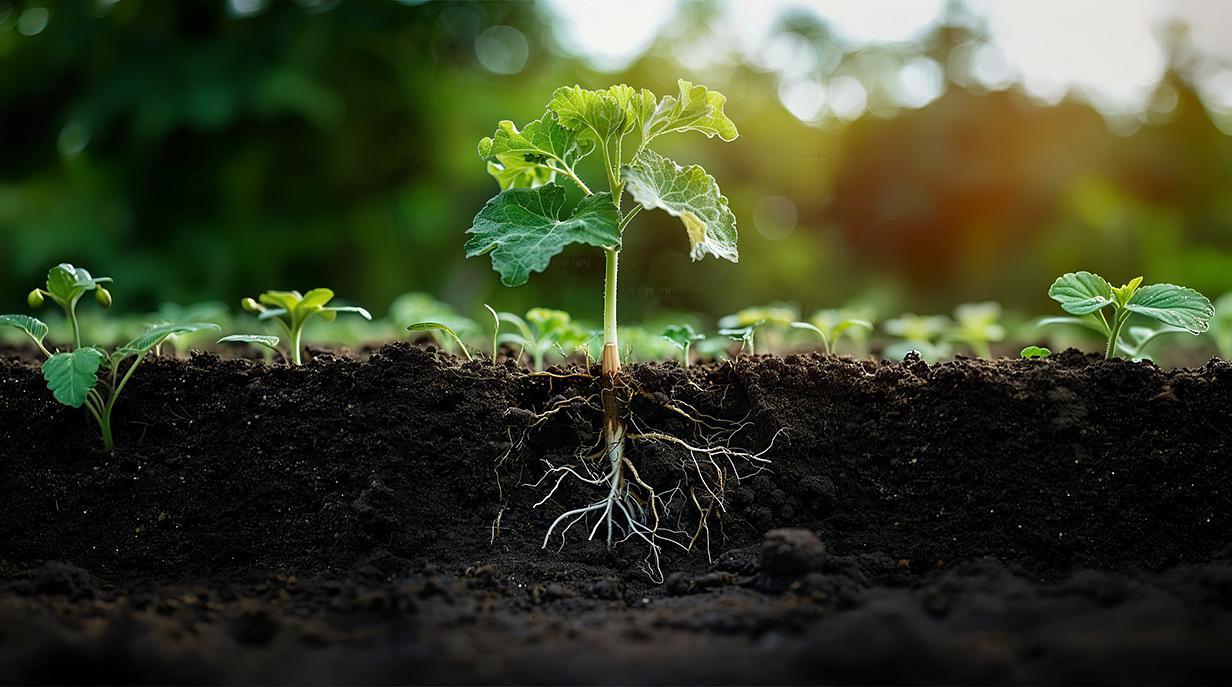
Application Rates by Soil Type
How much biochar to apply depends on your soil type, your goals, and your budget. Here are practical guidelines based on published field trial data and recommendations of the International Biochar Initiative.
Application Rate Notes Garden beds and raised beds 5-10% by volume (1-2 inches mixed into top 6 inches) Mix with compost before adding Sandy agricultural soil 3-5 tons per acre (2-4 CY per 1,000 sq ft) Focus on water retention and CEC Clay agricultural soil 1-3 tons per acre (1-2 CY per 1,000 sq ft) Improves drainage and root penetration Loam agricultural soil 1-2 tons per acre (0.5-1.5 CY per 1,000 sq ft) Maintenance rate for healthy soil Potting mix and containers 10-15% by volume Pre-charge with liquid fertilizer Compost blend 5-10% by volume Add at beginning of composting cycle Turf and lawn 0.5-1 ton per acre Top-dress and aerate; apply with core aeration in fall Reclamation and remediation 5-10 tons per acre Heavy application for damaged soils, mine sites, brownfields Start low, go higher. Begin at the low end of the range, observe results for one growing season, and increase the rate the following year if needed. Biochar is permanent, so over-application is harder to correct than under-application.
One-time vs. annual. Unlike fertilizer or compost, biochar does not need to be reapplied every year. A single heavy application of 3 to 5 tons per acre creates lasting soil improvement. Some growers maintain with 0.5 to 1 ton per acre every few years.
Mixing Biochar with Compost: The Charging Process
Raw biochar straight from production has empty pores and no nutrient load. If you apply it to soil in this state, it can temporarily tie up nitrogen as soil microbes begin colonizing it. This is sometimes called "nitrogen robbery" and it can stunt plant growth for the first few weeks.
The solution is simple: charge your biochar before applying it.
Charging means saturating biochar with nutrients and beneficial microbes before it goes into the ground. The most common method is blending biochar with finished compost and letting the mixture sit for two to four weeks.
How to Charge Biochar
- Mix biochar with compost at a ratio of 1 part biochar to 3-5 parts compost by volume
- Moisten the blend until it holds together when squeezed but does not drip
- Turn the pile every 3-5 days to maintain aerobic conditions
- Wait 2-4 weeks for microbial colonization and nutrient absorption
- Apply the charged blend to soil at your target rate
You can also charge biochar by soaking it in compost tea, worm casting leachate, fish emulsion, or diluted liquid fertilizer for 24 to 48 hours. This is faster than the compost blending method but does not introduce the same diversity of soil biology.
For container growing and potting mixes, soak biochar in a balanced liquid fertilizer (diluted to label strength) overnight before blending it into the mix.
How Biochar Is Produced
Biochar production requires heat and restricted oxygen. There are three main equipment categories, each suited to different scales and operations.
Air Curtain Burners
An air curtain burner is a mobile wood waste disposal unit that creates biochar as a natural byproduct. The bottom of the burn chamber becomes oxygen-starved during operation, producing pyrolysis conditions while the air curtain handles smoke and emissions above.
This is the most practical entry point for contractors, land clearers, and forestry crews. The machine handles your primary job (eliminating brush, logs, and stumps) while generating a sellable byproduct. No second piece of equipment required.
Brands we carry and support:
- Merris WX-5 and WX-8: Built for clean wood waste disposal with biochar recovery. These are the units we sell new.
- Air Burners Inc CharBoss: A dedicated mobile biochar system that automatically extracts and quenches biochar at 300 to 500 pounds per hour.
A standard air curtain burner produces 10 to 15 cubic yards of biochar per day with manual recovery. For the full production process, read our step-by-step guide: How to Produce Biochar with an Air Curtain Burner.
Pyrolysis Retorts and Kilns
Retort systems heat biomass in a sealed chamber where oxygen is excluded by design. These are purpose-built biochar machines that produce higher and more consistent yields (25 to 35% of feedstock by weight) than air curtain burners. They work best in stationary installations where biochar is the primary product.
Retorts and kilns process a wider range of feedstock including crop residue, nut shells, and agricultural waste. They cost more upfront and require prepared feedstock (chipped or uniform-sized material).
Flame Curtain Kilns (Cone Kilns)
Flame curtain kilns are open-top, cone-shaped vessels. A layer of flame across the top surface prevents oxygen from reaching the material below. They are the lowest-cost production method and work well for small-batch producers, farms, and research projects. Entry cost can be under $5,000 for a fabricated unit.
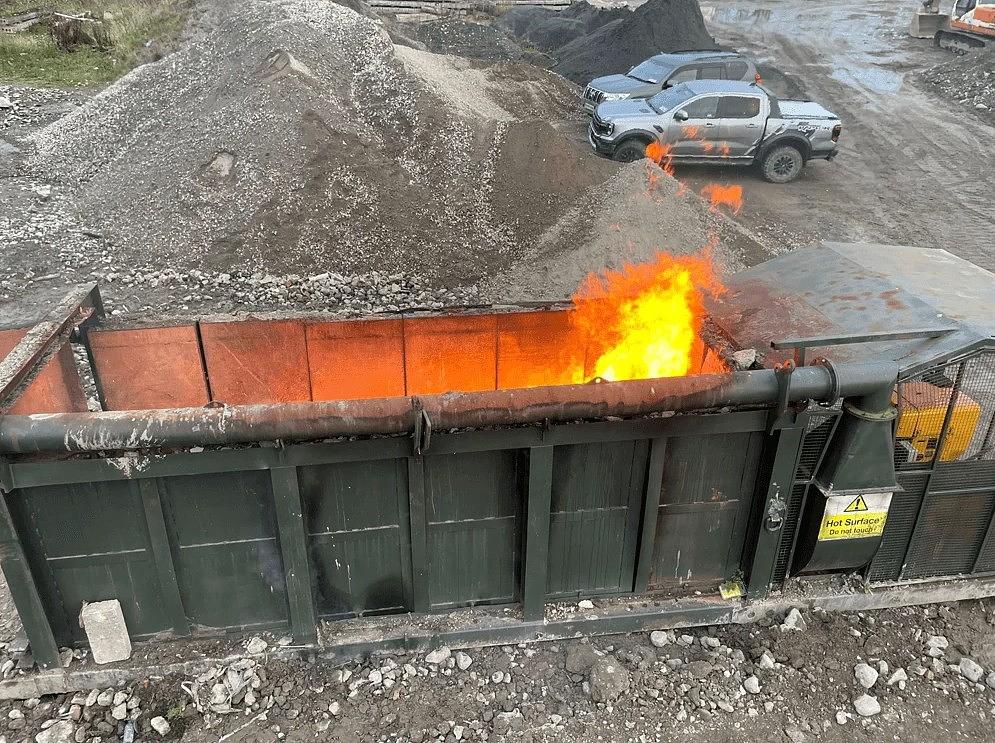
Air Burner: New Merris WX-8
The Business Case: Biochar Revenue Per Ton
Biochar is not just good for soil. It is a profitable product for anyone producing it at scale.
Product Price Range Bulk biochar (soil amendment) $200-$400 per ton Retail bagged biochar $500-$1,000+ per ton Biochar-compost blends $150-$300 per ton Carbon credits $150-$200 per tonne CO₂e Premium certified organic biochar $600-$1,200 per ton Example daily revenue from an air curtain burner: A standard unit producing 10 cubic yards of biochar per day at a bulk rate of $120 to $125 per cubic yard generates $1,200 to $1,250 per day — or $24,000 to $25,000 per month on a 20-day work schedule. This revenue is on top of the primary value the machine provides: eliminating wood waste without trucking or tipping fees.
Operators who bag and brand their biochar for retail sale can push margins significantly higher. A cubic yard of biochar broken into 1-cubic-foot bags at $15 to $25 per bag generates $400 to $675 per cubic yard instead of $120 to $125 bulk.
For more detail on the economics, read our guide on how to produce biochar with an air curtain burner.
Frequently Asked Questions
Is biochar the same as charcoal?
No. Biochar and charcoal are both produced through pyrolysis, but they are made for different purposes. Charcoal is manufactured as a fuel to be burned. Biochar is manufactured as a soil amendment to be buried. Charcoal briquettes often contain binders and lighter fluid additives that are harmful to soil.
How long does biochar last in soil?
Biochar is stable in soil for hundreds to thousands of years. Unlike compost, mulch, or other organic amendments that decompose within a few years, biochar's carbon structure resists microbial breakdown. A single application creates a permanent improvement to your soil.
Can you apply too much biochar?
Yes, but it takes a lot. Application rates above 15 to 20% by volume can cause problems including excessive drainage in already sandy soils, pH shifts in sensitive crops, and temporary nitrogen tie-up. Stay within the recommended ranges and start at the low end.
Does biochar replace fertilizer?
No. Biochar is not a fertilizer. It contains very little nitrogen, phosphorus, or potassium on its own. What biochar does is hold nutrients from other sources (compost, manure, synthetic fertilizers) in the root zone so plants can access them more efficiently. Many growers find they can reduce fertilizer inputs by 10 to 20% over time.
Should I charge biochar before applying it?
Yes, especially for garden beds and containers. Uncharged biochar can temporarily tie up soil nitrogen as microbes colonize it. Charging takes 2 to 4 weeks with compost or 24 to 48 hours with a liquid soak.
What is the best biochar for garden soil?
Look for biochar with a carbon content above 70%, a pH between 7 and 9, and low ash content (below 15%). Biochar produced from clean hardwood at temperatures between 500 and 700 degrees Fahrenheit generally meets these standards. OMRI-listed biochar is certified for organic production.
Can I make biochar at home?
You can produce small batches using a two-barrel retort method or a flame curtain kiln. For anything beyond small garden quantities, you need production equipment. An air curtain burner produces 10 to 15 cubic yards per day while handling wood waste disposal at the same time.
Is wood ash a good substitute for biochar?
No. Wood ash and biochar serve completely different functions. Wood ash is a liming agent that raises soil pH and supplies potassium and calcium. It dissolves quickly and has no lasting soil structure benefits. Biochar improves water retention, microbial habitat, and nutrient-holding capacity for centuries. If your soil needs both pH adjustment and long-term structural improvement, apply wood ash and biochar separately at appropriate rates.
Start Producing or Buying Biochar
Whether you are a farmer looking to improve your soil, a landscaper sourcing premium amendments, or a contractor looking to turn wood waste into a revenue stream, biochar makes financial and agronomic sense.
We sell air curtain burners from Merris and support equipment from Air Burners Inc that produce biochar every day in the field. We have been helping equipment operators find the right machines since 1973. If you want to start producing biochar or need help choosing the right burner for your operation, we are here to help.
Call us at 770-433-2670 or email Sales@grindercrusherscreen.com to talk with our team. Browse our current air curtain burner inventory to see what is available.