





Crusher Buckets for Skid Steers: What You Need to Know Before Buying
Crusher buckets have exploded in popularity over the past few years, and for good reason. They let you crush concrete, brick, and soft rock right on the job site using equipment you already own. No separate machine. No extra trailer. Just an attachment on the end of your skid steer.
But there is a catch. A skid steer crusher bucket is not a standalone crusher. It has real limitations in power, throughput, and what materials it can handle. If you buy one expecting jaw crusher production, you will be disappointed. If you understand what it actually does well, it can be a profitable tool.
We have been selling crushing equipment since 1973. We sell standalone crushers for production work and talk with contractors daily who are evaluating whether an attachment or a dedicated machine is the right move. This guide gives you the honest picture on skid steer crusher buckets so you can decide if one fits your operation.
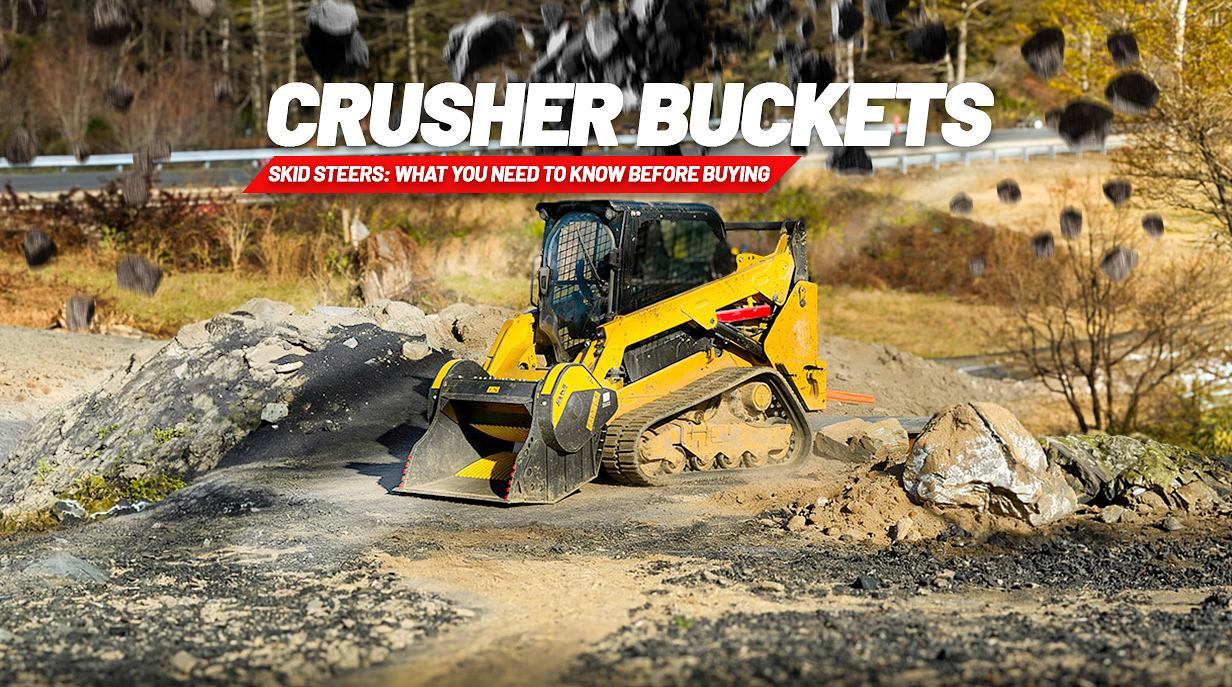
Can a Skid Steer Run a Crusher Bucket?
Yes, but not every skid steer can. Crusher buckets demand serious hydraulic flow and machine weight. If your skid steer does not meet the minimums, the bucket either will not work at all or will crush so slowly that it is not worth the effort.
Hydraulic Requirements
A crusher bucket needs high-flow hydraulics. Most crusher bucket manufacturers require 25 to 30+ GPM (gallons per minute) of auxiliary hydraulic flow. Some smaller models (like the MB-L120) can operate at 25 GPM, but larger models need 30 to 40+ GPM. Standard-flow skid steers typically deliver 15 to 24 GPM, which is not enough for most crusher buckets.
If your skid steer does not have high-flow hydraulics, you will need to either upgrade the machine or choose a different skid steer. This is not optional. The hydraulic flow drives the crushing jaws or rotor. Without enough flow, the bucket stalls on material or cycles so slowly that you are barely producing anything.
Check your skid steer's spec sheet for auxiliary hydraulic flow rate. If it says "high flow" or lists 30+ GPM, you are likely in range. If it lists "standard flow" at 15 to 22 GPM, that machine will not run most crusher buckets effectively.
Machine Weight
The skid steer itself needs to be heavy enough to handle the bucket. Most crusher bucket manufacturers recommend a carrier machine weighing at least 7,000 to 8,000 pounds. Smaller skid steers lack the stability and lifting capacity to work safely with a loaded crusher bucket.
A crusher bucket weighs 1,500 to 3,500 pounds depending on the model. Add a full load of concrete or rock and the total weight on the arm climbs fast. An undersized skid steer tips forward, cannot lift the bucket high enough to dump, or simply cannot maneuver safely.
The larger compact track loaders (CTLs) in the 8,000 to 11,000 pound class are better suited for crusher buckets than wheeled skid steers of the same rated capacity. Tracks distribute weight better and provide more stability.
Hydraulic Pressure
Beyond flow rate, hydraulic pressure matters. Most crusher buckets need 3,000 to 4,000+ PSI of operating pressure. Most modern skid steers with high-flow packages meet this threshold, but verify against the bucket manufacturer's specifications before purchasing.
Requirement Minimum for Crusher Bucket Typical Standard Skid Steer Typical High-Flow Skid Steer Hydraulic flow (GPM) 30+ GPM 15-25 GPM 30-40+ GPM Operating pressure (PSI) 3,000-4,000+ PSI 3,000-3,500 PSI 3,000-4,500 PSI Machine weight 7,000+ lbs 5,000-7,000 lbs 7,500-11,000 lbs Rated operating capacity 2,000+ lbs 1,200-2,000 lbs 2,000-3,500 lbs Bottom line: You need a full-size skid steer or compact track loader with a high-flow hydraulic package. A small or mid-size standard-flow machine will not cut it.
What a Skid Steer Crusher Bucket Can and Cannot Crush
This is where honesty matters. A skid steer crusher bucket works well on certain materials and fails on others. Knowing the difference saves you from buying the wrong tool.
Materials It Handles Well
Concrete (non-reinforced and lightly reinforced). This is the bread and butter application. A crusher bucket breaks down concrete slabs, sidewalks, footings, and small demolition debris into reusable aggregate. Lightly reinforced concrete with thin rebar works, though the rebar needs to be pulled out with a magnet afterward.
Brick and block. CMU blocks, bricks, and masonry crush easily. These are softer materials that a crusher bucket processes without excessive wear.
Soft rock. Limestone, sandstone, and other softer natural stone can be crushed in a bucket. These materials fracture cleanly and do not put extreme stress on the jaws.
Asphalt (small pieces). Some crusher buckets handle broken asphalt chunks, though throughput drops compared to concrete or rock.
Materials It Does NOT Handle
Hard granite, basalt, or quartzite. These materials are too hard and abrasive for a crusher bucket on a skid steer. The machine does not have the power to crush them efficiently, and jaw wear will be extreme. You need a standalone jaw crusher or impact crusher for hard rock.
Heavily reinforced concrete. Thick rebar, wire mesh, and heavy structural steel jam the crushing jaws. If the concrete has #6 rebar or larger on tight spacing, you will spend more time clearing jams than crushing.
Large boulders. The jaw opening on a skid steer-sized crusher bucket is limited, typically 12 to 20 inches wide. You cannot feed material larger than the opening.
Mixed C&D debris with wood, plastic, and metal. A crusher bucket is not a sorting tool. Mixed debris jams the jaws and damages the bucket. Clean your material before feeding it.
A crusher bucket on a skid steer is a tool for processing clean, moderately soft material in limited quantities. That is a useful niche, but it is not a substitute for a production crusher. For more on how standalone crushers handle tougher materials, see our jaw crusher guide.
Realistic Production Rates
This is the section where most manufacturer marketing gets optimistic. We will give you the real numbers.
A skid steer crusher bucket realistically produces 5 to 15 cubic yards per hour of crushed material. That range depends on the material type, feed size, desired output size, the operator's skill, and the specific bucket model.
Here is what affects throughput:
Material hardness. Soft brick and block crush faster than concrete. Concrete crushes faster than natural stone. The harder the material, the slower the cycle.
Feed size vs jaw opening. If the material barely fits in the jaw opening, each cycle takes longer. Smaller feed material processes faster because the jaws close less distance per cycle.
Output size setting. A tighter jaw setting (smaller output) means more crushing cycles and slower throughput. If you need 3/4-inch minus product from a crusher bucket, expect throughput at the low end. If you accept 3-inch minus, throughput improves.
Operator skill. An experienced operator who feeds the bucket efficiently, positions the machine well, and keeps a steady rhythm produces more than someone learning on the job. This factor alone can double output.
Material Realistic Output (CY/hr) Notes Brick and block 10-15 CY/hr Softer material, faster cycling Non-reinforced concrete 8-12 CY/hr Most common application Lightly reinforced concrete 5-10 CY/hr Rebar slows processing, needs magnet Soft rock (limestone) 5-10 CY/hr Harder than concrete, slower feed Asphalt chunks 5-8 CY/hr Flexible material, can slow jaws At 8 to 10 cubic yards per hour on concrete, a full day of crushing (8 hours) yields roughly 65 to 80 cubic yards. That is not a lot compared to even a small standalone crusher, which can produce 50 to 100+ tons per hour. But for a landscaper, small demolition contractor, or site work contractor who needs to crush material occasionally, it can pay for itself.
Best Crusher Bucket Brands for Skid Steers
Several manufacturers build crusher bucket attachments sized for skid steers and compact track loaders. Here are the brands we see most often in the field.
MB Crusher
MB Crusher is the most recognized name in the crusher bucket market. The Italian manufacturer has been building crusher attachments since 2001 and offers models specifically sized for skid steers (the MB-L series). MB buckets are jaw-type crushers with hydraulic jaw adjustment for changing output size. They are well-built, widely available, and have a strong dealer and parts network.
MB also builds crusher buckets for excavators in larger sizes. If you start with a skid steer model and later move to an excavator-mounted bucket, staying within the MB line simplifies parts and service.
ALLU
ALLU, a Finnish manufacturer, builds transformer buckets that combine screening and crushing functions. Their crusher buckets use a different approach than traditional jaw-type buckets — ALLU units process material through rotating drums with interchangeable blades. This design works well for softer materials like C&D debris and contaminated soils.
ALLU buckets are versatile. The same frame accepts different drum and blade configurations for crushing, screening, mixing, and aerating. If your work crosses multiple applications, that flexibility has value. Browse our ALLU attachments.
Simex
Simex, another Italian manufacturer, builds a range of crusher buckets for skid steers and excavators. Their CBE line includes models for skid steers in the 7,000 to 12,000 pound class. Simex buckets use a rotary rotor design and are known for aggressive crushing action.
Simex is less widely distributed than MB in North America, so parts and service availability varies by region. If you are considering a Simex bucket, check dealer coverage in your area first.
Choosing Between Brands
All three brands build quality equipment. The main differences come down to availability of parts and service in your area, the specific model that fits your skid steer, and price. We recommend getting specs from each manufacturer, confirming compatibility with your machine, and checking local dealer support before deciding.
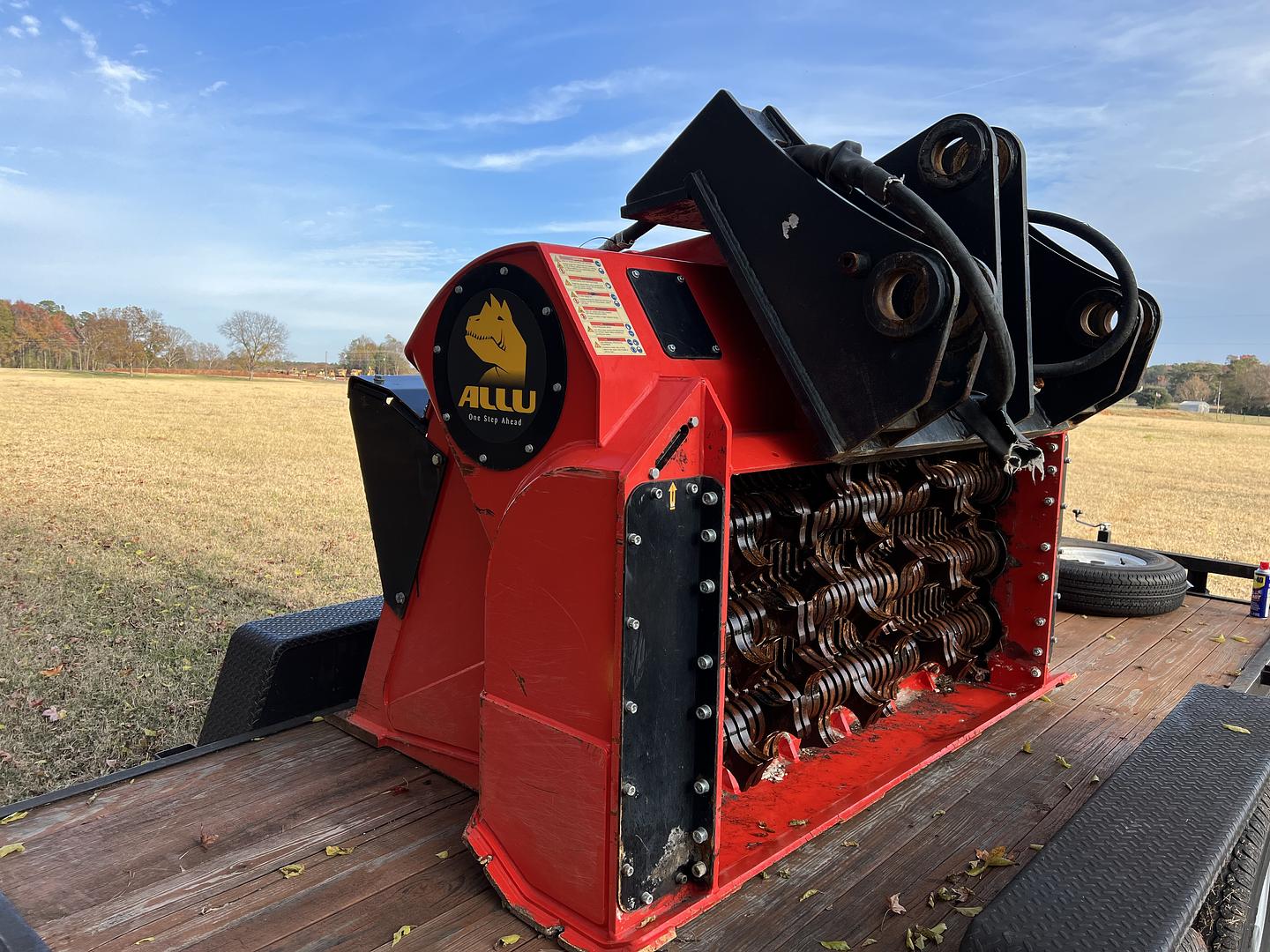
Attachment above: 2019 ALLU DH3-17
Skid Steer Crusher Bucket vs Screening Bucket
These two attachments get confused often, but they do completely different jobs. Understanding the difference prevents you from buying the wrong tool.
What Each Does
A crusher bucket reduces the size of material. It takes large chunks of concrete, brick, or rock and crushes them into smaller aggregate. It changes the size of the material through compression.
A screening bucket separates material by size. It takes mixed material (like topsoil with rocks, or excavated dirt with debris) and shakes it through a mesh to separate fines from oversize. It does not change the size of anything. It sorts what is already there.
When to Use Each
Crusher Bucket Screening Bucket Purpose Reduce material size Separate material by size Input Concrete, brick, rock chunks Topsoil, dirt, compost, mixed soil Output Crushed aggregate (1 product) Fines + oversize (2 products) Common use Demolition recycling, base material Topsoil cleaning, site prep, landscaping Typical throughput 5-15 CY/hr 15-30 CY/hr A demolition contractor tearing out a concrete slab needs a crusher bucket to turn that slab into reusable base material. A landscaper cleaning topsoil needs a screening bucket to separate rocks and roots from the good dirt.
Some operators own both. The crusher bucket processes demo material on one job. The screening bucket cleans topsoil on the next. They are complementary tools, not competitors.
For a detailed comparison of screening options, read our guide to choosing the right screening equipment. If you are considering a screening bucket for topsoil work, that guide covers throughput, cost, and when a standalone screener makes more sense.
When a Standalone Crusher Makes More Sense
A skid steer crusher bucket works for small-volume, occasional crushing. But there is a clear point where it stops making financial sense and a standalone crusher takes over.
Volume Threshold
If you need to crush more than roughly 50 tons per hour, or if you are crushing all day every day, a crusher bucket on a skid steer is too slow. At 5 to 15 cubic yards per hour, the bucket simply cannot keep up with production-scale demand.
A small standalone jaw crusher handles 50 to 150 tons per hour. A mid-size portable impact crusher handles 100 to 300+ tons per hour. The throughput gap between a crusher bucket and even a small standalone machine is enormous.
Hard Rock
If your material is hard granite, basalt, or other abrasive rock, a skid steer does not have the power to crush it efficiently through a bucket attachment. A standalone jaw crusher with a heavy flywheel and purpose-built crushing chamber handles hard rock all day. The wear costs on a crusher bucket in hard rock make the economics unworkable.
Daily Production Work
Contractors who run a crushing operation as a primary business need a dedicated machine. A recycling yard that processes concrete five days a week. A quarry that produces road base continuously. An aggregate operation filling trucks. These applications demand standalone crushers.
A crusher bucket ties up your skid steer for hours. That machine cannot do anything else while it is crushing. A standalone crusher frees up the skid steer for loading, grading, and other work.
The Upgrade Path
Many operators start with a crusher bucket and graduate to a standalone crusher as volume grows. That is a smart approach. The bucket lets you test the market, prove demand, and generate revenue while you evaluate whether a full machine is justified.
When you are ready for that step, we carry new and used standalone crushers in every size range. We have helped hundreds of contractors make that transition from attachment to dedicated machine. Call us at 770-433-2670 and we can walk through what fits your volume and your budget.
Cost Considerations
Crusher Bucket Price
Skid steer crusher buckets typically cost between $15,000 and $45,000 depending on the brand, model, and size. Smaller units for lighter-duty work start at the low end. Larger models from premium brands like MB Crusher run toward the top.
Used crusher buckets are available but less common on the secondary market than used standalone crushers. When they do appear, pricing depends heavily on jaw wear and overall condition. Browse our listings for current availability.
Operating Costs
Jaw wear is the primary ongoing expense. Crusher bucket jaws are smaller than standalone crusher jaws and may need replacement sooner, especially if you are processing abrasive material. Budget for jaw replacements based on the manufacturer's guidance for your material type.
Hydraulic maintenance is also a factor. Running a crusher bucket puts sustained high-load demand on your skid steer's hydraulic system. Fluid changes, filter replacements, and hose inspections should happen more frequently when running a crusher bucket regularly.
Cost Per Yard Math
At 8 cubic yards per hour and $40 per hour in operating costs (fuel, operator, wear), you are looking at roughly $5 per cubic yard in direct production cost. If you can sell or reuse that crushed material at $15 to $25 per cubic yard (typical for recycled base material), the margins are there for small-volume work.
The math changes when you compare it to a standalone crusher. A used portable jaw crusher producing 75 tons per hour has a much lower cost per ton. But the upfront investment is $100,000 to $300,000+ versus $20,000 to $40,000 for a bucket. Match the tool to your volume.
Frequently Asked Questions
What size skid steer do I need for a crusher bucket?
You need a full-size skid steer or compact track loader weighing at least 7,000 to 8,000 pounds with a high-flow hydraulic package delivering 30+ GPM. Smaller machines lack the hydraulic flow to power the crushing jaws and the weight to handle the loaded bucket safely. Check the crusher bucket manufacturer's compatibility chart for your specific machine before buying.
How much does a skid steer crusher bucket cost?
Prices range from $15,000 to $45,000 for new units, depending on brand, model, and crushing capacity. MB Crusher, ALLU, and Simex are the most common brands for skid steer-sized models. Used units are less common but do appear on the market at lower price points. Contact us at 770-433-2670 for current pricing on models that fit your machine.
Can a crusher bucket replace a jaw crusher?
No. A crusher bucket supplements a crusher for small-volume, occasional work. A skid steer crusher bucket produces 5 to 15 cubic yards per hour. A standalone jaw crusher produces 50 to 500+ tons per hour. If you need daily production, high throughput, or the ability to crush hard rock, you need a standalone crusher. A bucket works well for demolition contractors who need to process small amounts of concrete on site.
What can you crush with a skid steer crusher bucket?
Concrete (non-reinforced and lightly reinforced), brick, CMU block, soft rock like limestone and sandstone, and small asphalt chunks. You cannot effectively crush hard granite, basalt, heavily reinforced concrete, or mixed debris with wood and metal. The material must be clean and fit within the bucket's jaw opening, which is typically 12 to 20 inches wide.
Is a crusher bucket worth it for a small contractor?
It can be, if the work is there. A demolition contractor who regularly tears out concrete slabs, sidewalks, and footings can turn that waste into reusable base material on site. That saves hauling costs and disposal fees while producing a product you can use or sell. The key is having enough recurring work to justify the $15,000 to $45,000 investment. If you only crush a few times a year, renting may make more sense than buying.
How does a crusher bucket compare to a screening bucket?
They do different jobs. A crusher bucket reduces material size, turning big chunks into small aggregate. A screening bucket separates material by size, sorting fines from oversize without changing anything. A demolition contractor who needs to crush concrete wants a crusher bucket. A landscaper who needs to clean topsoil wants a screening bucket. Some contractors own both for different applications. Read our guide to choosing the right screening equipment for more on screening options.
Talk to Us About Crushing Equipment
Whether a crusher bucket fits your operation or you are ready for a standalone machine, we can help you figure out the right move. We carry crushers in every size and configuration, from compact portable units to full production plants. We have been doing this since 1973 and we have seen every application.
Call 770-433-2670 or email Sales@grindercrusherscreen.com to discuss your situation. We will give you a straight answer on what equipment makes sense for your volume, your material, and your budget.