





What Is a Jaw Crusher? A Complete Guide to Buying, Sizing, and Operating
Jaw crushers are the most common primary crushers in the aggregate and demolition industries. They break large pieces of rock, concrete, brick, block, and C&D debris into smaller, more manageable sizes. If you run a quarry, demolition site, or recycling operation, chances are a jaw crusher sits at the front of your process.
At GCS, we have been selling jaw crushers for sale since 1973. We are a master distributor for new equipment and a broker for used machines. This guide covers how jaw crushers work, how to pick the right size, and what to look for if you are buying used.
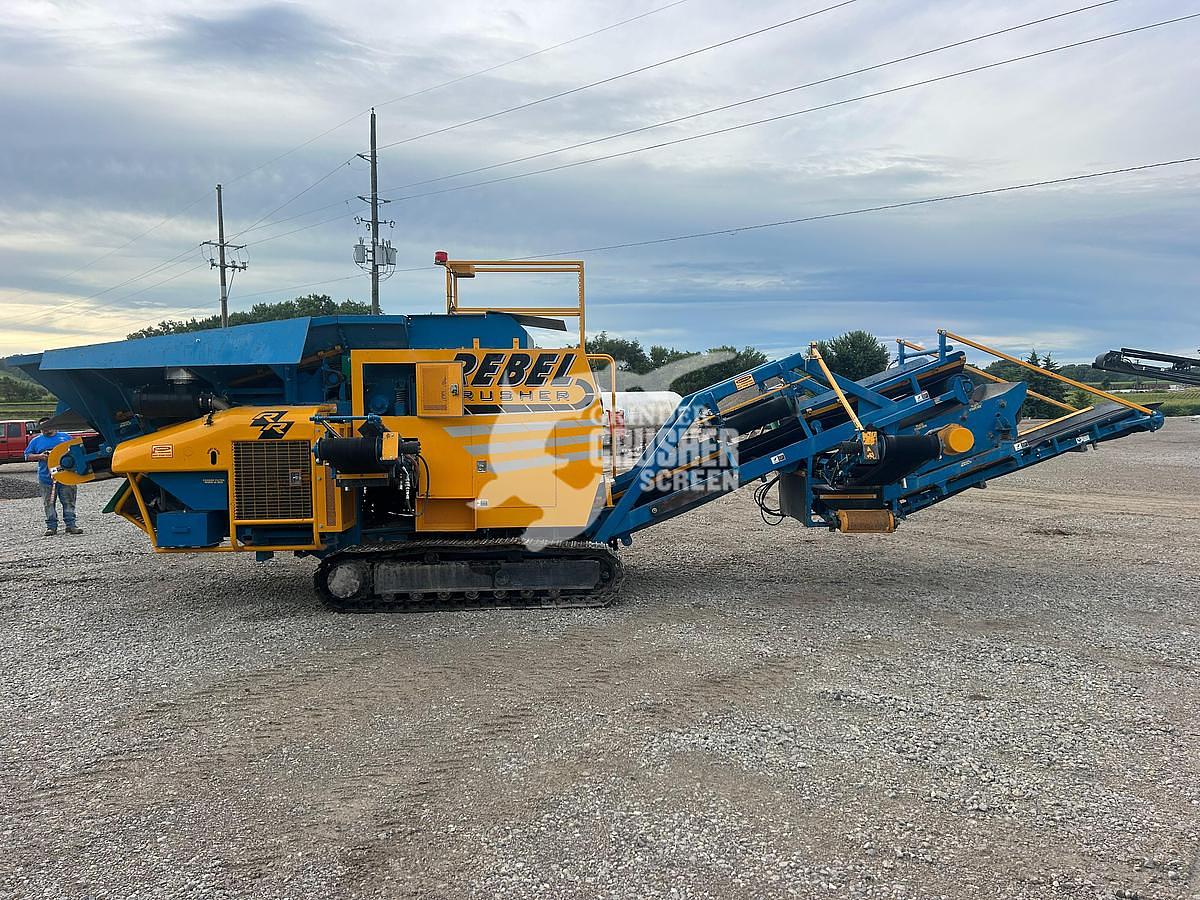
How Does a Jaw Crusher Work?
A jaw crusher uses two heavy steel plates to crush material through compression. One plate is fixed to the frame. The other swings back and forth on an eccentric shaft. Material feeds into the V-shaped opening at the top, called the feed opening. As the swing jaw moves toward the fixed jaw, it compresses and fractures the material. When the swing jaw pulls back, crushed material drops further into the chamber.
The gap at the bottom of the chamber is called the CSS (closed side setting). The CSS determines the maximum size of the finished product. Most modern jaw crushers let you adjust the CSS with hydraulic wedges or manual shims.
Jaw crushers achieve a reduction ratio of roughly 6:1 to 8:1. That means a crusher with a 30-inch feed opening typically produces material in the 4- to 5-inch range. For finer product, you need a secondary crusher such as a cone or impact crusher downstream.
Jaw Plates and Wear Parts
The jaw plates (also called jaw dies) are the primary wear parts. They are made from manganese steel, which work-hardens under impact. As material passes through, the jaw dies absorb the punishment instead of the frame. Replacing jaw dies is the most frequent maintenance task on any jaw crusher. A well-run operation tracks jaw die wear and flips or replaces them on a set schedule. Browse our jaw crusher parts to find replacement jaw dies and other wear components.
What Materials Can a Jaw Crusher Handle?
Jaw crushers excel at processing hard, abrasive materials. Common applications include:
- Quarry rock: Granite, limestone, basalt, sandstone, and other natural stone
- Concrete: Reinforced or plain concrete from demolition projects
- Brick and block: Masonry debris from building teardowns
- C&D debris: Mixed construction and demolition material (minus wood, plastic, and metals)
- Ore: Mining operations use jaw crushers for primary reduction of hard ore
What a Jaw Crusher Cannot Crush
Jaw crushers do not handle asphalt. Asphalt is soft and sticky at warm temperatures. It clogs the chamber and gums up the jaw dies instead of fracturing cleanly. If you need to process asphalt millings or reclaimed asphalt pavement (RAP), you need an impact crusher. Impact crushers use high-speed rotors and blow bars to shatter material on impact, which works well for asphalt and softer materials.
This is one of the most common mistakes we see buyers make. They buy a jaw crusher thinking it will handle everything on a demolition site, including asphalt. It will not. Plan your crusher selection around the materials you actually need to process.
How to Choose the Right Jaw Crusher Size
Picking the right jaw crusher depends on three factors: feed size, required throughput, and desired product size.
1. Feed Size
The feed opening of the crusher must accept your largest pieces of material. Measure the biggest chunks your excavator or loader will drop into the hopper. The feed opening width should be at least 25% larger than your maximum feed size. If you are processing 24-inch concrete slabs, you need a crusher with a feed opening of at least 30 inches.
2. Throughput (Tons Per Hour)
Every jaw crusher has a rated capacity in tons per hour (TPH). This rating depends on the CSS setting, the type of material, and how consistently you feed the crusher. Manufacturers publish capacity charts by CSS setting. Match the rated TPH to your production target, and leave some margin. Running a jaw crusher at 100% rated capacity all day will accelerate wear and stress the machine.
3. Desired Product Size
The CSS controls your product size. A tighter CSS means smaller product but lower throughput. A wider CSS means more tons per hour but coarser material. If you need a finished product smaller than 1.5 to 2 inches, plan on a secondary crusher or a closed-circuit setup with a screen returning oversize material to the crusher.
Portable vs. Stationary
Jaw crushers come in stationary, skid-mounted, wheeled portable, and track-mounted configurations. Stationary plants suit quarries and permanent recycling yards. Track-mounted jaw crushers work best on demolition sites and road jobs where you move frequently. Wheeled portable units split the difference. Consider how often you relocate before choosing a platform.
Browse our full inventory of jaw crushers for sale or see all crushers to compare jaw, cone, and impact models.
Jaw Crusher Advantages
Jaw crushers remain the default primary crusher for good reasons:
- Simple design: Fewer moving parts mean less downtime and lower maintenance costs compared to impact crushers or cone crushers in primary applications.
- Low dust production: Compression crushing generates significantly less dust than impact crushing. This matters for permit compliance and operator health.
- Low operating cost per ton: Jaw dies last a long time in most applications. Fuel or electrical consumption per ton is competitive with any crusher type.
- Handles hard material well: Jaw crushers thrive on the hardest rock and concrete. They do not care about rebar in concrete the way some other crushers do.
Jaw Crusher Limitations
No machine does everything. Know these limitations before you buy:
- Coarser product: As a primary crusher, a jaw crusher produces material that typically needs secondary processing to make spec aggregate. Small jaw crushers (under 20-inch feed) can produce a tighter product but at lower throughput.
- Lower reduction ratio: A 6:1 to 8:1 ratio means you may need a second stage to reach your target size.
- No asphalt: As covered above, jaw crushers are not built for asphalt recycling. Use an impact crusher for that.
- Shape: Jaw-crushed material tends to be flatter and more elongated than impact-crushed product. If cubical shape matters for your spec, plan accordingly.
What to Check When Buying a Used Jaw Crusher
Buying a used jaw crusher can save a significant amount of money compared to new. But used equipment carries risk. Here is what to look for before you commit.
Inspection Checklist
GCS is a broker for used equipment. We connect buyers and sellers and can help arrange third-party inspections. We do not perform inspections ourselves. Any reputable used equipment purchase should include a thorough mechanical inspection. Here are the critical items:
Wear Plates and Jaw Dies — Check the jaw dies for remaining life. Measure the thickness at multiple points. Look for uneven wear patterns, which can indicate feed problems or a bent pitman. Ask if the dies have been flipped already. Worn-out jaw dies are not a deal-breaker since they are a normal replacement item. But they affect the purchase price.
Toggle Seat and Toggle Plate — The toggle plate is a sacrificial component designed to break before the frame does if the crusher encounters an uncrushable object. Check the toggle seat surfaces for pitting and deformation. Inspect the toggle plate for cracks. A worn toggle system causes sloppy CSS adjustment and inconsistent product size.
Bearings and Lubrication System — Bearings are the most expensive wear item on a jaw crusher after the frame itself. Listen for rumbling or grinding when the crusher runs. Check the lubrication system for leaks, correct oil level, and proper grease distribution. Ask for oil analysis records if available.
Hydraulic CSS Adjustment — If the crusher has hydraulic CSS adjustment, cycle it through the full range during the inspection. Look for leaking cylinders, slow response, or jerky movement. Manual shim adjustment is simpler but more labor-intensive to change.
Frame Cracks and Welds — This is the most critical item. A cracked frame can cost more to repair than the crusher is worth. Look closely at the main frame, especially around the bearing housings, toggle area, and feed opening. Look for signs of weld repairs. Some frame repairs are acceptable if done by a qualified shop. Others are red flags.
Electrical and Controls — Check the motor, starter, and control panel. Look for corroded wiring, overheated contactors, and missing safety interlocks. On diesel-hydraulic portable units, inspect the power unit, hydraulic pumps, and engine separately.
Hours and Maintenance History
Always ask for the hour meter reading and maintenance records. A jaw crusher with 5,000 hours and complete service records is a better buy than one with 2,000 hours and no paperwork. Missing records usually mean deferred maintenance.
Key things to look for in the records:
- Jaw die replacement intervals (tells you what material was being crushed)
- Bearing replacements or rebuilds
- Toggle plate replacements (frequent replacements may indicate tramp metal problems)
- Any frame repairs
- Oil analysis history
Price Ranges for Used Jaw Crushers
Used jaw crusher prices vary widely based on size, age, brand, condition, and configuration. Small portable units with feed openings under 20 inches start at a lower price point. Mid-size units (24- to 36-inch feed) command a higher price. Large stationary or track-mounted jaw crushers with 42-inch or larger feed openings represent a significant investment even on the used market.
Age matters, but condition matters more. A well-maintained 15-year-old jaw crusher from a quality manufacturer can outperform a neglected 5-year-old machine. Contact us at 770-433-2670 for current pricing on specific makes and models in our inventory.
Browse our current used jaw crushers to see what is available.
Common Problems With Used Jaw Crushers
These are the issues we see most often on used machines:
- Bearing wear: The most common major repair. Worn bearings cause excessive vibration, poor product quality, and eventual catastrophic failure if ignored.
- Toggle failures: Repeated toggle plate breaks suggest the machine was fed tramp metal regularly or the CSS was set too tight for the application.
- Frame fatigue: Micro-cracks around bearing housings and toggle areas develop over thousands of hours. They start small and grow. Catch them early or they become frame replacements.
- Worn cheek plates and side liners: Often overlooked during a quick inspection. Worn cheek plates allow material to bypass the jaw dies and accelerate wear on the frame.
- Stretched or damaged pitman: The pitman (swing jaw assembly) takes enormous cyclic loads. Check for cracks at the top bearing area and around the toggle pocket.
Jaw Crusher vs. Impact Crusher: Which Do You Need?
This is the question we answer most often. Here is the short version:
Choose a jaw crusher if you are crushing rock, concrete, brick, block, or hard C&D debris and you need a primary crusher for high-volume production. Jaw crushers cost less to operate per ton on hard materials and produce less dust.
Choose an impact crusher if you are crushing asphalt, need a more cubical product shape, or want a higher reduction ratio in a single pass. Impact crushers handle a wider range of materials including asphalt, concrete, and softer rock. They wear faster on very hard or abrasive stone.
Many operations run both. A jaw crusher handles the hard rock and concrete. An impact crusher handles the asphalt and produces spec material where shape matters. See our full lineup of all crushers to compare options.
Frequently Asked Questions
What is a jaw crusher used for?
A jaw crusher is a primary crusher used to break large pieces of rock, concrete, brick, block, and C&D debris into smaller sizes. Quarries use jaw crushers for the first stage of aggregate production. Demolition contractors use them to recycle concrete and masonry on site. Mining operations use them for primary ore reduction.
How does a jaw crusher work?
A jaw crusher works by compression. Material feeds into a V-shaped chamber formed by a fixed jaw plate and a moving (swing) jaw plate. The swing jaw moves back and forth, driven by an eccentric shaft. As the swing jaw closes, it crushes material against the fixed jaw. When it opens, crushed material falls to a lower point in the chamber or exits through the bottom.
What can a jaw crusher NOT crush?
A jaw crusher cannot crush asphalt. Asphalt is too soft and sticky for compression crushing. It clogs the chamber and coats the jaw dies. If you need to process asphalt, use an impact crusher. Impact crushers use high-speed impact rather than compression, which works effectively on asphalt and RAP (reclaimed asphalt pavement).
Jaw crushers also struggle with very wet, clay-heavy material. Sticky clay packs the chamber and reduces throughput. Pre-screening to remove fines and clay before the crusher helps prevent this.
How much does a used jaw crusher cost?
Used jaw crusher prices depend on size, brand, age, condition, hours, and whether the unit is portable or stationary. Smaller units cost less. Larger track-mounted units from major manufacturers are at the higher end. Condition and maintenance history affect price as much as age. Call us at 770-433-2670 for pricing on specific units, or browse our current used jaw crushers inventory online.
Ready to Find the Right Jaw Crusher?
We have been matching buyers with the right crushing equipment since 1973. Whether you need a new jaw crusher or a quality used machine, we can help you find the right fit for your operation and budget. Browse our jaw crushers for sale, check our used jaw crushers, or call us at 770-433-2670.