





Crusher Buckets: The Complete Guide to Excavator and Skid Steer Bucket Crushers
A crusher bucket turns your excavator or skid steer into a crushing machine. Instead of loading material into a haul truck and sending it to a stationary plant, you crush it right there in the bucket. It is a simple concept that appeals to a lot of contractors, but there are real trade-offs that most marketing brochures gloss over.
We have been selling crushing equipment since 1973. We sell standalone crushers, portable plants, and full crushing systems. That perspective matters here because crusher buckets compete directly with the standalone machines we carry. We will give you an honest comparison so you can decide which approach fits your operation.
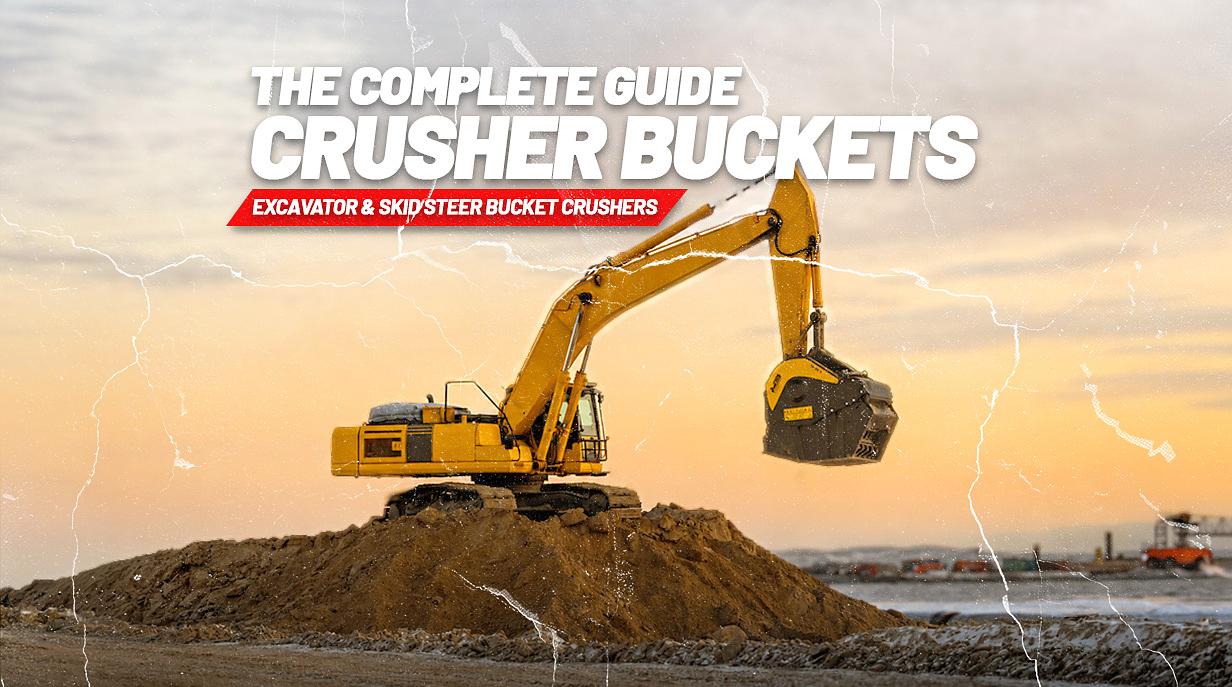
What Is a Crusher Bucket?
A crusher bucket is a hydraulic attachment that replaces the standard digging bucket on an excavator or, in some models, a skid steer loader. It contains a jaw mechanism or impact mechanism inside the bucket shell. The excavator's hydraulic system powers the crushing action. You scoop material into the bucket, the jaws or rotors crush it, and crushed material falls out through sizing gaps at the bottom or sides.
The concept is appealing because you do not need a separate machine. You already own the excavator. The crusher bucket turns it into a dual-purpose tool: it can dig and crush with the same base machine. That saves capital compared to buying a standalone crusher, at least on paper.
Crusher buckets are most commonly used in demolition, utility work, landscaping, and small recycling operations. They handle concrete, brick, natural rock, and some other construction and demolition debris. They are not designed for high-volume production. They are designed for convenience and versatility on smaller jobs.
How a Crusher Bucket Works
The operator scoops material into the crusher bucket just like loading a standard bucket. Once loaded, the operator activates the auxiliary hydraulic circuit to power the crushing mechanism. Material is crushed inside the bucket and falls out through adjustable gaps at the bottom or sides.
The entire process depends on the excavator's auxiliary hydraulic flow and pressure. Larger excavators supply more hydraulic power, which means faster cycle times and the ability to handle harder material. Smaller machines limit throughput and restrict the material types you can process.
Output size is adjustable on most models, typically ranging from about 3/4 inch up to 4 or 5 inches. Changing the gap setting usually requires manual adjustment between cycles.
One thing to understand: the crushing cycle is not continuous like a standalone crusher. You scoop, crush, dump, and repeat. This batch process is the fundamental reason why crusher bucket production rates are lower than standalone machines.
Types of Crusher Buckets
There are two main styles of crusher buckets, and the differences matter for your application.
Jaw-Style Crusher Buckets
Jaw-style crusher buckets use two opposing jaw plates that compress material, similar to how a full-size jaw crusher works. One jaw is fixed and the other moves, squeezing material until it fractures. The crushed material then falls through the gap between the jaws.
Jaw-style buckets are the most common type. They handle hard materials well, including concrete, natural rock, and brick. They tend to produce a more angular, slab-like product, which is typical of jaw-style compression crushing. They are relatively simple mechanically, which helps with maintenance and reliability.
Most of the major crusher bucket brands, including MB Crusher, Epiroc, and Hartl, offer jaw-style models.
Rotary-Style Crusher Buckets
Rotary-style crusher buckets use spinning drums or rotors with teeth to break material apart. Unlike jaw-style buckets that use compression, rotary designs reduce material through the action of rotating elements. Some manufacturers like ALLU use interchangeable drum configurations that can screen, crush, and blend material. Simex uses a toothed rotor design for aggressive material reduction.
Rotary-style buckets are less common than jaw-style designs, but they offer more versatility. Some are technically screening-crushing buckets that combine both functions in a single attachment.
Rotary-style buckets can handle softer materials like asphalt and light demolition debris more effectively than jaw-style buckets. However, they tend to have higher wear costs because the rotor components wear faster, especially on abrasive material.
Jaw-Style vs Rotary-Style Comparison
Feature Jaw-Style Bucket Rotary-Style Bucket Crushing method Compression between two jaw plates Impact via rotors or hammers Product shape Angular, slab-like Cubic, well-shaped Best materials Concrete, hard rock, brick Softer rock, asphalt, mixed C&D Wear costs Lower Higher Availability Most manufacturers offer these Fewer options on the market Mechanical complexity Simpler More complex
Sizing a Crusher Bucket by Excavator Class
Crusher buckets are sized to match the excavator that will carry them. The excavator must have sufficient hydraulic flow, pressure, and lifting capacity to power and handle the bucket.
Excavator Class Operating Weight Typical Bucket Width Approximate Throughput Common Applications Mini (2-8 ton) 4,000-18,000 lb 16-24 in 3-8 TPH Utility trenching, small landscaping Small (8-15 ton) 18,000-33,000 lb 20-28 in 5-15 TPH Small demolition, residential work Medium (15-30 ton) 33,000-66,000 lb 24-36 in 10-30 TPH General demolition, recycling Large (30-45 ton) 66,000-100,000 lb 32-44 in 20-40 TPH Heavy demolition, large recycling Extra Large (45+ ton) 100,000+ lb 40-52 in 30-50 TPH Quarry support, major demolition The throughput figures above are realistic working rates, not peak marketing claims. Real-world rates in mixed demolition material are typically 30-50% lower than published specs.
Skid Steer Crusher Buckets
Some manufacturers offer crusher buckets for skid steer loaders and compact track loaders. These produce 3-10 TPH at best and suit only light-duty applications: small landscaping projects, utility work, and processing small amounts of concrete or brick. They fill a niche for operators who already own a skid steer and only need to process small volumes occasionally.
Materials a Crusher Bucket Can Handle
Crusher buckets can process a range of materials, but they have clear limitations. Here is what works and what does not.
Materials That Work Well
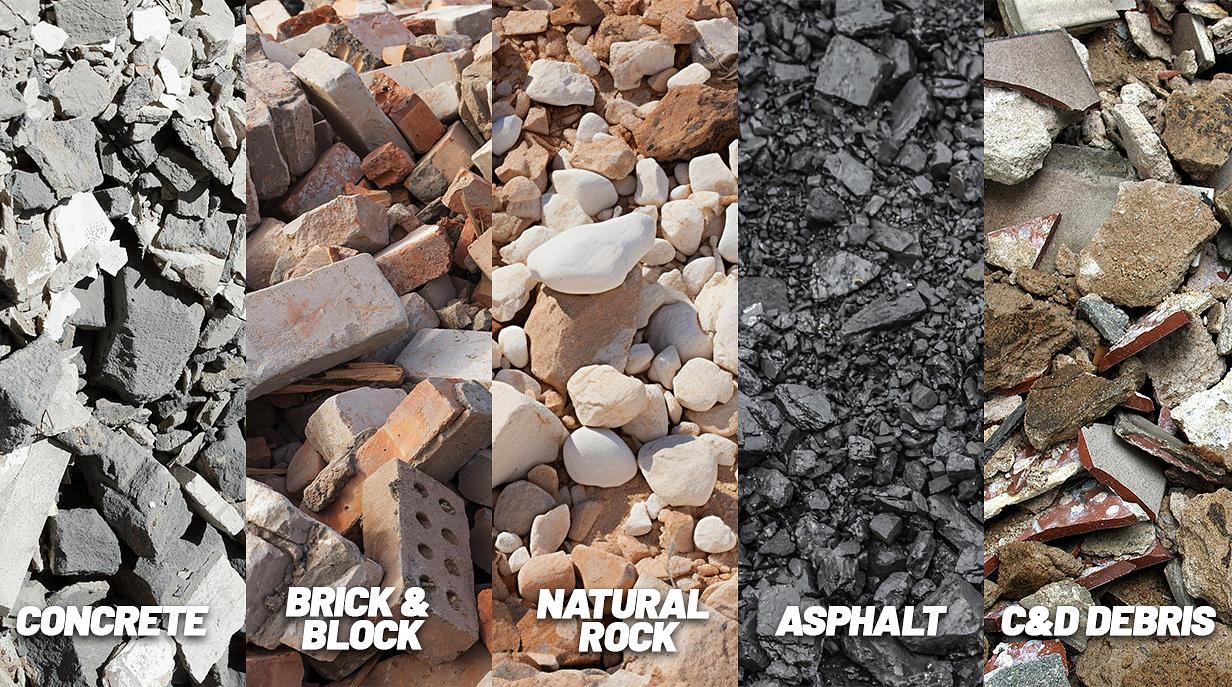
Concrete. This is the most common material for crusher buckets. Standard unreinforced concrete and lightly reinforced concrete crush well in a jaw-style bucket. The bucket produces crushed concrete aggregate that works for backfill, road base, and general fill. Heavy rebar must be removed or cut before loading, as large rebar can jam the bucket mechanism.
Brick and block. Crusher buckets handle brick, concrete block, and masonry debris without difficulty. These materials are relatively soft and fracture easily under compression.
Natural rock. Limestone, sandstone, and other medium-hard rocks crush well. Harder rocks like granite and basalt are possible but significantly reduce throughput and increase jaw plate wear.
Asphalt. Rotary-style crusher buckets can process asphalt millings and broken asphalt pavement. Jaw-style buckets struggle with asphalt for the same reason full-size jaw crushers do: asphalt is flexible and tends to compress between the jaws rather than fracturing cleanly. For heavy asphalt processing, an impact crusher is the better tool.
Mixed C&D debris. Light construction and demolition debris, including concrete, brick, tile, and stone mixed together, can be processed. You do need to remove wood, metal, and other non-crushable contaminants before loading.
Materials That Do Not Work
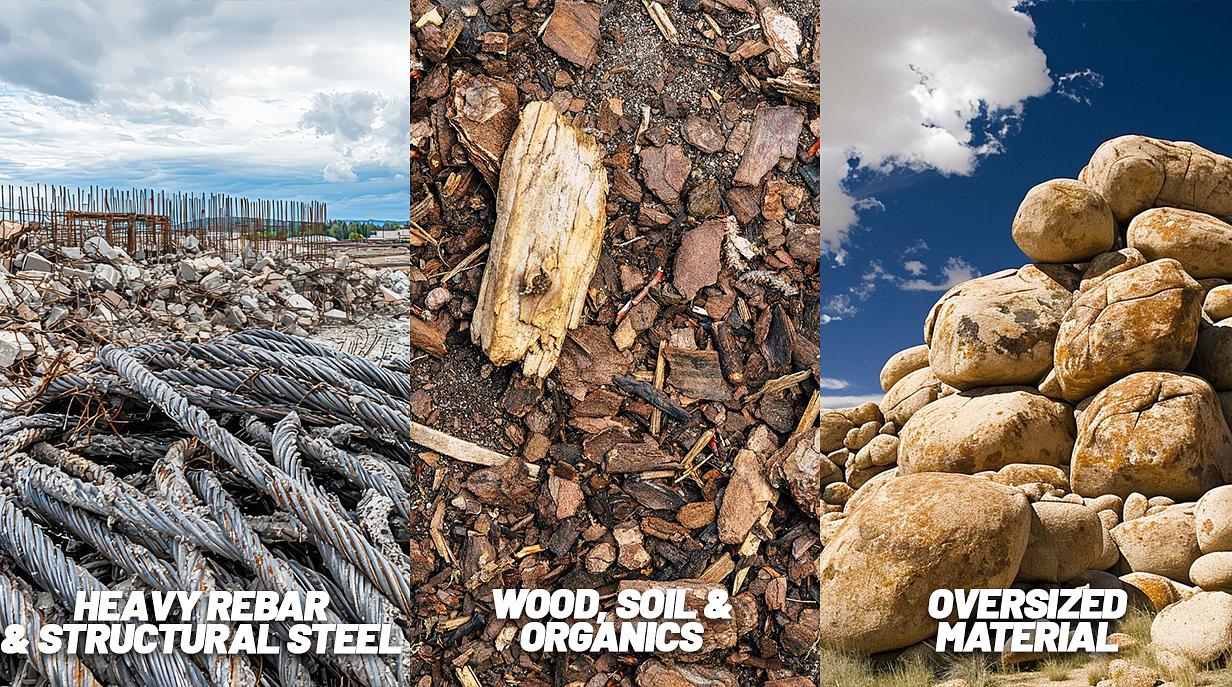
Heavy rebar and structural steel. Large rebar (#6 and above), I-beams, and structural steel will jam and damage the crushing mechanism. Light wire mesh is tolerable, but anything heavier must be removed before loading.
Wood, soil, and organics. Crusher buckets need clean, hard material. Wood does not fracture under compression and will clog the bucket. Wet soil and clay prevent material from falling through the discharge gaps.
Oversized material. The bucket opening is relatively small compared to a standalone crusher, so feed material often needs to be broken down with a hydraulic breaker first.
Production Rates: Marketing Claims vs Reality
Production rate claims for crusher buckets are often inflated. Manufacturers publish throughput numbers that represent peak performance under ideal conditions: soft limestone, perfectly sized feed, no interruptions. In the real world, you are dealing with mixed material, varying hardness, rebar that needs to be picked out, and downtime between cycles.
A crusher bucket on a 20-30 ton excavator realistically produces 10-30 TPH of crushed concrete in sustained operation. A large bucket on a 40+ ton excavator might reach 30-50 TPH under good conditions. Compare that to a standalone portable jaw crusher, which produces 100-300+ TPH continuously. A crusher bucket processes in batches. A standalone crusher processes continuously through a feeder.
Not every job needs high production. If you are processing 20-50 tons at a residential demolition site, a crusher bucket handles that in a few hours without mobilizing a separate machine. But processing 500 or 1,000 tons through a crusher bucket is painfully slow. For those volumes, a dedicated portable crusher is a far better investment.
The honest assessment: a crusher bucket is a convenience tool, not a production tool. If you understand that distinction, you will make a good decision.
Top Crusher Bucket Brands
Several manufacturers build crusher buckets. Here are the major brands and what sets each apart.
MB Crusher (Italy) is the most recognized name in crusher buckets. They offer jaw-style models for excavators from 2.5 to 70+ tons, plus models for skid steers and loaders. MB pioneered the category and has the widest model range and dealer network.
ALLU (Finland) is best known for screening-crushing buckets that combine both functions. Their Transformer series uses a rotary drum design rather than traditional jaws. ALLU buckets are popular in landscaping, remediation, and applications where screening and light crushing happen together. Browse our ALLU screening and crushing attachments.
Epiroc (Sweden) manufactures jaw-style crusher buckets built for heavy-duty demolition and recycling. Epiroc's global service network is an advantage for larger operations and fleet owners.
Simex (Italy) produces rotary-style crusher buckets with a reputation for compact, practical design. They cover smaller excavators and skid steers better than some competitors.
Hartl (Austria) builds jaw-style crusher buckets with aggressive jaw geometry that delivers strong throughput relative to bucket size. Well-regarded in European markets for mid-size to large excavators.
Brand Comparison Overview
Brand Origin Primary Type Excavator Range Notable Strength MB Crusher Italy Jaw-style 2.5-70+ ton Widest model range, market leader ALLU Finland Rotary screen/crush Various Versatile multi-function buckets Epiroc Sweden Jaw-style Mid to large Global service network Simex Italy Rotary (rotor with teeth) Small to large Compact, practical design Hartl Austria Jaw-style Mid to large High crushing force for size
New vs Used Pricing
Crusher bucket pricing varies significantly based on brand, size, and condition. Here is a general overview of what to expect.
New Crusher Bucket Pricing
New crusher buckets range from roughly $15,000 to $20,000 for small units sized for mini excavators up to $80,000 to $150,000+ for large, heavy-duty models sized for 40+ ton excavators. Premium brands like MB Crusher and Epiroc tend to command higher prices.
Size Class Excavator Match Approximate New Price Range Small 2-10 ton excavator $15,000-$30,000 Medium 10-25 ton excavator $30,000-$65,000 Large 25-45 ton excavator $60,000-$100,000 Extra Large 45+ ton excavator $90,000-$150,000+ Used Crusher Bucket Pricing
Used crusher buckets sell for roughly 40-70% of new pricing, depending on age, hours, jaw plate condition, and brand. Key things to inspect on a used unit: jaw plate wear, hydraulic cylinder condition (leaks, slow cycle times), structural cracks in the shell and mounting brackets, and compatibility with your excavator's coupler system. Crusher buckets do not always have hour meters, so evaluate wear visually.
The Real Cost Comparison
A mid-range crusher bucket costs $40,000-$80,000. A used standalone portable jaw crusher might cost $75,000-$200,000, but it produces five to ten times the volume per hour. On a per-ton basis, the standalone crusher is significantly cheaper for any job over a few hundred tons. The crusher bucket wins only when volumes are low and you value the convenience of crushing with equipment you already own.
If you are processing more than a few hundred tons per month, we recommend looking at a standalone crusher. We carry new and used jaw crushers, impact crushers, and complete portable plants that will outproduce a crusher bucket by a wide margin.
Crusher Bucket vs Standalone Crusher: Which Do You Need?
This is the most important question in this guide. Here is a quick decision framework.
Choose a crusher bucket when:
- You process small volumes (under 100 tons per job)
- Your jobs are scattered across many locations
- You already own an excavator and want to avoid a second machine
- You only need occasional crushing
- Job site space is tight
Choose a standalone crusher when:
- You process more than a few hundred tons per month
- Throughput and cost per ton matter to your bottom line
- You run a recycling operation or process material regularly
- You need continuous production and spec-grade output
Some contractors use both. They run the crusher bucket on small, scattered jobs and a standalone crusher at their yard or on larger jobs where volume justifies it. If your work varies in scale, this combination is practical.
We sell standalone jaw crushers, impact crushers, and complete crushing systems. If you are deciding between a crusher bucket and a dedicated machine, call us and we will help you evaluate your volume, material, and budget.
Frequently Asked Questions
What is a crusher bucket used for?
A crusher bucket is a hydraulic attachment for excavators and skid steers that crushes concrete, brick, rock, and other hard C&D debris directly on the job site. The most common application is crushing concrete at demolition sites so the material can be reused as backfill or road base instead of being hauled to a landfill. Crusher buckets are best suited for small to medium volumes where mobilizing a standalone crusher is not practical.
How much does a crusher bucket cost?
New crusher buckets range from about $15,000 for small models (mini excavators) up to $150,000 or more for large units (45+ ton excavators). Used units sell for 40-70% of new pricing depending on condition and brand. The mid-range for most contractor applications on 15-30 ton excavators runs roughly $30,000 to $65,000 new. Browse our attachments inventory for current listings.
How many tons per hour can a crusher bucket produce?
Realistic rates range from about 5 TPH for small units up to 30-50 TPH for large units on 40+ ton excavators. Be cautious of manufacturer claims that cite higher numbers — those are peak rates under ideal conditions. In real-world mixed demolition material, expect 30-50% lower throughput. If you need more than 50 TPH consistently, a standalone portable crusher is a better choice.
Can a crusher bucket crush rebar?
Light wire mesh and thin rebar are tolerable, but heavy rebar (#6 and above) must be removed before loading. Large rebar can jam the mechanism and damage jaw plates. Some buckets include a rebar cutting feature, but these work only on lighter reinforcement. If your concrete is heavily reinforced, plan for extra time and labor to prepare the material.
What size excavator do I need for a crusher bucket?
Small crusher buckets work on excavators as light as 5 tons, but throughput is very low. For practical production, most contractors use 15-30 ton excavators, which provide enough hydraulic flow and lifting capacity to run the bucket efficiently. Always verify that your excavator meets the manufacturer's specs for hydraulic flow (GPM), pressure (PSI), and lifting capacity before purchasing.
Is a crusher bucket better than a standalone crusher?
Neither is universally better. A crusher bucket on a 25-ton excavator might produce 15-25 TPH. A standalone portable jaw crusher in a similar price range produces 100-300+ TPH. The crusher bucket wins on convenience for small, scattered jobs. The standalone crusher wins on production volume and cost per ton. For contractors processing large volumes regularly, the standalone machine pays for itself quickly. Read our detailed comparison in the jaw crusher guide.
Get Help Choosing the Right Crushing Equipment
We have been helping contractors and producers find the right crushing equipment for over 50 years. Whether a crusher bucket makes sense for your operation or whether you would be better served by a standalone jaw crusher or impact crusher, we can help you evaluate your options honestly.
We carry new and used crushers in a range of sizes and configurations. We are not here to push you toward the most expensive option. We are here to help you match the equipment to the job.
Call us at 770-433-2670 or email Sales@grindercrusherscreen.com to discuss your application.