





Portable Rock Crushers: Types, Costs, and Buying Guide
A portable rock crusher lets you crush material where the work is. Instead of hauling rock, concrete, or asphalt to a fixed plant, you bring the crusher to the job site. That saves trucking costs, reduces permitting hassles, and speeds up production.
We have sold portable crushers since 1973. This guide covers the main types, what they cost, and how to pick the right one for your operation.
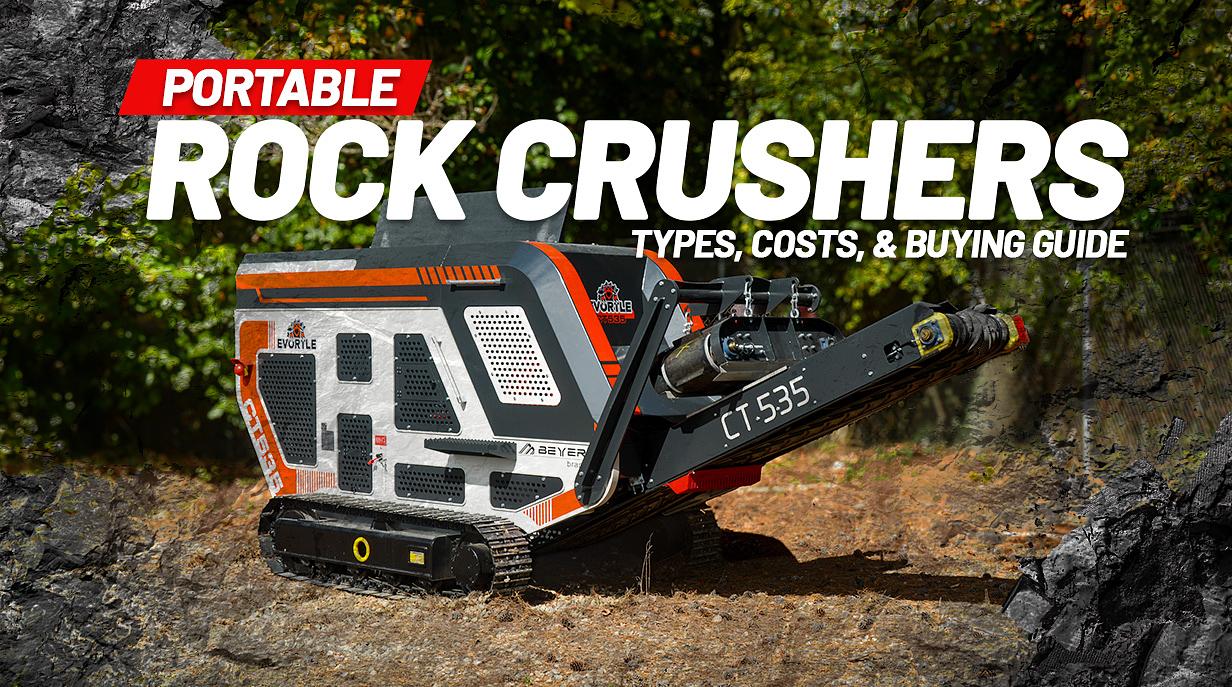
What Is a Portable Rock Crusher?
A portable rock crusher is a crushing plant built on a chassis that can be moved between job sites or within a single large site. It includes a feeder, a crusher, discharge conveyors, and sometimes a screen, all on one platform.
Portability matters because many crushing jobs are temporary. A demolition contractor might spend two weeks on one site and then move to another across town. A road builder might need to produce base material at several points along a new highway corridor. A portable crusher goes where the work is.
Fixed crushing plants produce aggregate at the lowest per-ton cost for high-volume, single-location operations. But if you need to move, a fixed plant is not practical. That is where portable crushers earn their place.
Types of Portable Crushers
Portable crushers come in three main configurations. Each trades off between mobility, setup time, and cost.
Track-Mounted Crushers
Track-mounted crushers sit on steel crawler tracks, similar to an excavator. They are self-propelled and can move around a job site under their own power. An operator can reposition the machine in minutes.
Track-mounted units are the most mobile option on-site. They work well at large demolition sites, quarries, and any operation where the crusher needs to follow the work. The downside is transport: they ride on a lowboy trailer between job sites, which adds cost.
Wheel-Mounted Crushers
Wheel-mounted (or trailer-mounted) crushers sit on a steel frame with highway-legal axles and tires. A truck tows them between job sites. Setup involves leveling the chassis, deploying conveyors, and connecting power.
These are the best option for contractors who move between job sites frequently. Highway transport is simpler and cheaper than hauling a track-mounted unit on a lowboy. Setup takes longer than track-mounted units but is still measured in hours, not days.
Skid-Mounted Crushers
Skid-mounted crushers sit on a steel skid frame with no wheels or tracks. They must be lifted and placed by crane or loaded onto a trailer. Once placed, they operate as stationary units until it is time to move again.
Skid-mounted units are the least expensive portable option. They are "portable" in the sense that they can be relocated, but they are not designed for frequent moves. They fit operations that stay in one place for months at a time but may eventually relocate.
Comparison Table
Track-mounted crushers are self-propelled on site. Setup takes minutes. Best for large sites, quarry face work, and frequent repositioning. Transport between sites requires a lowboy trailer. These are the highest-cost option.
Wheel-mounted crushers are towable on the highway. Setup takes hours. Best for moving between job sites. Transport between sites is a standard highway tow. These fall in the mid-range for cost.
Skid-mounted crushers require a crane or trailer to relocate. Setup takes hours to a full day. Best for semi-permanent installations. Transport between sites uses a flatbed or lowboy. These are the lowest-cost option.
Portable Jaw Crushers
Portable jaw crushers are the most common type of portable crusher. They work as primary crushers, accepting large feed material and reducing it to a smaller size.
A portable jaw crusher handles concrete, natural rock (granite, basalt, limestone), brick, block, and general construction and demolition debris. Feed sizes vary by model, but larger portable jaw crushers accept material over 30 inches across. Throughput ranges from under 100 TPH for compact models to over 500 TPH for large production units.
Portable jaw crushers do not crush asphalt. Asphalt is too flexible and sticky for compression crushing. The material wedges between the jaw plates instead of fracturing. If your job involves asphalt, you need a portable impact crusher.
Jaw crushers have the lowest wear costs of any crusher type. Jaw plates are the main wear item and last a long time on most materials. The simple design means less downtime and fewer parts to maintain. For more on how these machines work, see our guide: what is a jaw crusher.
Browse our inventory of portable jaw crushers.
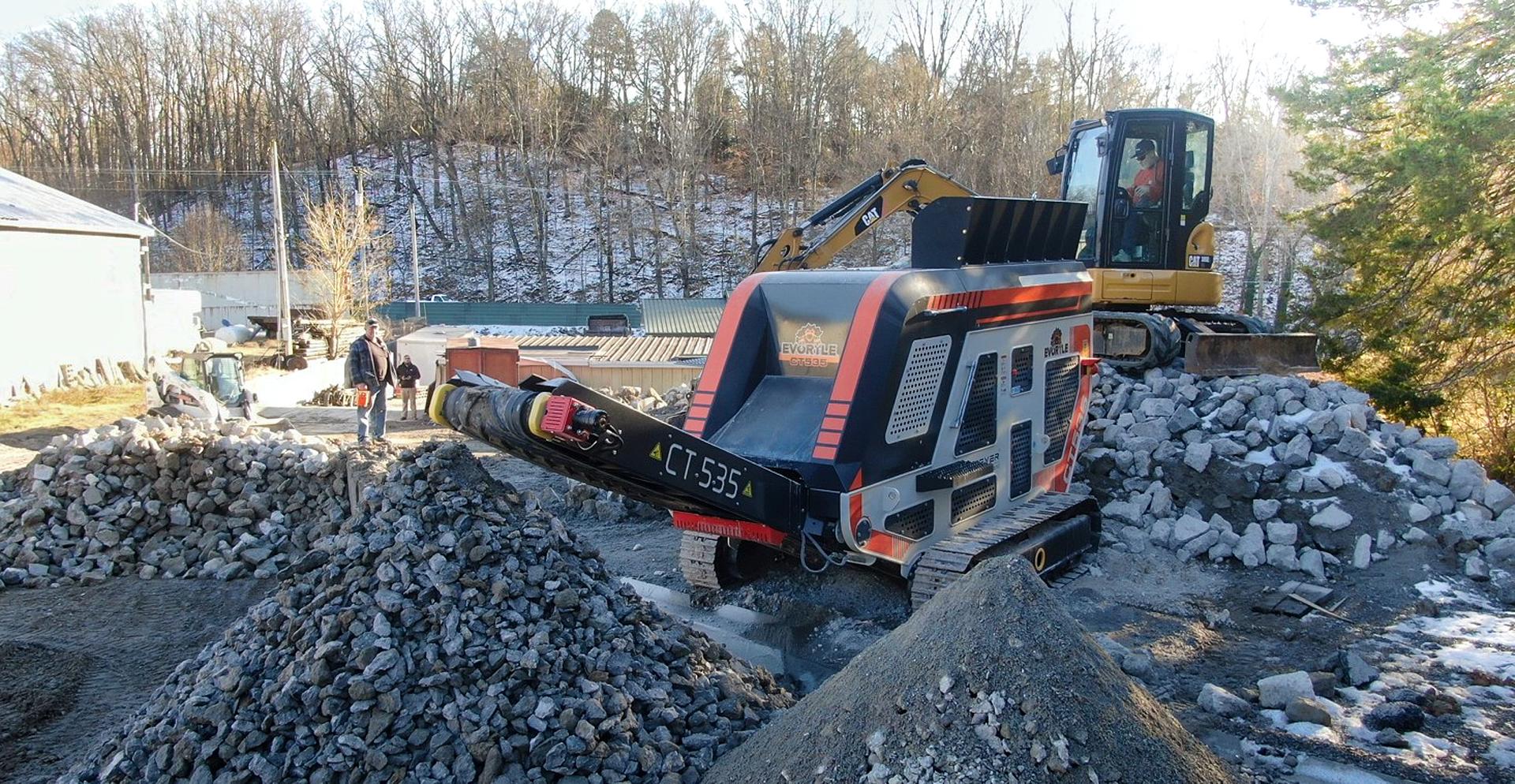
Jaw Crusher above: Evortle CT535 Jaw Crusher - This is a heavy duty small jaw crusher, nearly twice the weight of the competition (14,331 lbs compared to 7,500 lbs). It's made to handle concrete block, brick, and soft rock.
Portable Impact Crushers
Portable impact crushers break material by striking it with blow bars at high speed. The impact shatters the material into a well-shaped, cubic product.
Impact crushers handle asphalt, concrete, limestone, and softer rock. They are the only portable crusher type that can process asphalt effectively. They also produce a better-shaped product than jaw crushers, which matters when the output must meet a spec for road base or aggregate.
The trade-off is higher wear costs. Blow bars wear down faster than jaw plates, especially on hard or abrasive material. On softer materials like limestone and clean asphalt, wear costs are more manageable.
For a detailed look at how these machines work, read our guide: what type of crusher is best.
Browse our inventory of portable impact crushers.
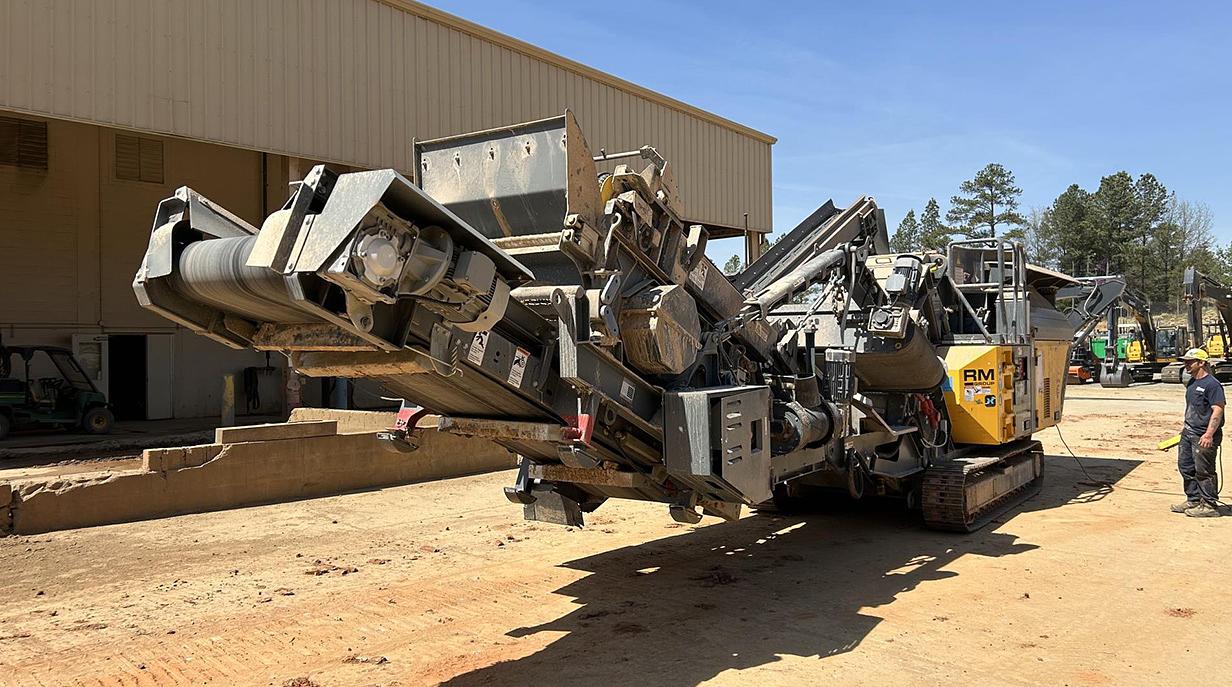
Impact Crusher above: 2023 Rubble Master RM70 GO!
Portable Cone Crushers
Portable cone crushers handle secondary and tertiary crushing. They take pre-crushed material and reduce it to fine, uniform aggregate. Feed sizes are limited, typically under 12 inches.
Cone crushers are less common in portable applications than jaw or impact crushers. Most portable cone crushers pair with a portable jaw crusher to form a two-stage plant. This combination produces spec aggregate in the field without a fixed plant.
Portable cone crushers fit quarry operations, gravel processing, and any application where fine aggregate is needed at a temporary or semi-permanent location.
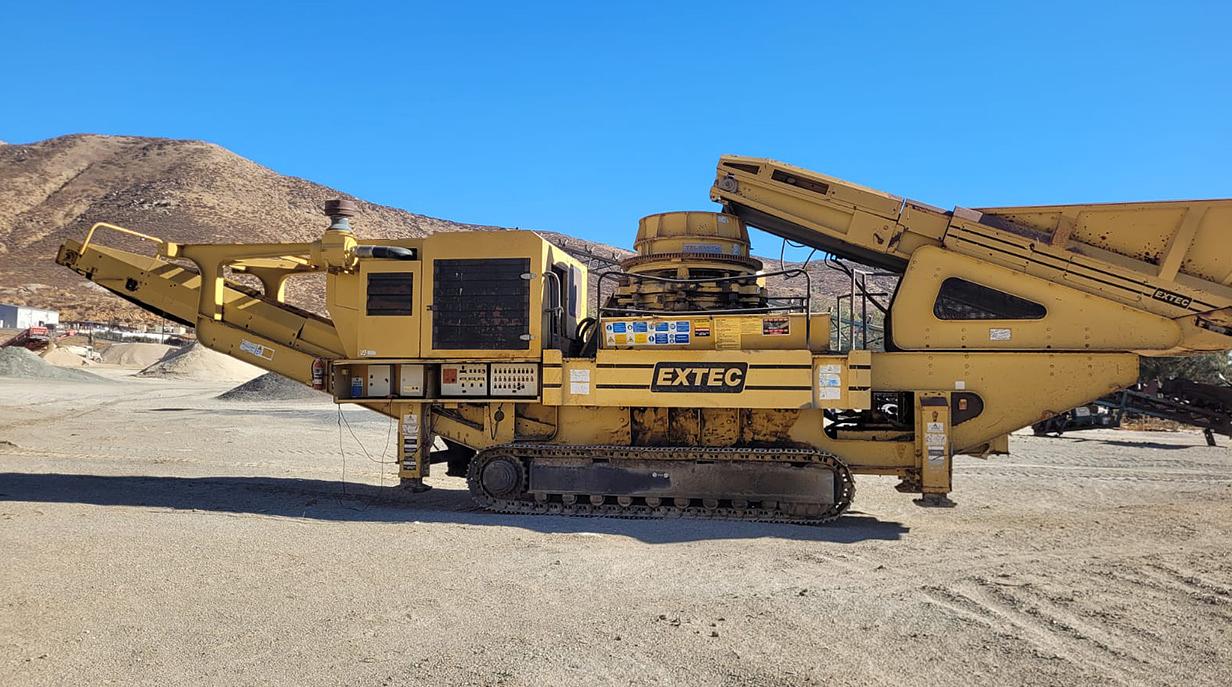
Cone Crusher above: 2007 Extec X44
Applications
Demolition Recycling
Crushing concrete and brick on the demolition site eliminates trucking costs and landfill fees. A portable jaw crusher handles most demolition material. If the site includes asphalt paving, add or substitute a portable impact crusher for that material.
Road Construction
Road builders need base material along the entire corridor. A portable crusher produces road base from local rock or recycled concrete, reducing the need to haul material long distances. Wheel-mounted or track-mounted units can leapfrog along the project as sections are completed.
Quarry Operations
A portable jaw crusher at the quarry face reduces material right where it is blasted. This cuts loader and haul truck cycles. Track-mounted models follow the face as it advances.
Remote Sites
Some projects are far from any fixed crushing plant. Mining exploration, remote construction, and pipeline projects all benefit from portable crushers that can be transported to the site and set up quickly.
Size Guide: Matching Crusher to Throughput
Small: Under 100 TPH
Compact portable jaw crushers fit small demolition sites, landscaping operations, and small-volume recycling. These units are easier to transport and require less setup. They work well for contractors who process material occasionally rather than full-time.
Medium: 100 to 300 TPH
Mid-size portable jaw crushers and impact crushers cover most contractor applications. This range handles steady demolition recycling, small to mid-size quarry production, and road construction projects. Most contractors buying their first portable crusher end up in this range.
Large: 300+ TPH
Full production portable plants serve quarries, large-scale recycling operations, and major construction projects. These machines are larger, heavier, and more expensive to transport. They deliver throughput that approaches fixed plant levels while maintaining the ability to relocate.
Cost Factors
Purchase Price: New vs Used
New portable crushers vary widely in price based on type, size, and features. Larger, track-mounted units with built-in screens and magnets cost more than basic wheel-mounted jaw crushers.
Used portable crushers cost significantly less than new. A well-maintained used machine can deliver years of production at a fraction of the new price. We carry both new and used crushers for sale. We help arrange inspections on used equipment so buyers can evaluate condition before committing.
Rental vs Buy
Renting makes sense for short-term projects or when you want to test a crusher type before buying. If you will use a crusher on one job and then not again for months, renting avoids the capital outlay.
Buying makes sense when you will use the crusher regularly. If you are running the machine 20+ hours per week over many months, owning is almost always cheaper per ton than renting. The break-even point depends on rental rates in your area, but many contractors find that a used purchase pays for itself within one to two large jobs.
Operating Costs
Fuel is a major operating expense. Portable crushers run on diesel engines (some newer models offer electric or hybrid power). Fuel consumption scales with throughput and material hardness.
Wear parts are the second largest expense. Jaw plates, blow bars, and cone liners all need periodic replacement. Budget for these based on your material type: abrasive materials like granite consume wear parts faster than limestone or clean concrete.
Labor requirements vary. Some modern track-mounted crushers can be operated by one person. Larger plants with multiple stages need more crew.
Transport and Mobilization
Moving a portable crusher between sites costs money. Track-mounted units need a lowboy trailer and permits for oversize loads. Wheel-mounted units tow behind a truck but still require fuel and driver time. Factor transport costs into your per-ton economics, especially if you move frequently.
Brand Overview
Several manufacturers build portable crushers that we sell through our inventory.
SEBA builds compact, track-mounted jaw crushers and impact crushers designed for smaller job sites and contractors. Their machines are known for quick setup and ease of transport.
Rebel Crusher manufactures portable impact crushers built for recycling applications. Their machines target the concrete and asphalt recycling market.
Eagle Crusher produces a range of portable jaw, impact, and cone crushers. They build both track-mounted and portable plant configurations for quarry and recycling applications.
Rubble Master specializes in compact, track-mounted impact crushers. Their machines are designed for on-site recycling and are popular with demolition and general contractors.
Portable vs Stationary: When Each Makes Sense
Choose Portable When:
- You work at multiple job sites per year
- Your projects are temporary (weeks to months)
- You are a contractor who follows the work
- Hauling material to a fixed plant is not cost-effective
- You need to crush material on a demolition or construction site
Choose Stationary When:
- You operate at a single location (quarry, permanent recycling yard)
- Your volume is high enough to justify fixed infrastructure
- You need the lowest possible per-ton production cost
- You require multiple crushing and screening stages that exceed what portable plants offer
Many operators start with a portable crusher and add stationary equipment later as their volume grows. The two approaches are not mutually exclusive.
Frequently Asked Questions
How much does a portable rock crusher cost?
Prices vary widely based on type, size, and condition. Small, used portable jaw crushers start at a lower price point, while large, new track-mounted production plants cost significantly more. Contact us at 770-433-2670 for current pricing on specific models in our inventory.
Can a portable crusher crush asphalt?
Only portable impact crushers can crush asphalt. Portable jaw crushers and portable cone crushers cannot process asphalt effectively. Asphalt is flexible and sticky, so it requires the high-speed impact of blow bars to fracture. If your job includes asphalt, make sure you are looking at impact crushers, not jaw crushers.
What size portable crusher do I need?
Match the crusher to your required throughput. Under 100 TPH suits small sites and occasional use. Between 100 and 300 TPH covers most contractor applications. Over 300 TPH fits quarry production and large-scale recycling. Also consider feed size: make sure the crusher opening accepts the largest material you will feed it.
Is it cheaper to rent or buy a portable crusher?
It depends on how often you will use it. Renting is cheaper for short-term, one-off projects. Buying (especially used) is cheaper if you will run the machine regularly over many months. Many contractors find that purchasing a used portable crusher pays for itself within one to two major jobs.
Find the Right Portable Crusher
We have matched contractors and producers with the right crushing equipment for over 50 years. Whether you need a compact jaw crusher for small demo jobs or a full track-mounted production plant, we can help.
Browse portable crushers for sale or call us at 770-433-2670 to discuss your application.