





Jaw Crusher vs Impact Crusher vs Cone Crusher
Choosing the right crusher saves you money and headaches. Pick the wrong type and you get poor product, high wear costs, or a machine that simply cannot do the job. This guide covers all three main crusher types so you can match the right machine to your application.
We have sold crushers since 1973. We have seen every mistake in the book. The most common one is buying a crusher that does not fit the material or the output spec. Let us walk through what each crusher does, where it excels, and where it falls short.
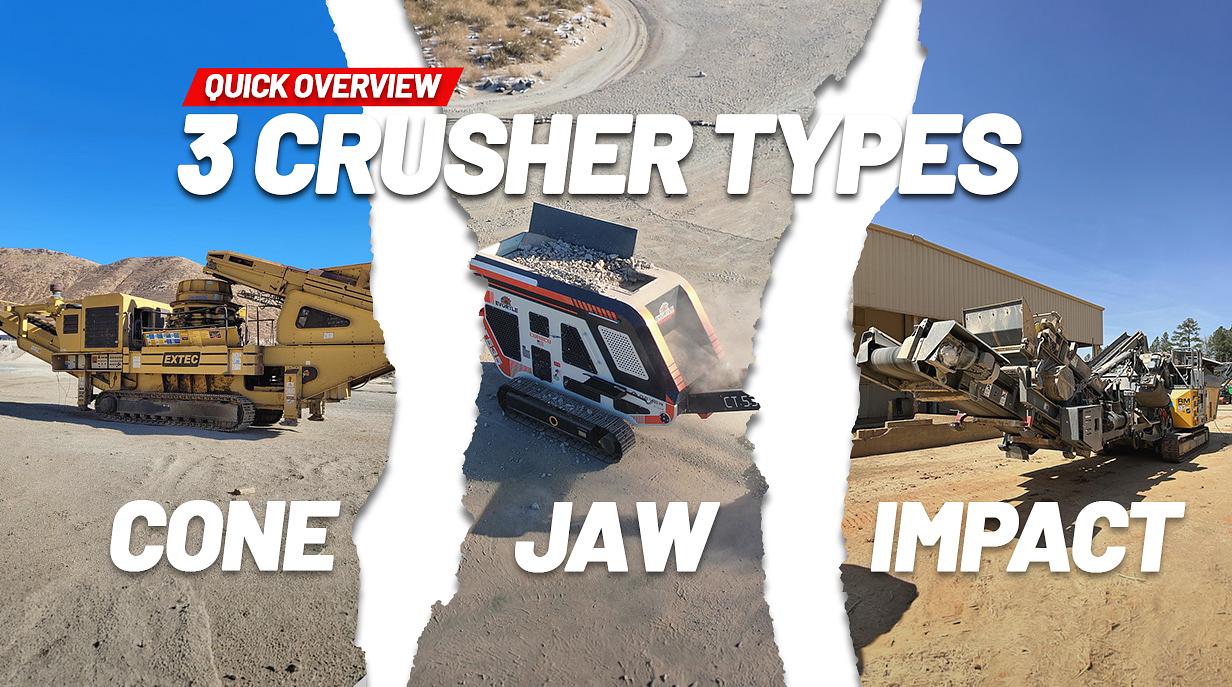
Quick Overview: Three Crusher Types
There are three main crusher types used in aggregate production, demolition recycling, and quarry operations.
Jaw crushers use compression to break material between two steel plates. They handle the largest feed sizes and work as primary crushers. They are simple, reliable, and affordable.
Impact crushers throw material against heavy blow bars or anvils at high speed. The impact shatters material into a more cubic shape. They handle a wider range of materials, including asphalt.
Cone crushers squeeze material between a rotating mantle and a concave liner. They produce fine, uniform aggregate and work as secondary or tertiary crushers after a primary stage.
Side-by-Side Comparison Table
Jaw crushers use compression between two plates. They accept feed sizes up to 40 inches or more and produce output in the 1-inch to 6-inch+ range at 50 to 1,500+ TPH. Best materials include concrete, hard rock, brick, block, and C&D debris. Product shape tends to be elongated and slab-like. Wear costs are the lowest of the three types. Purchase price is the lowest at similar capacities. Maintenance is low thanks to a simple design with few moving parts.
Impact crushers throw material against blow bars or anvils at high speed. They accept feed sizes up to 24 inches for most HSI models and produce output in the 3/4-inch to 4-inch range at 50 to 800+ TPH. Best materials include asphalt, concrete, limestone, and softer rock. Product shape is cubic and well-shaped. Wear costs are high because blow bars wear fast on hard material. Purchase price is mid-range. Maintenance frequency is higher due to regular blow bar and liner replacement.
Cone crushers compress material between a rotating mantle and a concave liner. They accept pre-crushed feed up to 12 inches and produce output in the 1/4-inch to 2-inch range at 50 to 1,000+ TPH. Best materials include pre-crushed hard rock, gravel, and ore. Product shape is cubic, uniform, and fine. Wear costs are moderate to high for manganese liners. Purchase price is the highest of the three. Maintenance is moderate, but liner changes are labor-intensive.
Jaw Crushers: When to Use Them
A jaw crusher is a primary crusher. It takes large, raw material and breaks it down to a smaller size. The machine is simple: a fixed jaw plate and a moving jaw plate squeeze material until it fractures.
What Jaw Crushers Handle Well
Jaw crushers excel at crushing hard, abrasive materials. Common applications include concrete, natural rock (granite, basalt, quartzite), brick, block, and general C&D debris. They accept the largest feed sizes of any crusher type, which makes them the first stage in most crushing operations. For more detail on how these machines work, see our guide on what is a jaw crusher.
What Jaw Crushers Do NOT Handle
Jaw crushers cannot crush asphalt. Asphalt is flexible and sticky. A compression crusher cannot fracture it cleanly. The material compresses and wedges between the jaw plates instead of breaking. If you need to crush asphalt, you need an impact crusher.
Why Choose a Jaw Crusher
Jaw crushers have the simplest design of any crusher type. Fewer moving parts means less downtime and lower maintenance costs. Toggle plates, bearings, and jaw plates are the primary wear items. Jaw plate changes are straightforward compared to cone liner changes or blow bar replacements on impact crushers.
Operating costs per ton are typically the lowest of any crusher type. Fuel consumption is moderate. Jaw plates last a long time on most materials.
Best Applications for Jaw Crushers
- Demolition sites: crushing concrete and C&D debris
- Quarry primary stage: reducing blasted rock
- Concrete recycling operations
- Road base production from concrete or rock
- Any application needing a reliable primary crusher
Browse our current inventory of jaw crushers for sale.
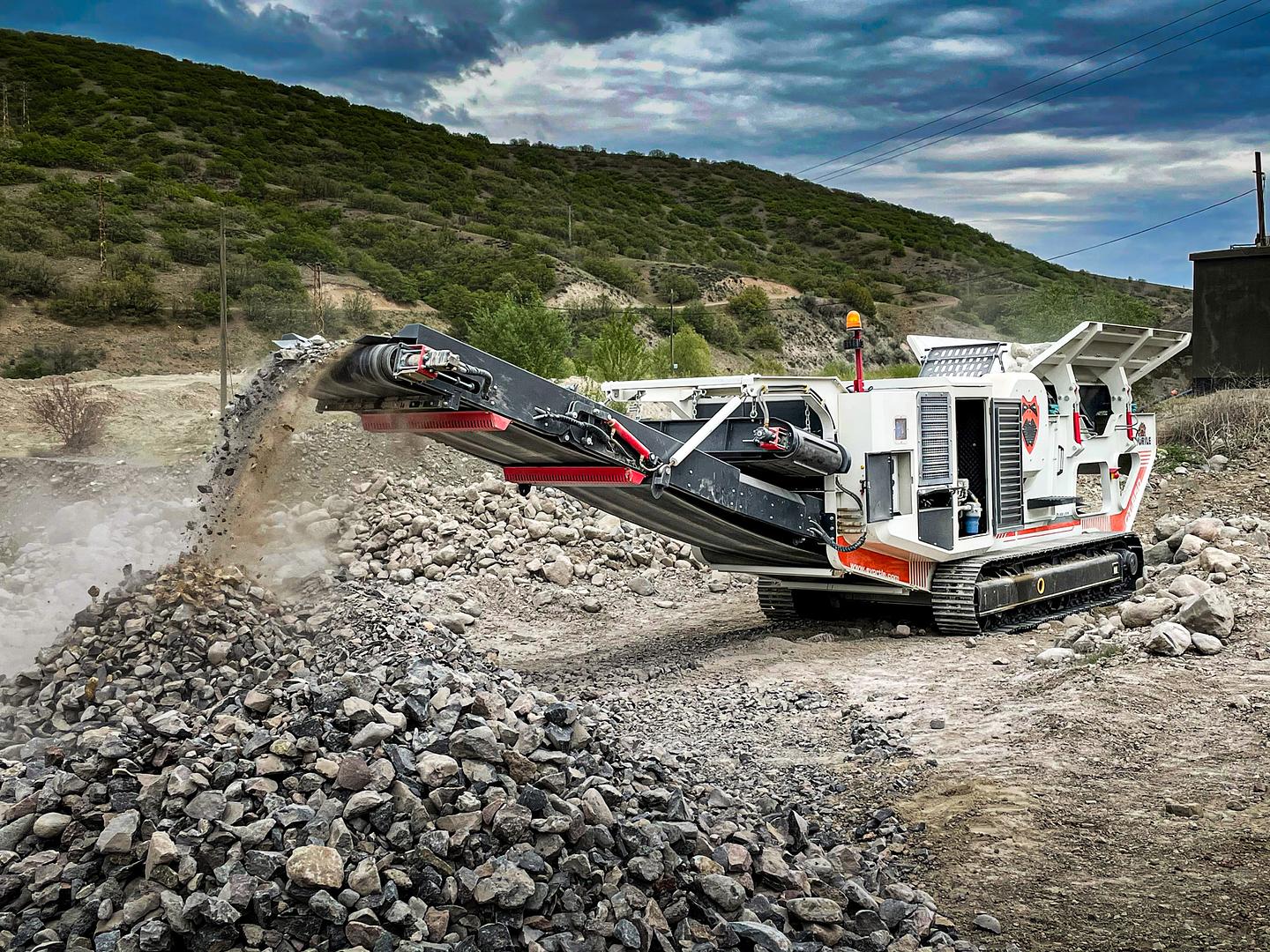
Jaw Crusher above: New Evortle CT850
Impact Crushers: When to Use Them
Impact crushers break material by throwing it at high speed against heavy metal blow bars, anvils, or curtains. The impact shatters the material rather than squeezing it. This produces a more cubic, well-shaped product. For a deeper look at how these machines work, read our guide on what is an impact crusher.
HSI vs VSI: Two Types of Impact Crushers
HSI (Horizontal Shaft Impact) crushers use a horizontal rotor with blow bars. Material enters the top and gets struck by the spinning blow bars, then hits breaker plates or curtains. HSI crushers are the more common type for recycling and primary crushing.
VSI (Vertical Shaft Impact) crushers use a vertical rotor that throws material outward against a curtain of material or anvils. VSI crushers are specialty machines used mainly for shaping aggregate and manufacturing sand. They are not primary crushers.
What Impact Crushers Handle Well
Impact crushers handle asphalt, concrete, limestone, and other softer to medium-hard materials. They are the only crusher type that effectively processes asphalt. The high-speed impact fractures the asphalt cleanly, where compression crushers cannot.
They also produce a superior product shape compared to jaw crushers. The cubic output reduces the need for additional screening and reprocessing.
The Trade-Off: Wear Costs
Impact crushers have higher wear costs than jaw crushers. Blow bars wear down faster, especially on abrasive materials like concrete with rebar. Crushing hard granite or basalt through an impact crusher burns through blow bars quickly and drives up cost per ton.
This is why material selection matters. An impact crusher is cost-effective on limestone and asphalt. On hard granite, you are better off with a jaw crusher as your primary.
Best Applications for Impact Crushers
- Asphalt recycling (the only crusher type for this)
- Concrete recycling where product shape and quality matter
- Limestone quarry operations
- Aggregate shaping for spec products
- Applications requiring a clean, cubic product
Browse our current inventory of impact crushers for sale.
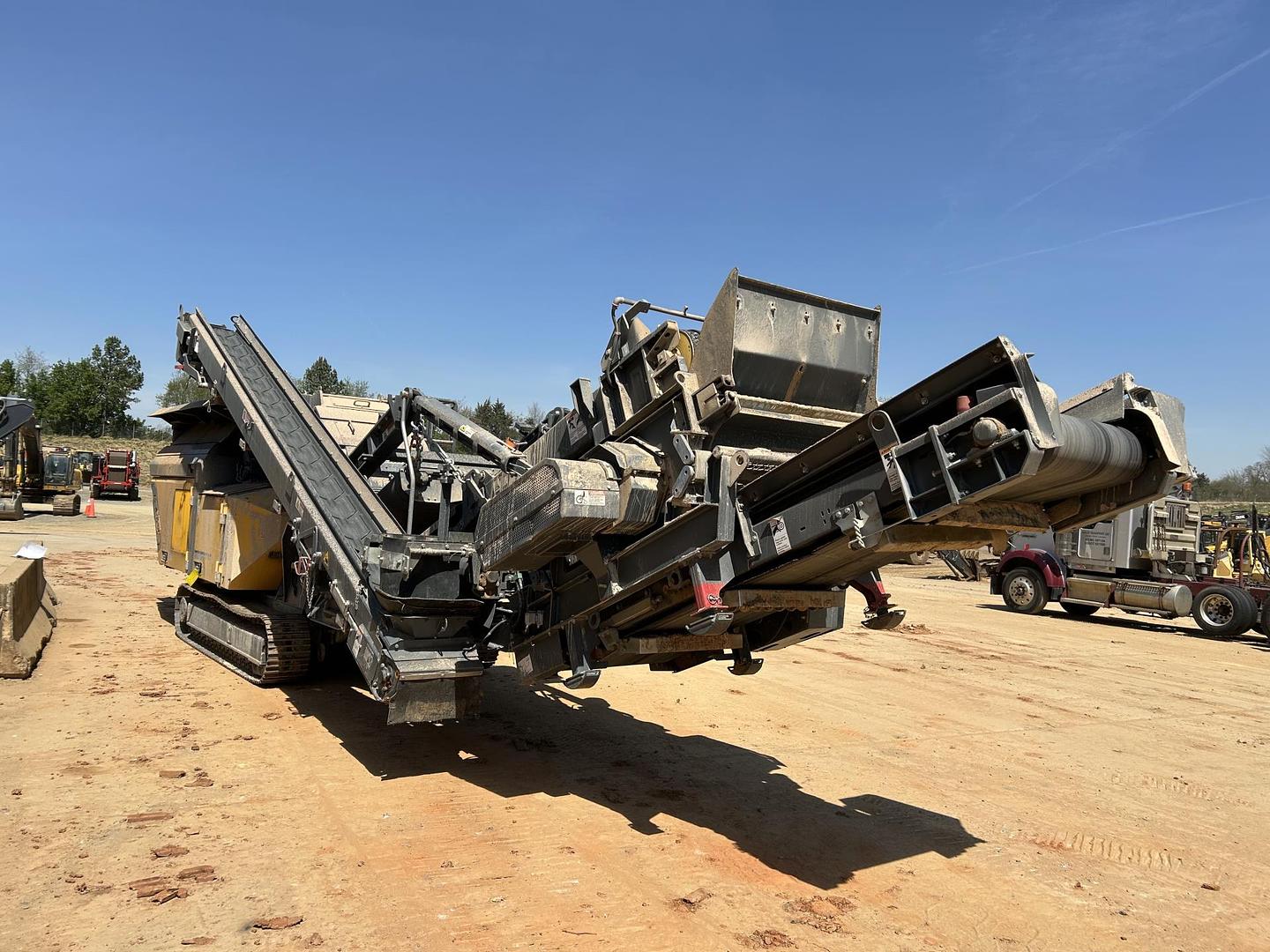
Impact Crusher above: 2023 Rubble Master RM70 GO!
Cone Crushers: When to Use Them
A cone crusher is a secondary or tertiary crusher. It takes material that has already been reduced by a primary crusher (usually a jaw crusher) and crushes it further into fine, uniform aggregate.
How Cone Crushers Work
Material feeds into the top of the cone crusher and falls between a rotating mantle and a fixed concave liner. The mantle gyrates (not rotates) inside the concave, squeezing material as it passes through the narrowing gap. The result is a fine, uniform, well-shaped product.
What Cone Crushers Handle Well
Cone crushers process pre-crushed hard rock, gravel, and ore. They produce tight size distributions that meet aggregate specifications. They are the standard choice for producing 3/4" minus, 1/2" minus, and other fine aggregate products.
Limitations of Cone Crushers
Cone crushers are not primary crushers. They cannot accept large, unprocessed material. Feed size is limited, typically under 12 inches depending on the model. Feeding oversized material damages the machine.
They are also more expensive to purchase and maintain than jaw crushers. Liner changes require more labor and downtime. However, for producing spec aggregate, no other crusher type matches their precision.
Best Applications for Cone Crushers
- Fine aggregate production (3/4" and smaller)
- Quarry secondary and tertiary crushing stages
- Manufactured sand production (VSI crushers also fill this role)
- Any operation needing tight, uniform size distribution
Browse our current inventory of cone crushers for sale.
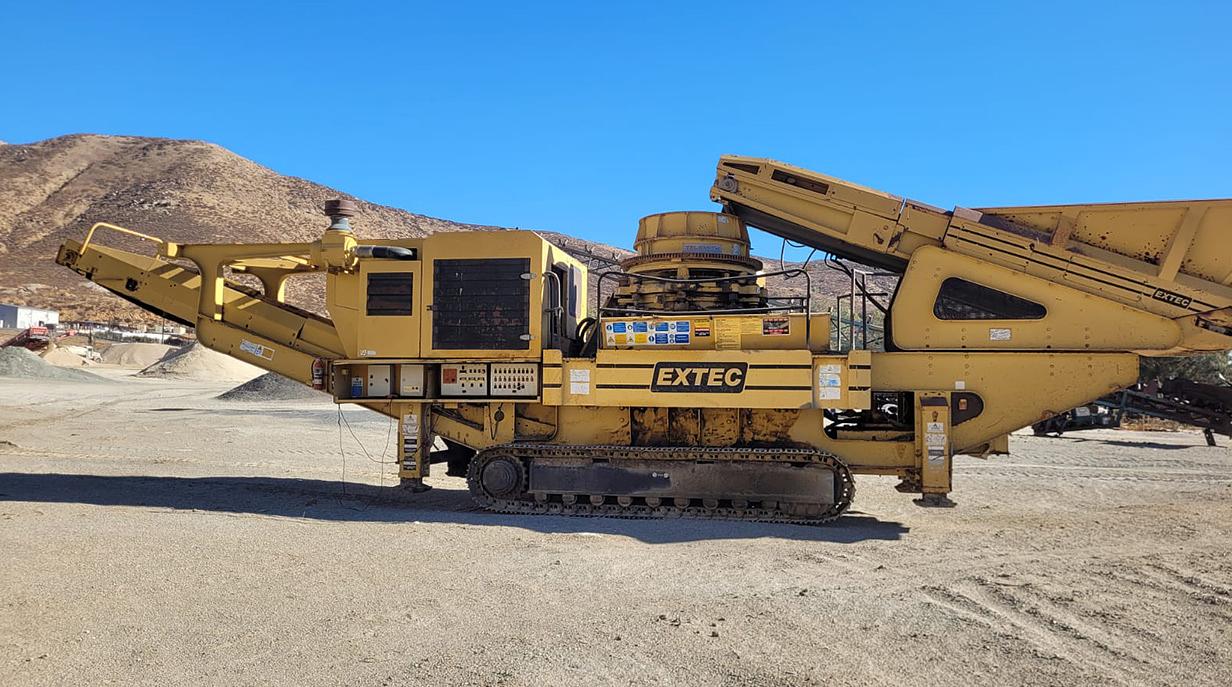
Cone Crusher above: 2007 Extec x44
Decision Guide: Which Crusher for Your Application
Here is a straightforward guide based on what you are crushing and what you need to produce.
Concrete recycling: A jaw crusher handles this well as a primary crusher. If product shape matters for your end use, an impact crusher produces a more cubic output.
Asphalt recycling: An impact crusher is the only option. Jaw crushers and cone crushers cannot process asphalt effectively.
Hard rock quarry: Start with a jaw crusher as the primary stage. Add a cone crusher as the secondary stage if you need fine aggregate.
Road base production: A jaw crusher produces suitable road base material from concrete or rock in a single pass.
Fine aggregate and sand: A cone crusher (or VSI) is the right choice for producing 3/4" minus and smaller aggregate products.
General demolition: A jaw crusher handles the widest range of demolition materials and accepts the largest feed sizes.
Using Two Crushers Together
Many operations need more than one crushing stage. Here are the most common combinations.
Jaw Crusher + Cone Crusher
This is the standard setup for hard rock production. The jaw crusher reduces large raw material down to a manageable size. The cone crusher then produces fine, uniform aggregate. This pairing works well in quarries and gravel operations where product specs are tight.
Jaw Crusher + Impact Crusher
This combination provides versatility. The jaw crusher handles primary reduction of hard material. The impact crusher re-crushes the output into a well-shaped product. This setup works for operations that process mixed materials or need both primary reduction and a quality finished product.
Impact Crusher Alone
For softer materials like limestone, asphalt, or clean concrete, a single impact crusher can often handle the job in one pass. The output is well-shaped and often meets spec without a second crushing stage. This keeps your equipment costs and footprint smaller.
Cost Comparison
Purchase Price
Jaw crushers are generally the least expensive of the three types at similar capacities. Impact crushers fall in the mid-range. Cone crushers are typically the most expensive due to their precision engineering and heavy construction.
Used equipment can significantly reduce the upfront cost for any crusher type. A well-maintained used jaw crusher, for example, costs a fraction of a new one and can deliver years of service. We carry both new and used crushers to fit different budgets.
Operating Costs
Wear parts are the biggest ongoing expense. Jaw crusher plates last the longest on most materials. Impact crusher blow bars wear fastest, especially on hard or abrasive feed. Cone crusher liners fall between the two, but liner changes take more labor.
Fuel consumption varies by model and throughput, but all three types are diesel or electric powered. Larger machines consume more fuel.
Maintenance labor is lowest on jaw crushers because of their simple design. Impact crushers need more frequent attention to blow bars and liners. Cone crushers require skilled maintenance for liner changes and hydraulic system upkeep.
New vs Used Considerations
New equipment comes with manufacturer warranties and the latest features. Used equipment costs less upfront but may need wear parts sooner. We help arrange inspections on used equipment so you can assess condition before you buy. We coordinate the process between buyer and seller to make sure you know what you are getting.
Frequently Asked Questions
What is the difference between a jaw crusher and an impact crusher?
A jaw crusher uses compression: two plates squeeze material until it fractures. An impact crusher uses velocity: blow bars strike material at high speed and shatter it. The practical difference is that jaw crushers handle the hardest materials at the lowest wear cost, while impact crushers produce a better-shaped product and can handle asphalt. Read more in our guides on jaw crushers and crusher types on our blog.
Can a jaw crusher crush asphalt?
No. Asphalt is too flexible and sticky for compression crushing. It compresses between the jaw plates without fracturing cleanly. Only an impact crusher can effectively process asphalt. The high-speed impact shatters the asphalt where compression cannot.
Which crusher produces the best shaped aggregate?
Impact crushers produce the most cubic, well-shaped aggregate. Cone crushers also produce a well-shaped product, especially at finer sizes. Jaw crushers tend to produce a more elongated, slab-like product. If product shape is critical to your application, an impact crusher or cone crusher is the better choice.
Do I need one crusher or two?
That depends on your feed material, the output size you need, and your volume. A single jaw crusher works well for basic concrete recycling and demolition. A single impact crusher handles asphalt recycling and softer materials in one pass. If you need fine, uniform aggregate from hard rock, you likely need two stages: a jaw crusher followed by a cone crusher or impact crusher.
Find the Right Crusher
We have been selling crushers since 1973. We carry jaw, impact, and cone crushers in a range of sizes and configurations. Whether you need a single machine or a multi-stage setup, we can help you match the right equipment to your application.
Browse all crushers for sale or call us at 770-433-2670 to talk through your options.