





Mulch Blower Trucks for Sale: New and Used Buying Guide
A mulch blower truck is one of the fastest ways to install bulk landscape material. One truck with a two-person crew replaces six to ten workers with wheelbarrows. That kind of labor savings changes the math on every large mulch, compost, or erosion control job you bid.
We have been selling heavy equipment at GCS since 1973, and blower trucks are one of the fastest-growing segments we deal in. Whether you are shopping for a new unit or a used mulch blower truck for sale, this guide covers everything you need to evaluate before you buy.
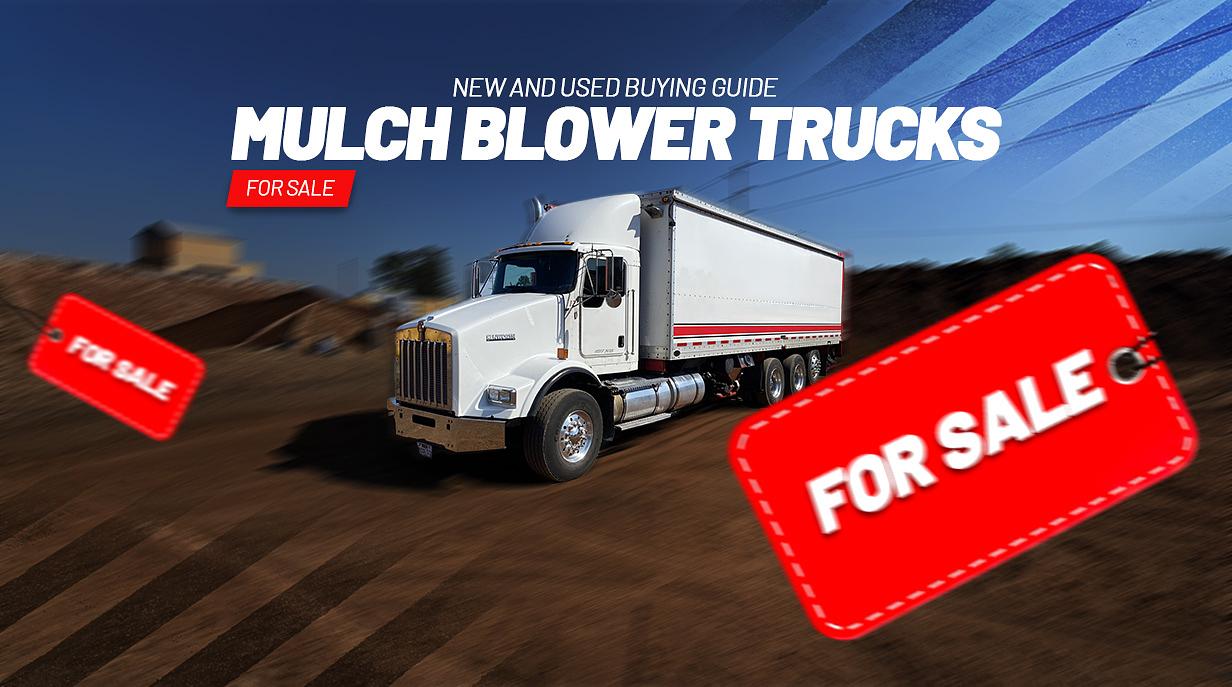
What to Look for in a Used Blower Truck
Buying a used mulch blower truck can save you $50,000 to $150,000 compared to new. But a bad purchase will cost you more in downtime and repairs than you saved on the sticker price. Here is what to inspect before you commit.
Engine Condition
The blower engine is the heart of the system. Most blower trucks use a dedicated auxiliary diesel engine, separate from the truck's drive engine. Ask for service records and check the hour meter. A well-maintained blower engine can run 6,000 to 10,000+ hours before a major overhaul. No service records means no way to verify what you are buying.
Listen for unusual noise on startup. Look for excessive exhaust smoke. Pull the oil cap and check for milky residue that signals coolant contamination.
Blower Unit
The positive displacement blower creates the airstream that carries material through the hose. Worn lobes reduce air volume and blowing distance. Pull the inspection cover and check for scoring, pitting, or uneven wear on the rotors.
Ask how many hours are on the blower and whether it has been rebuilt. A blower rebuild runs $3,000 to $8,000 depending on the brand and size. Factor that cost into your offer if the unit shows wear.
Hose Condition
Hose is the number-one consumable on a blower truck. Material flowing at high velocity erodes the interior wall over time. External cuts, kinks, and sun damage weaken the outer jacket. Ask how old the hose is and how many sections have been replaced.
New hose runs $8 to $15 per foot for standard 4-inch or 5-inch blower hose. A full 300-foot set costs $2,400 to $4,500. Budget for hose replacement on any used purchase.
Hopper and Conveyor
The hopper takes constant abuse from loaders dumping material. Look for bent sidewalls, cracked welds, and damaged floor slats. Walking-floor conveyors and live-bottom systems use chains and hydraulic drives that wear over time.
Check the conveyor for smooth, consistent travel. Listen for grinding or binding. Inspect hydraulic lines and fittings for leaks. A conveyor rebuild can cost $5,000 to $15,000 depending on the system.
Metering System
The metering system controls how much material enters the airstream. Worn paddles, stretched chains, or damaged auger flights cause inconsistent flow. That inconsistency leads to hose plugs and uneven application on the job.
Run the metering system at several speeds during your inspection. Material should flow steadily without surging or stopping.
New vs Used Mulch Blower Truck Cost
The mulch blower truck cost gap between new and used is significant. Here is a general pricing breakdown based on what we see in the market.
Size Class New Price Used Price Notes Trailer-mounted (5-8 CY) $60,000-$120,000 $25,000-$60,000 Entry-level, good for part-time blowing Small truck-mounted (8-12 CY) $150,000-$220,000 $50,000-$120,000 Single axle, suits mid-size contractors Mid-size truck-mounted (12-16 CY) $220,000-$300,000 $80,000-$175,000 Tandem axle, most popular size class Large truck-mounted (16+ CY) $300,000-$350,000+ $120,000-$200,000 Tri-axle, high-volume production New units come with full warranties, the latest technology, and zero wear. You pick the chassis, hopper size, and options. Lead times run 4 to 8 months on most new builds.
Used units are available now. A well-maintained used blower truck with 3,000 to 5,000 hours on the blower engine still has plenty of productive life. The savings let you enter the blowing business with less risk and less debt.
We list both new and used blower trucks for sale on our site. Inventory changes regularly, so check our listings or call us to discuss what is available.
Express Blower vs Finn vs Peterson: Brand Comparison
Three brands dominate the mulch blower truck market. Each takes a different approach to design, and each has a loyal following.
Express Blower
Express Blower focuses exclusively on blower truck equipment. Their EB-60 series is one of the most widely used machines in the industry. Express Blower units are known for strong dealer support, operator training programs, and a well-developed parts network. They build machines for landscape contractors, material suppliers, and erosion control companies.
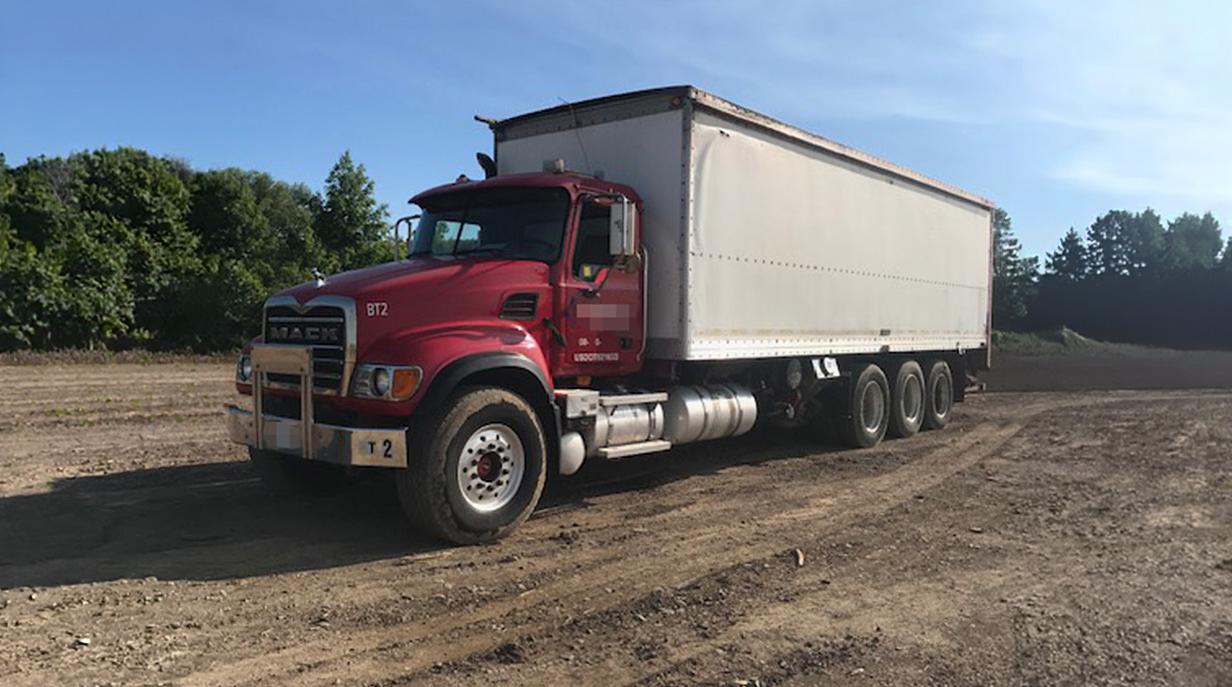
Blower truck above: 2004 Express Blower EB60
Finn Corporation
Finn builds blower trucks alongside hydroseeding and erosion control equipment. Their BB302 and BB1208 models are popular with contractors who handle both mulch installation and erosion control. Finn machines have a reputation for durability and parts availability. The company has been building landscape equipment for decades.
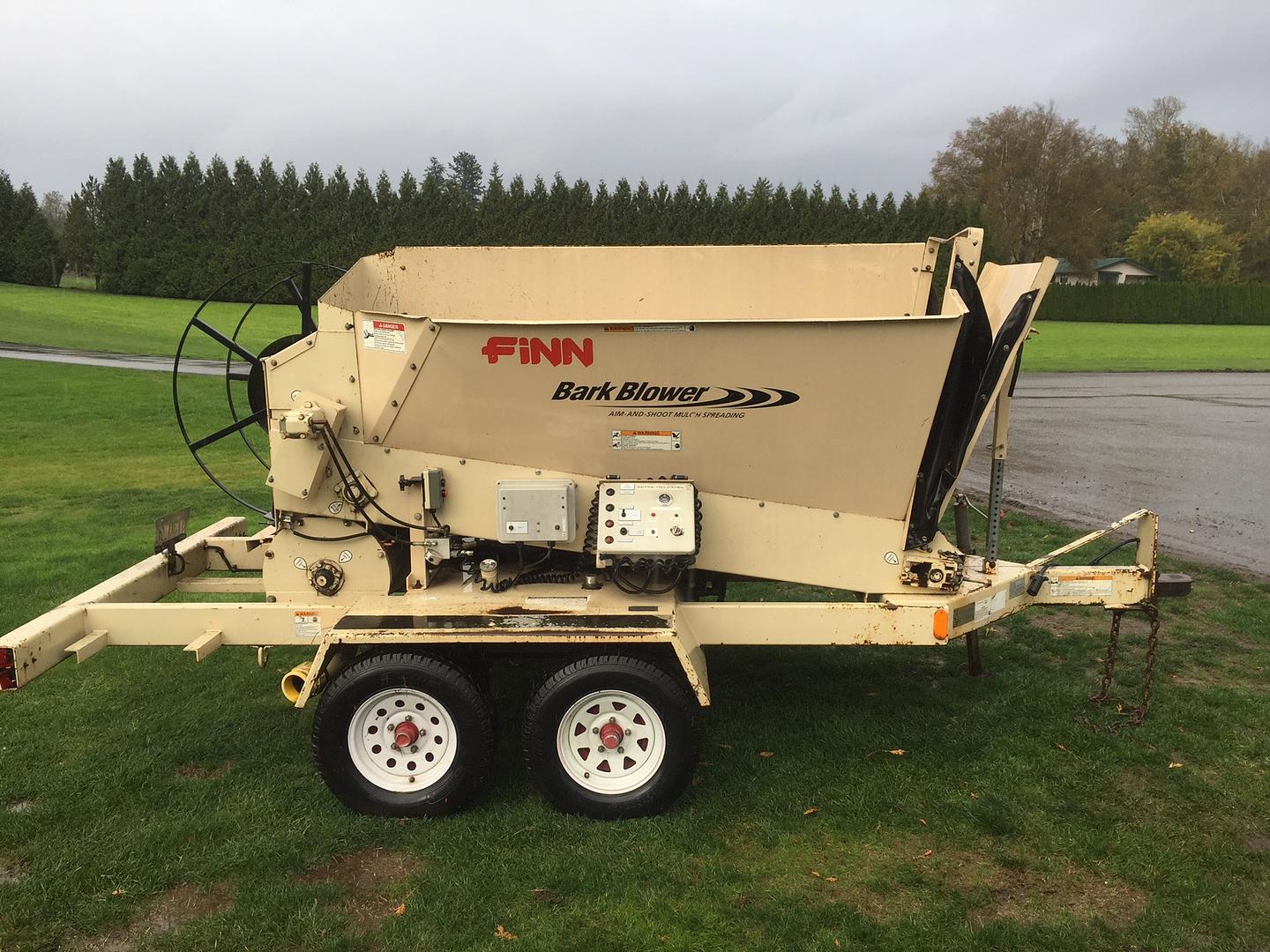
Bark Blower above: 2007 Finn BB302
Peterson
Peterson builds heavy-duty blower trucks for high-production environments. Their machines target large material supply yards and high-volume landscape operations. Peterson also manufactures horizontal grinders, so their equipment reflects an industrial design philosophy.
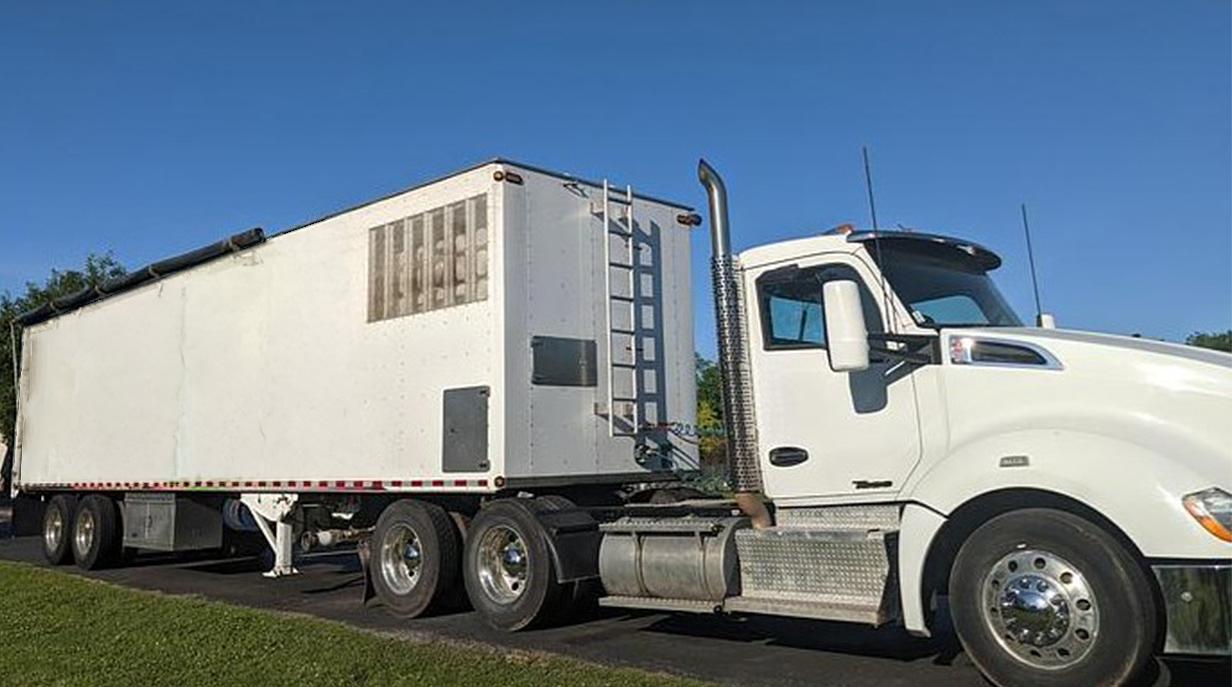
Blower Truck: 2017 Peterson BTR70
Brand Comparison Table
Brand Focus Popular Models Hopper Capacity Best For New Price Range Express Blower Blower trucks only EB-60, EB-45 8-20+ CY Full-time blowing contractors $180,000-$350,000+ Finn Blower trucks + erosion control BB302, BB1208 8-16+ CY Multi-service erosion contractors $150,000-$300,000+ Peterson Blower trucks + horizontal grinders BT series 12-20+ CY High-volume material suppliers $200,000-$350,000+ No single brand is the clear winner for every buyer. Express Blower is hard to beat if blowing is your primary business. Finn makes sense if you already run Finn erosion control equipment or need multi-purpose machines. Peterson fits operations that need maximum production capacity.
Truck Chassis Options
The chassis under your blower truck affects payload capacity, maneuverability, licensing requirements, and operating cost.
Single Axle
A single rear axle chassis keeps the truck shorter and lighter. Gross vehicle weight ratings (GVWR) typically fall between 26,000 and 33,000 pounds. Single axle trucks are easier to maneuver in tight residential areas and may not require a CDL in some states if GVWR stays under 26,001 pounds. Single axle blower trucks typically carry 8 to 12 cubic yards of material.
Tandem Axle
A tandem rear axle chassis is the most popular configuration for blower trucks. GVWR ranges from 40,000 to 58,000 pounds. The extra axle spreads the load and allows hopper capacities of 12 to 16 cubic yards. A CDL is required in all states. Tandem axle trucks balance payload, stability, and maneuverability — most full-time blowing operations run tandem axle machines.
Tri-Axle
A tri-axle chassis handles the heaviest loads. GVWR can exceed 65,000 pounds. Hopper capacities reach 16 to 20+ cubic yards. These trucks are built for high-volume operations on large commercial, municipal, and highway erosion control projects where job access is not an issue.
Chassis Comparison Table
Configuration GVWR Hopper Capacity CDL Required Best For New Chassis Cost Single Axle 26,000-33,000 lbs 8-12 CY May not be required Residential and part-time blowing $60,000-$90,000 Tandem Axle 40,000-58,000 lbs 12-16 CY Yes Full-time contractors (most popular) $90,000-$140,000 Tri-Axle 58,000-66,000+ lbs 16-20+ CY Yes High-volume commercial/municipal $120,000-$170,000 Common chassis brands include Kenworth, Peterbilt, Freightliner, International, and Western Star.
Capacity Sizing for Your Operation
Choosing the wrong size blower truck wastes money on either excess capacity or a machine that cannot keep up with demand.
Part-time blowing or startup operations. If mulch blowing is one of several services you offer, start with a trailer-mounted unit (5 to 8 cubic yards) or a small truck-mounted system (8 to 10 cubic yards). Lower upfront cost means lower risk while you build your customer base.
Mid-size landscape contractors. If you install 10 to 30 loads of mulch per week, a tandem axle truck with a 12 to 16 cubic yard hopper hits the sweet spot. You carry enough material per trip to handle most residential and small commercial jobs in one load.
High-volume operations. Material supply yards, large landscape companies, and erosion control contractors running 30+ loads per week need 16 to 20+ cubic yard capacity on a tandem or tri-axle chassis. Fewer trips to reload means more billable time on the job.
Blowing distance matters too. Most blower trucks push material through 200 to 300+ feet of hose. If your typical jobs require long hose runs, you need a machine with a larger blower and higher airflow capacity.
Consider your growth plan. Buying slightly more capacity than you need today is usually smarter than outgrowing a machine in 18 months. The resale market for blower trucks is strong, so upsizing later is an option, but the cost of buying and selling twice adds up.
Financing Options
A mulch blower truck is a major capital purchase. Most buyers finance rather than pay cash.
Equipment loans. A traditional equipment loan lets you own the truck from day one. Terms typically run 3 to 7 years with interest rates based on your credit, time in business, and the age of the equipment. New units qualify for better rates than used.
Equipment leases. A lease keeps monthly payments lower and may offer tax advantages. At the end of the lease, you can buy the equipment at residual value, return it, or upgrade.
SBA loans. Small Business Administration loans offer favorable terms for qualifying buyers. SBA 7(a) and 504 loans can cover equipment purchases with longer repayment periods and lower down payments.
Dealer financing. Some manufacturers and dealers offer in-house financing or partnerships with lending institutions.
Visit our financing page or call us at 770-433-2670 and we can walk you through your options based on your situation.
Frequently Asked Questions
How much does a mulch blower truck cost?
New mulch blower trucks range from $150,000 to $350,000+ depending on the chassis, hopper capacity, and brand. Used mulch blower trucks sell for $50,000 to $200,000 depending on age, condition, and hours. Trailer-mounted units start lower, around $60,000 new and $25,000 used.
What is the best brand of mulch blower truck?
Express Blower, Finn, and Peterson are the three leading brands. Express Blower is the top pick for dedicated blowing operations. Finn is strong for contractors who also do erosion control and hydroseeding. Peterson builds the heaviest-duty machines for high-volume production. The best brand depends on your operation and the dealer support in your area.
How far can a blower truck blow mulch?
Most mulch blower trucks push material through 200 to 300+ feet of hose. Blowing distance depends on the blower size, hose diameter, and material type. Longer hose runs reduce flow rate. Jobs that need maximum distance require a machine with a larger positive displacement blower and higher airflow capacity.
Do I need a CDL to drive a mulch blower truck?
It depends on the truck's gross vehicle weight rating. Trucks with a GVWR over 26,001 pounds require a CDL in all states. Some single axle blower trucks stay under that threshold. Tandem and tri-axle blower trucks always require a CDL. Check your state's specific requirements.
How many cubic yards does a blower truck hold?
Hopper capacity ranges from 5 to 8 cubic yards on trailer-mounted units up to 16 to 20+ cubic yards on large truck-mounted systems. The most popular size for full-time contractors is 12 to 16 cubic yards on a tandem axle chassis.
Can I blow compost and soil with a mulch blower truck?
Yes. Most blower trucks handle screened compost, soil blends, and other bulk materials in addition to mulch. The material must be screened to a consistent particle size and at the right moisture level. Well-screened compost and soil blends blow cleanly and are popular for lawn topdressing and garden bed preparation.
Is a mulch blowing business profitable?
A well-run mulch blowing operation can be very profitable. A two-person crew with a blower truck replaces six to ten manual laborers. Contractors typically charge $50 to $100+ per cubic yard installed, depending on the material and job difficulty. Many blower truck owners report payback on their equipment within 12 to 24 months of steady work.
Should I buy new or used?
Buy used if you are entering the blowing business and want to limit your initial investment. A good used blower truck with documented maintenance history offers strong value. Buy new if you have an established operation, need specific features, and want a full warranty with zero wear.
We have been helping buyers find the right heavy equipment since 1973. If you are in the market for a mulch blower truck, we can help you sort through the options and find a machine that fits your operation and your budget.
Browse our current blower truck inventory or reach out directly:
Call 770-433-2670 or email Sales@grindercrusherscreen.com.