





Spray Mulch Dye: Does Refreshing Old Mulch Actually Work?
Faded mulch looks bad. Sun-bleached beds make an otherwise clean property look neglected. Spray mulch dye promises to fix that problem without tearing out the old mulch and hauling in fresh material. But does it actually work?
We have been selling mulch production and coloring equipment since 1973. We see both sides of this question every day. Homeowners want to know if a mulch dye spray is worth the trouble. Commercial landscapers want to know if spraying makes more money than replacing. Here is a straight answer on both fronts.
What Is Spray Mulch Dye?
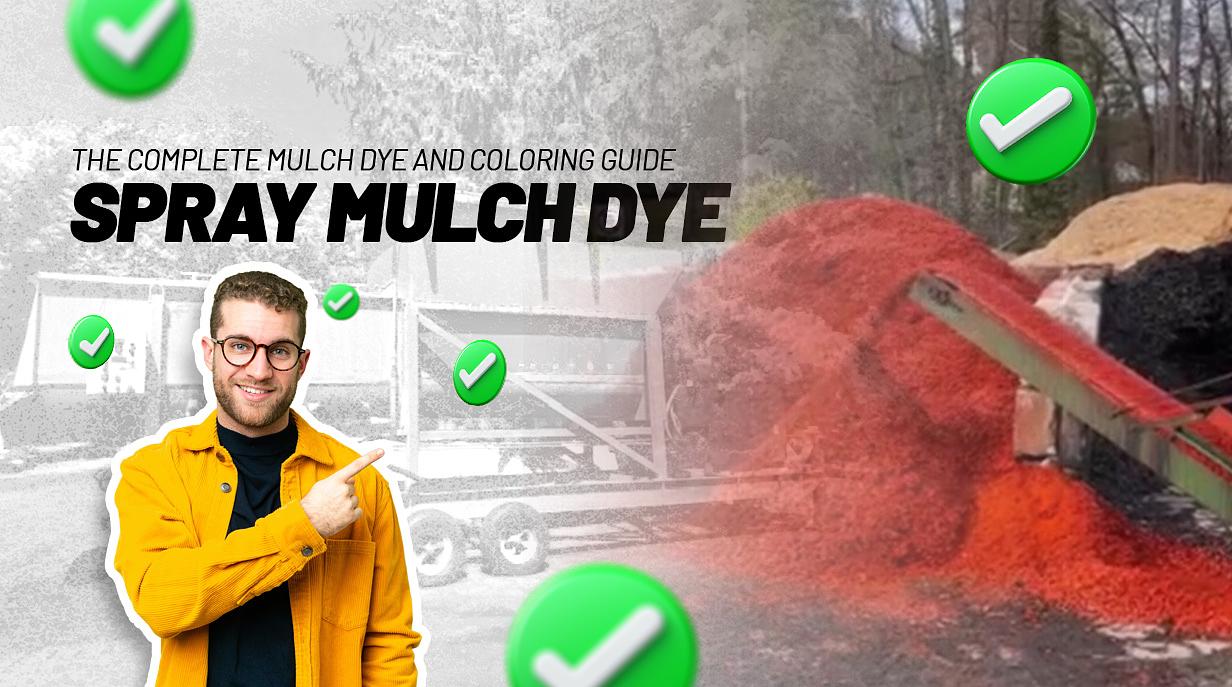
Spray mulch dye is a water-based colorant designed to restore faded mulch to its original color. You mix the concentrate with water, load it into a sprayer, and apply it directly onto existing mulch beds. The dye soaks into the wood fibers and dries to a uniform finish.
Most mulch dye products are made from iron oxide pigments suspended in a water-based carrier. These are the same pigments used in commercial mulch coloring machines at production yards. The difference is scale. A spray bottle covers a few flower beds. A coloring machine processes hundreds of cubic yards per hour.
Spray mulch dye is available in black, brown, and red. Black mulch dye spray is the most popular option for residential use. Brown and red mulch dye are also widely available from most manufacturers.
The concentrates are generally non-toxic once dried. They will not harm plants, pets, or soil organisms when applied according to the label directions.
How to Apply Mulch Dye Spray
Applying mulch dye is straightforward, but the prep work matters more than the spraying itself.
Equipment You Need
A basic residential application requires a pump sprayer, the dye concentrate, and water. A standard 1- or 2-gallon garden sprayer works for small beds. For larger areas, a backpack sprayer or a wheeled sprayer with a 15- to 25-gallon tank will save significant time.
Commercial applicators often use ATV-mounted or truck-mounted sprayers with adjustable nozzles. A fan-tip nozzle gives the most even coverage. Cone nozzles work but tend to concentrate product in the center of the spray pattern.
Step-by-Step Application
1. Clean the mulch beds. Remove leaves, trash, and large debris. Blow or rake the surface so the dye reaches the mulch fibers, not the debris sitting on top.
2. Mix the dye. Most concentrates mix at a ratio of roughly 1 part dye to 4 or 5 parts water. Follow the manufacturer's directions. A thicker mix gives deeper color but uses more product. A thinner mix goes further but may need a second coat.
3. Protect adjacent surfaces. Mulch dye stains concrete, pavers, siding, and fences. Mask off or cover anything you do not want colored. Overspray on a concrete walkway is very difficult to remove.
4. Spray in even passes. Hold the nozzle 12 to 18 inches above the mulch surface. Work in overlapping passes, similar to painting a wall with a sprayer. Do not soak any one area. Light, even coats produce the best results.
5. Let it dry. Drying time is typically 2 to 4 hours under normal conditions. Do not water the beds or walk on treated mulch until the dye has fully dried. If rain is expected within 6 hours, wait for a dry window.
Coverage Rates and Cost
Expect to get 100 to 200 square feet of coverage per gallon of mixed solution. Actual coverage depends on how faded the mulch is, the color you are applying, and how thick you mix the concentrate.
A gallon of concentrate costs $20 to $50 depending on the brand and color. Black mulch dye spray concentrate tends to fall at the lower end of that range.
For a typical residential property with 500 to 1,000 square feet of mulch beds, you will spend $40 to $100 in dye. Compare that to $200 to $500 for new bulk mulch delivered and installed.
Spray Mulch Dye vs. Replacing Mulch: Cost Comparison
For a residential property with approximately 1,000 square feet of mulch beds:
Factor Spray Mulch Dye Fresh Mulch Replacement Material cost $40-$100 $150-$300 (bulk mulch) DIY labor time 1-2 hours 4-8 hours Professional labor cost $100-$200 $300-$600 Adds mulch depth No Yes (2-3 inches) Weed suppression No improvement Full benefit Soil moisture retention No change Improved Total DIY cost $60-$160 $200-$500 Total professional cost $140-$300 $450-$900 Spray dye wins on cost every time. Replacing mulch wins on function. That trade-off is the key to deciding which approach makes sense for your situation.
Does Spray Mulch Dye Last?
Durability is the weak point of spray mulch dye. The honest answer is that it lasts 3 to 6 months before noticeable fading begins again.
What Affects Durability
UV exposure. South-facing beds in full sun fade fastest. Beds in partial shade hold color significantly longer. In a hot southern climate, expect the shorter end of the 3- to 6-month range for sun-exposed areas.
Rain and irrigation. Heavy rain within the first 24 hours can wash dye off the surface before it fully bonds. After curing, normal rain and irrigation will not strip the color, but months of water exposure gradually lightens it.
Mulch condition. Dye works best on mulch that is faded but still intact. If the mulch is decomposed, thin, or breaking down into soil, dye will not save it. The wood fibers need to be present for the dye to bond to.
Application thickness. A heavier application lasts longer than a light misting. Two thin coats outperform one thick coat for both appearance and durability.
Realistic Expectations
Plan on spraying twice per season in most climates. In the Southeast or Southwest, you may need three applications per year to maintain a consistent look. That changes the annual cost calculation, but it is still cheaper than replacing mulch each time. For more detail on why mulch fades and how to slow it down, read our guide on how to keep red mulch from turning maroon.
When Spraying Makes Sense (and When It Does Not)
Spray Dye Is a Good Fit When:
- The existing mulch is still 2 to 3 inches deep and structurally sound
- You need a quick refresh before a property showing, event, or seasonal transition
- Budget is tight and the beds do not need additional weed suppression
- You are a property manager maintaining dozens of beds and need to stretch the maintenance budget
Fresh Mulch Is the Better Choice When:
- The existing mulch has decomposed to less than 1 inch deep
- Weed pressure is high and you need the physical barrier of fresh material
- The beds have not been refreshed in 2 or more years
- You are establishing new landscape beds from scratch
A smart approach for many homeowners is to replace mulch every other year and spray dye in the off years. That cuts the annual mulch budget roughly in half while keeping beds looking fresh year-round.
Commercial-Scale Mulch Refreshing vs. Residential
Here is where the conversation shifts. For a homeowner with a few hundred square feet of beds, a pump sprayer and a jug of concentrate is all you need. For a commercial landscaper maintaining HOA properties, apartment complexes, or municipal parks, the math changes dramatically.
The Commercial Opportunity
A landscaping crew that offers mulch dye spray services can refresh 5,000 to 10,000 square feet per day with an ATV-mounted or truck-mounted sprayer. At commercial pricing of $0.15 to $0.30 per square foot, that is $750 to $3,000 in daily revenue. Material cost runs $0.03 to $0.08 per square foot. The margins are strong.
Property managers love this service because it costs less than full mulch replacement and the disruption is minimal. No dump trucks, no wheelbarrows tearing up turf, and no multi-day installation windows.
When Contractors Should Think Bigger
If you are a mulch supplier or landscape material producer, the real money is in coloring mulch at the production level. A mulch coloring machine lets you buy raw ground wood, color it to spec, and sell finished colored mulch at a premium. The per-yard economics of production-level coloring dwarf what you can earn with spray-on dye services.
We carry drum colorizers and pump-style colorizers for operations at every scale. For a deep dive into mulch dye products, formulations, and production-scale coloring, read our Coloring Mulch 101 guide.
Frequently Asked Questions
Is spray mulch dye safe for plants and pets?
Most mulch dye sprays are made from iron oxide pigments and water-based carriers. Once dried, they are non-toxic and safe around plants, pets, and children. Always check the product label. Allow 2 to 4 hours of drying time before letting pets or children onto treated beds.
How long does mulch dye spray take to dry?
Under normal conditions, spray mulch dye dries in 2 to 4 hours. High humidity, cool temperatures, and shade extend drying time. Do not water the beds or allow foot traffic until the dye is fully dry.
Will mulch dye spray stain my driveway or sidewalk?
Yes. Mulch dye will stain concrete, pavers, natural stone, fences, and siding. Mask off or cover all adjacent hardscapes before spraying. Overspray is very difficult to remove from porous surfaces.
Can I spray dye on rubber mulch or rock?
Spray mulch dye is formulated for wood-based mulch. It bonds to wood fibers. It will not adhere well to rubber mulch, gravel, or stone.
How much does it cost to spray dye on mulch?
For a DIY homeowner, expect to spend $40 to $100 in concentrate to cover 500 to 1,000 square feet. Professional services typically charge $0.15 to $0.30 per square foot for commercial properties. A gallon of concentrate costs $20 to $50 and covers 100 to 200 square feet of mixed solution.
Does black mulch dye spray fade to gray?
Black dye fades gradually back toward the natural gray-brown of weathered wood. The fade is progressive, not sudden. Most applications maintain a good appearance for 3 to 6 months depending on sun exposure and rainfall.
Can I change the color of my mulch with spray dye?
You can go darker but not lighter. You can spray black dye over brown or red mulch. You cannot spray brown or red dye over black mulch and expect good results. Always go from a lighter existing color to a darker dye color.
Is it better to spray mulch dye or replace mulch?
It depends on the condition of your existing mulch. If the mulch is still 2 to 3 inches deep and structurally sound, spraying is faster and cheaper. If the mulch has decomposed or thinned out below 1 inch, replacement is the better investment because you regain weed suppression and moisture retention.
Ready to Talk Mulch Equipment?
Whether you are a homeowner looking for dye recommendations or a commercial operation considering mulch coloring equipment, we can help. We have been matching buyers with the right equipment since 1973.
Give us a call at 770-433-2670 or email us at Sales@grindercrusherscreen.com. We will walk you through the options and help you find the right fit for your operation.