





Mulch Coloring Machines: How They Work, What They Cost, and Top Brands
Colored mulch sells for more than natural mulch. The color is what turns a commodity product into a premium product. A mulch coloring machine is the equipment that makes that upgrade possible.
We have been selling mulch production equipment since 1973. We have helped hundreds of mulch producers add colorizing to their operations. This guide covers how mulch coloring machines work, throughput by machine size, dye consumption, top brands, pricing for new and used equipment, and how to match a colorizer to the grinder you already own.
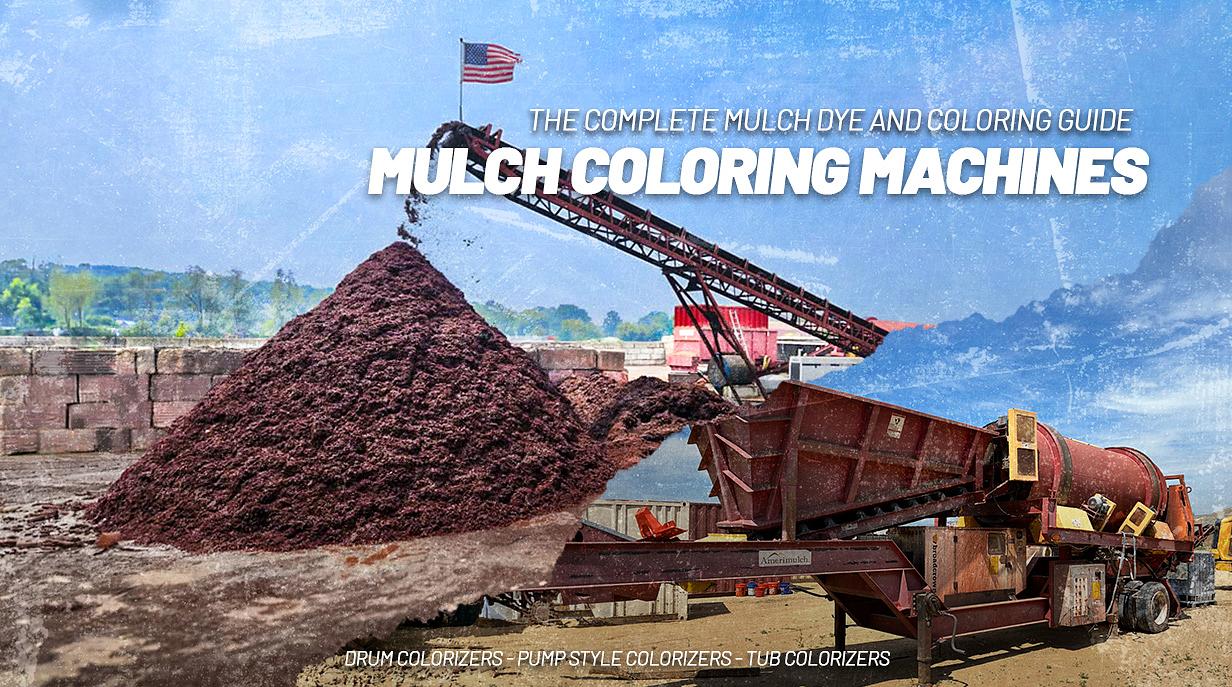
How Mulch Coloring Equipment Works
A mulch coloring machine applies liquid dye to ground wood material. The goal is even, consistent color coverage on every particle. Three main machine designs handle this job.
Drum Colorizers
A drum colorizer tumbles mulch through a rotating drum while spray nozzles apply dye inside the drum. The tumbling action exposes all surfaces of the wood particles to the dye. Material enters one end and exits the other, fully coated.
Drum colorizers are the most common type on the market. They deliver consistent color with good dye efficiency. The enclosed drum contains overspray, which reduces dye waste and keeps the work area cleaner.
Most drum units run continuously. Mulch feeds in by conveyor, tumbles through the drum for 15 to 30 seconds, and exits onto a stockpile conveyor.
Conveyor Colorizers
A conveyor colorizer sprays dye onto mulch as it travels along a belt conveyor. Spray bars mounted above the belt apply dye from above. Some models add spray bars below the belt or at transfer points to coat the underside of the material.
Conveyor colorizers are simpler in design than drum units. They have fewer moving parts and are easier to maintain. They work well for operations that already have conveyors in their material handling flow.
The trade-off is color consistency. Conveyor colorizers can leave the underside of particles less coated than the top, especially in a single-pass system.
Trommel-Integrated Colorizers
Some trommel screen manufacturers offer colorizing systems built into the trommel drum. The trommel screens the mulch to size and applies color in the same pass. Spray nozzles inside the trommel drum coat the material as it tumbles through the screen.
This design saves space and eliminates a separate piece of equipment. The limitation is flexibility — if you need to screen without coloring, or color without screening, an integrated system makes one of those jobs harder.
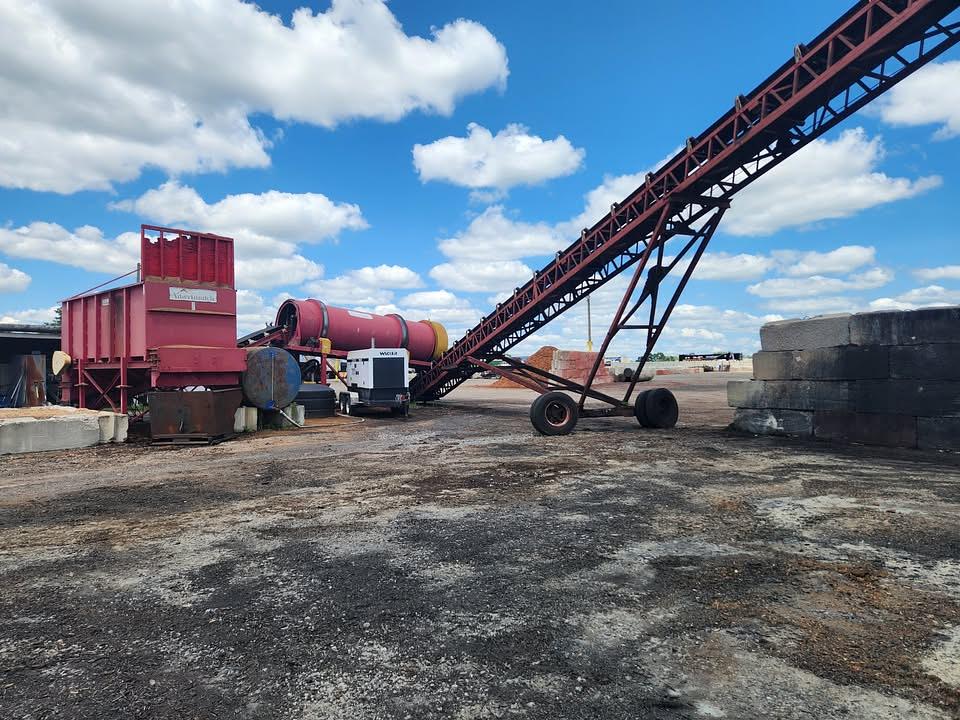
Colorizer above: 2008 Amerimulch Colortrom 250
Capacity and Throughput by Machine Size
Machine Size Throughput Best For Small (drum or conveyor) 50-80 CY/hr Start-up operations and single-grinder yards Mid-size (drum) 80-120 CY/hr Mid-volume producers and 2-3 grinder operations Large (drum or conveyor) 120-200+ CY/hr High-volume yards and multi-product operations Trommel-integrated 60-150 CY/hr Operations already screening to size Small machines in the 50 to 80 cubic yard per hour range match well with a single horizontal grinder. Mid-size units handle the output of two or three grinders. Large colorizers at 120 to 200+ cubic yards per hour are built for high-volume producers running material all day.
Dye Consumption Rates
Most mulch colorizers consume 1 to 3 gallons of liquid colorant per cubic yard of finished mulch. The actual rate depends on several factors.
Wood species. Hardwoods generally absorb more dye than softwoods. Pine and cedar take color with less dye per yard than oak or maple.
Grind size. Finer grinds expose more surface area. A double-ground mulch product may need 30 to 50 percent more dye than a single-ground product of the same species.
Target color. Black mulch typically requires less dye than red or brown. Red mulch usually requires the highest dye rate per yard.
Moisture content. Wet material dilutes the dye on contact. Most producers aim for 20 to 35 percent moisture content at the colorizing stage.
At current dye prices, the colorant cost per cubic yard typically runs $1.50 to $5.00 depending on color and application rate. For a deeper look at dye types and mixing ratios, see our Coloring Mulch 101 guide.
Top Mulch Colorizer Brands
Colorbiotics (Amerimulch)
Colorbiotics, which includes the Amerimulch brand, is one of the largest names in mulch colorizing. They manufacture both colorizing equipment and the dyes that go into them. Their product line ranges from entry-level conveyor systems to high-capacity drum colorizers. Buying the machine and dye from the same company simplifies support and troubleshooting.
Bandit Industries
Bandit is well known for grinders and chippers, and they also offer colorizing systems designed to integrate with their grinder product line. A Bandit mulch colorizer paired with a Bandit grinder gives you a matched system with one point of contact for support.
Rotochopper
Rotochopper manufactures grinders with integrated colorizing capability. Their machines grind and color in a single pass. For producers who want to keep their equipment footprint small, a grinder-colorizer combo from Rotochopper is worth evaluating.
Screen Machine Industries
Screen Machine builds trommels and screening equipment with optional colorizing packages. If you are already running a Screen Machine trommel, adding their colorizer package keeps your equipment lineup consistent.
New vs Used Pricing
Machine Type New Price Used Price Small drum or conveyor colorizer $30,000-$55,000 $15,000-$30,000 Mid-size drum colorizer $55,000-$90,000 $30,000-$55,000 Large drum colorizer (120+ CY/hr) $90,000-$150,000+ $50,000-$80,000 Trommel with integrated colorizer $80,000-$150,000+ $40,000-$75,000 Grinder-colorizer combo unit $150,000-$350,000+ $80,000-$200,000 Used equipment can save you 40 to 60 percent off new pricing. We list mulch colorizers for sale regularly, including both new and used machines. Check our current inventory for actual pricing on available units.
Maintenance Requirements
Spray nozzles. Check and clean them daily during production. Replace worn nozzles immediately. Most operators keep a full spare set on hand.
Dye pumps and lines. Flush dye lines at the end of every production day. Dried dye plugs lines and damages pump seals. Pumps should be inspected monthly.
Drum interior (drum colorizers). Scrape or pressure wash the interior on a weekly schedule to prevent buildup from flaking off onto finished mulch.
Bearings and drive components. Grease bearings on the manufacturer's recommended schedule. Inspect chains and sprockets monthly for wear.
Conveyor belts. Plan on replacing conveyor belts every 12 to 24 months in high-volume operations.
A well-maintained colorizer should run for years with minimal downtime. Skipping daily nozzle checks and dye line flushing is the fastest way to create expensive repair bills.
How to Match a Colorizer to Your Grinder Output
Start with your grinder's rated output. If your horizontal grinder produces 80 cubic yards per hour, your colorizer should handle at least 80 cubic yards per hour. Add a 20 percent buffer for peak-rate surges.
Match the feed method. Make sure the discharge height of your grinder or screening step can feed the colorizer's intake conveyor without an extra transfer.
Consider your product mix. If you run both colored and natural mulch, you need a flow that lets you bypass the colorizer for natural product. A standalone mulch colorizer with a diverter gate handles this easily. Integrated grinder-colorizer combos are less flexible for mixed production.
Think about screening order. Screening before coloring means the colorizer only handles finished-size material, which improves dye efficiency. Coloring first and then screening can waste dye on oversized material that gets rejected. For more on getting your grind consistent, see our Coloring Mulch 101 guide.
Plan for growth. If you expect to add a second grinder in the next two to three years, size the colorizer for the larger output now.
We can help you spec the right match. Call us at 770-433-2670 or email Sales@grindercrusherscreen.com with your grinder model and production targets.
Frequently Asked Questions
How much does a mulch coloring machine cost?
New mulch coloring machines range from $30,000 for a small conveyor colorizer to $150,000 or more for a large drum unit. Used machines typically sell for $15,000 to $80,000 depending on size, brand, age, and condition.
How many gallons of dye does a colorizer use per cubic yard?
Most colorizers consume 1 to 3 gallons of liquid dye per cubic yard of mulch. Black mulch generally requires the least dye per yard. Red mulch usually requires the most. Read our Coloring Mulch 101 guide for full mixing and application detail.
Can I add a colorizer to my existing grinder setup?
Yes. Standalone drum and pump-style colorizers can be added to any existing mulch production line. You need a conveyor to feed mulch into the colorizer and a conveyor to carry the finished product to your stockpile area. Most installations can be completed in a few days with proper planning.
How long does it take for colored mulch to dry after coloring?
Freshly colored mulch needs 24 to 48 hours of drying time. Drying time depends on weather conditions, pile size, and air circulation. Thin stockpiles in direct sun dry faster than deep piles in shade. Turning the pile speeds up drying.
Is colored mulch safe for gardens and landscaping?
Yes. Modern mulch colorants are water-based and made from iron oxide and carbon-based pigments. They are non-toxic and safe for use around plants, pets, and children.
What is the difference between a drum colorizer and a conveyor colorizer?
A drum colorizer tumbles mulch inside an enclosed drum while spraying dye — giving more even, consistent color coverage. A conveyor colorizer sprays dye onto mulch as it passes along a belt. Conveyor systems are simpler and cheaper but may produce less even coverage on the underside of particles.
Do I need to screen mulch before coloring it?
Screening before coloring is recommended. Screening removes oversized pieces and contaminants before they reach the colorizer. This improves color consistency and prevents wasting dye on reject material. We carry trommel screens and shaker screens that integrate well with mulch production lines.
How do I switch between mulch colors on the same machine?
Switching colors requires flushing the dye system — drain the current dye, flush with water until lines run clear, fill with the new color, and run a small test batch. A full color change takes 30 to 60 minutes on most machines. For more on why colors shift unexpectedly, read our guide on keeping red mulch from turning maroon.
We have been helping mulch producers find the right equipment since 1973. Whether you are adding color to your product line for the first time or upgrading to a higher-capacity machine, we stock mulch colorizers for sale and can help you find the right fit.
Call us at 770-433-2670 or email Sales@grindercrusherscreen.com to talk through your options.