





Concrete Crusher Bucket: On-Site Demolition Recycling Guide
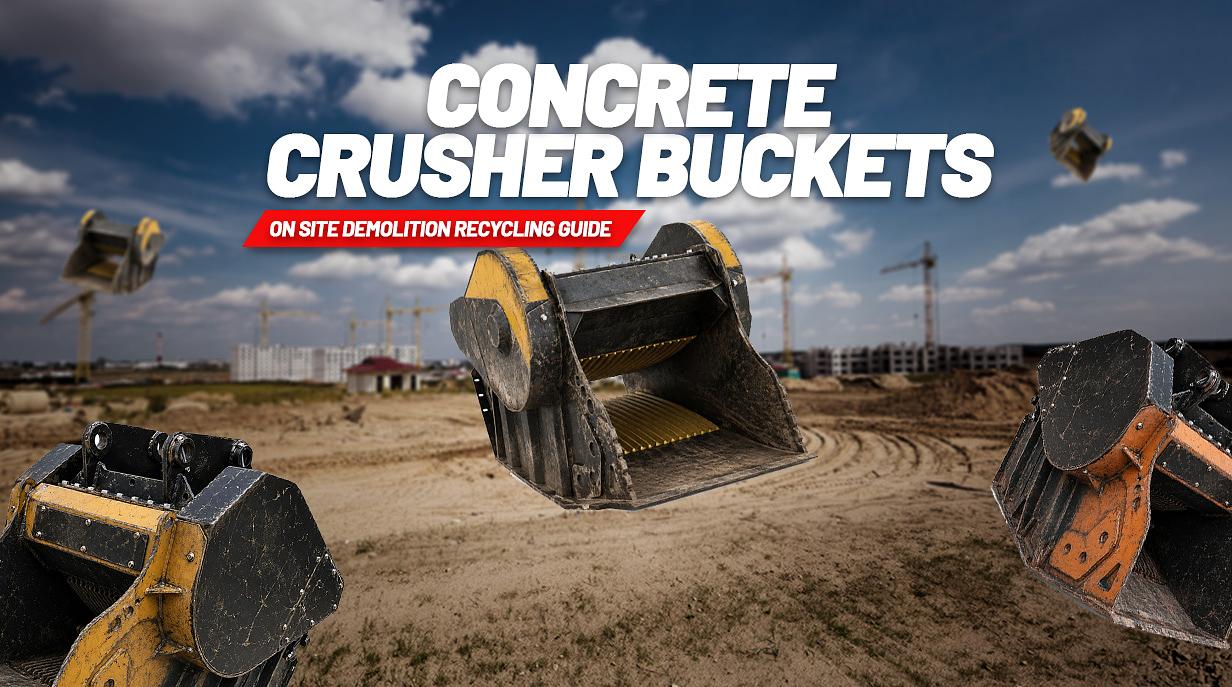
Every demolished concrete slab, foundation, or sidewalk creates the same question: haul it to a crushing yard or crush it on-site? A concrete crusher bucket lets you crush it right where it falls. Your excavator does the demolition and the crushing in the same footprint, with no haul trucks, no tipping fees, and no waiting for a mobile crusher to show up.
We have been selling crushing equipment since 1973. We sell standalone jaw crushers, impact crushers, and full crushing plants. We also talk to demolition contractors every week who use crusher bucket attachments for on-site concrete recycling. This guide covers the full workflow, the real economics, and where a crusher bucket makes sense versus where you need a bigger machine.
Why Crush Concrete On-Site
The economics of on-site concrete crushing come down to three cost categories that you eliminate or drastically reduce.
Tipping Fee Savings
Concrete disposal fees run $35 to $85 per ton at most landfills and transfer stations, depending on your region and whether the facility accepts clean concrete or charges C&D rates. Some metro areas charge over $100 per ton. On a job that generates 200 tons of concrete, tipping fees alone can cost $7,000 to $17,000.
When you crush concrete on-site with a crusher bucket, that disposal cost drops to zero. The material stays on the property as reusable aggregate.
Trucking Cost Elimination
Hauling concrete off-site requires trucks, fuel, driver time, and road time. A typical tandem dump truck holds 12 to 15 tons. That same 200-ton job requires 13 to 17 truckloads to a disposal site. At $50 to $150 per load depending on distance, you are spending $650 to $2,550 just on trucking.
A crusher bucket eliminates every one of those loads. The material never leaves the site.
Aggregate Reuse
Crushed concrete is a legitimate construction material. It compacts well, drains well, and provides a stable base. On most demolition sites, the crushed product can be used immediately for backfill, sub-base, temporary road surfaces, pad building, and general fill. That means you are not just avoiding disposal costs. You are also avoiding the cost of purchasing and hauling in virgin aggregate for the same purposes.
In many jurisdictions, recycled concrete aggregate (RCA) is an approved material for road base, pipe bedding, and structural fill applications. Check your local DOT and engineering specifications, but the material is widely accepted.
Crusher Bucket Output Sizes for Concrete
Most concrete crusher buckets produce output in the 2 to 4 inch minus range at standard gap settings. This is suitable for most backfill and base applications on a demolition site.
The gap setting on a jaw-style crusher bucket is adjustable. Tighter settings produce smaller material but reduce throughput because the jaws need more cycles to process each load. Wider settings increase throughput but produce larger, coarser aggregate.
Gap Setting Output Size Typical Use Effect on Throughput Tight (3/4 to 1.5 in) Mostly minus 1.5 inch Pipe bedding, compacted fill 30-50% reduction from max rate Medium (1.5 to 3 in) Mostly minus 3 inch Road base, backfill, sub-base Standard production rate Wide (3 to 5 in) Mostly minus 5 inch Rough fill, erosion control, rip-rap fill Maximum throughput For most demo site backfill and base work, a medium setting producing 2 to 3 inch minus material is the sweet spot. It balances production rate with a usable product size. If you need a tighter spec, a screening step after crushing will separate the fines from the oversize.
One note on product quality: crusher bucket output is less uniform than what a standalone jaw crusher produces. The shorter crushing chamber and batch process mean some pieces pass through with less reduction than others. For backfill and rough base work, this is not a problem. For engineered fill or DOT-spec road base, you may need to screen the product or consider a standalone crusher.
Rebar Handling
Concrete and rebar go together. Most structural concrete has some reinforcement, and that rebar does not disappear when you demolish the structure. How you handle rebar determines whether your crusher bucket runs smoothly or jams constantly.
Light Rebar (No. 3 and No. 4 Bars, Wire Mesh)
Most crusher buckets handle light rebar without difficulty. The jaws crush the concrete around it, and the rebar bends and passes through the bucket. It ends up in the crushed product pile as tangled pieces that can be removed with a magnet or by hand.
Wire mesh from slabs and sidewalks is generally not a problem. The thin gauge bends and deforms easily during the crushing process.
Medium Rebar (No. 5 and No. 6 Bars)
Medium-weight rebar is manageable in most medium and large crusher buckets (those designed for 20-ton and larger excavators). Smaller crusher buckets may struggle. The rebar can wedge between the jaw plates and stall the crushing cycle. When this happens, the operator needs to reverse the jaws, clear the jam, and try again.
If you know the concrete is reinforced with No. 5 or No. 6 bars, plan for slower production and occasional stalls.
Heavy Rebar (No. 7 and Above, Structural Steel)
Heavy rebar and structural steel do not belong in a crusher bucket. Period. Bars of No. 7 diameter and above, along with I-beams, plates, and structural connections, will jam the bucket, damage the jaw plates, and can crack the bucket housing. The repair bill from feeding heavy rebar into a crusher bucket will exceed whatever you saved by not pre-cutting it.
Pre-cut heavy rebar before loading the concrete into the bucket. A hydraulic shear attachment or a cutting torch handles this step.
Rebar Separation After Crushing
Rebar pieces end up mixed into your crushed aggregate pile. Before you use that aggregate as fill or base, you need to remove the metal. An excavator-mounted magnet, a magnetic separator, or even a hand magnet on smaller jobs will pull the rebar out of the pile. On larger jobs, some contractors run the crushed material over a belt with an overhead magnet before stockpiling.
Do not skip this step. Rebar protruding from fill material is a safety hazard and will cause problems if the aggregate is used under pavement or structures.
Demo Site Workflow: Step by Step
Here is how experienced demolition contractors run a concrete crusher bucket operation from start to finish.
Step 1: Demolish the Structure
The excavator breaks the concrete structure using a hydraulic breaker, the bucket teeth, or a combination of both. Break the concrete into pieces small enough to fit the crusher bucket opening. For most mid-size crusher buckets, that means pieces no larger than 18 to 24 inches across.
If the structure has heavy rebar or embedded steel, cut and separate the metal during this step. Do not wait until the concrete is loaded into the crusher bucket to deal with it.
Step 2: Swap to the Crusher Bucket
Once you have a pile of broken concrete, swap the breaker or digging bucket for the crusher bucket attachment. On a quick-coupler system, this takes a few minutes. Without a quick coupler, budget 15 to 30 minutes for the swap.
Many contractors prefer to dedicate one excavator to crushing and use a second machine or a loader to continue demolition and feed the crusher bucket. This keeps both machines productive and avoids constant attachment changes.
Step 3: Load and Crush
Scoop broken concrete into the crusher bucket. Activate the hydraulic circuit to start the jaws. The concrete fractures between the jaw plates and falls through as crushed aggregate. Once the bucket is empty, scoop the next load and repeat.
Operator technique matters. Loading the bucket evenly and avoiding oversized pieces keeps the cycle time consistent. An experienced operator learns the right amount of material per scoop and the rhythm of the crushing cycle for that particular bucket and material.
Step 4: Screen If Needed
For most backfill and general fill applications, the crushed product from the bucket is ready to use as-is. If you need a tighter gradation, run the material through a screening bucket or a small portable shaker screen.
A screening bucket is another excavator attachment that pairs naturally with a crusher bucket. Crush in one bucket, swap to the screening bucket, and screen the pile to separate fines from oversized pieces. Some operators use a second excavator with the screening bucket running simultaneously.
Step 5: Stockpile Reusable Aggregate
Push or pile the crushed concrete aggregate in a designated area on site. If you are using it for backfill on the same project, stockpile it near where it will be placed. If you are saving it for future use or selling it, stockpile it in a clean area away from dirt, organics, and other contaminants.
Label your stockpiles by size if you are producing multiple products. Keep recycled concrete aggregate separate from natural aggregate or other fill materials.
Production Rates: Concrete vs Rock
Concrete is one of the easiest materials for a crusher bucket to process. It fractures predictably under compression, and most concrete is softer than natural rock. That translates to faster cycle times and higher hourly production compared to crushing rock with the same bucket.
Realistic Production Rates
Material Excavator Class Typical Rate (CY/hr) Typical Rate (TPH) Notes Unreinforced concrete 20-30 ton 15-25 CY/hr 15-25 TPH Fastest; clean fractures Lightly reinforced concrete 20-30 ton 12-20 CY/hr 12-20 TPH Rebar slows cycle slightly Heavily reinforced concrete 30+ ton 8-15 CY/hr 8-15 TPH Frequent jams; pre-cut rebar Limestone 20-30 ton 10-18 CY/hr 12-22 TPH Moderate hardness Granite/basalt 30+ ton 6-12 CY/hr 8-16 TPH Hard; high wear on jaws These are real-world working rates, not manufacturer peak claims. Actual production depends on your specific bucket model, excavator size, material consistency, operator skill, and how much non-crushing time you spend.
A 200-ton concrete demolition job at 15 to 20 CY per hour takes roughly 10 to 14 hours of actual crushing time. That is one and a half to two full working days, plus time for demolition, rebar handling, and stockpiling.
When You Need More Production
If you are processing more than a few hundred tons on a single job, or if you crush concrete regularly across multiple projects per month, a crusher bucket becomes a bottleneck. A standalone jaw crusher or impact crusher produces 50 to 250+ TPH depending on size — 5 to 15 times the output of a crusher bucket.
We sell standalone crushers for exactly this situation. Many of our customers started with a crusher bucket, grew their volume, and graduated to a portable jaw crusher. If you are at that crossover point, call us. We carry both new and used crushers and can help you figure out the right size for your operation.
Environmental and Permit Considerations
Crushing concrete on a demolition site is not automatically allowed everywhere. Regulations vary by state, county, and municipality. Here is what you need to check before you start.
Local Permits and Zoning
Some jurisdictions require a permit for on-site crushing, even temporary operations. Others regulate it under the demolition permit. A few municipalities prohibit on-site crushing entirely and require material to be hauled to a licensed facility. Check with your local planning department, environmental agency, or building department before you plan an on-site crushing operation.
Dust Control
Crushing concrete generates dust. Silica dust from concrete is a health hazard under OSHA regulations. You are responsible for controlling dust exposure for your workers and for preventing dust from leaving the site.
Water suppression is the standard approach. A water truck or hose spraying the material before and during crushing keeps dust down. On dry, windy days, increase the water application.
Stormwater and Runoff
Crushed concrete stockpiles and the fines they generate can affect stormwater quality. Concrete dust is alkaline, and runoff from uncovered stockpiles can raise the pH of nearby waterways. Silt fences, straw wattles, and proper stockpile placement away from drains and waterways are standard measures.
Noise
Crusher buckets are not as loud as standalone crushers, but they are not quiet. Check local noise ordinances, especially on urban sites. Early morning and evening restrictions may limit your crushing hours.
Cost-Per-Ton Analysis: On-Site Crushing vs Hauling
Option A: Haul to a Crushing Yard
Cost Item Unit Cost Quantity Total Trucking (tandem dump, 14-ton loads) $75-$125 per load 14-15 loads $1,050-$1,875 Tipping/disposal fee $35-$85 per ton 200 tons $7,000-$17,000 Purchase replacement fill (if needed) $8-$15 per ton delivered 150 tons $1,200-$2,250 Total cost to haul $9,250-$21,125 Option B: Crush On-Site with a Crusher Bucket
Cost Item Unit Cost Quantity Total Crusher bucket ownership cost (amortized) $12-$18 per hour 12 hours $144-$216 Additional fuel (excavator under crush load) $15-$25 per hour 12 hours $180-$300 Jaw plate wear (prorated) $2-$4 per hour 12 hours $24-$48 Dust control (water) Lump sum 1 $100-$200 Total cost to crush on-site $448-$764 Net Savings
On a 200-ton job, on-site crushing saves roughly $8,500 to $20,000 compared to hauling — that is $42 to $100 per ton in savings.
These savings scale with job size. A 500-ton job saves even more because the fixed costs spread across more tons. On very small jobs under 50 tons, the savings are real but the absolute dollar amount may not justify owning a crusher bucket unless you encounter these jobs regularly.
When Hauling Still Wins
On-site crushing is not always the answer. Hauling makes more sense when the site has no room for stockpiling, local regulations prohibit on-site crushing, the concrete is contaminated with hazardous materials, you do not own an excavator large enough to run a crusher bucket, or the crushed material has no use on-site.
When a Standalone Crusher Wins
If you are processing more than 500 to 1,000 tons regularly, or if you run a recycling yard that accepts concrete from multiple sources, a standalone crusher is more cost-effective per ton. A portable jaw crusher or impact crusher produces 50 to 250+ TPH, which drops your cost per ton well below what a crusher bucket can achieve.
Tips for Maximizing Crusher Bucket Productivity on Concrete
Break concrete to manageable size first. Do not try to feed full slabs or oversized chunks into the bucket. Pre-break concrete to pieces that fit the bucket opening with room to spare. This prevents bridging and keeps cycle times consistent.
Keep the bucket jaws sharp. Worn jaw plates crush less efficiently and produce a coarser product. Replace or rotate jaw plates before they are completely worn out. The production rate difference between sharp and worn jaws is significant.
Wet the material. Spraying water on the concrete pile before loading the crusher bucket reduces dust, cools the jaw plates slightly, and can help material flow through the discharge gaps more easily.
Use a quick coupler. Switching between a breaker, digging bucket, and crusher bucket multiple times per day without a quick coupler wastes enormous amounts of time. A hydraulic quick coupler pays for itself quickly on jobs that require frequent attachment changes.
Dedicate a machine to crushing. If the job generates enough concrete, put one excavator on full-time crushing duty while a second machine continues demolition. Constant attachment swapping kills production.
Remove heavy rebar before loading. Spend the time up front. The production time you lose to clearing jams and the repair costs from damaged jaw plates far exceed the cost of cutting rebar before it goes into the bucket.
Frequently Asked Questions
What size concrete can a crusher bucket handle?
Most mid-size crusher buckets (designed for 20 to 30-ton excavators) accept concrete pieces up to 18 to 24 inches across. Larger buckets for 30+ ton excavators can handle pieces up to 28 to 32 inches. Always check the manufacturer's maximum feed size for your specific model. Overloading the bucket with material that is too large causes jams, stalls the hydraulic system, and can damage the jaw plates or bucket housing.
Can I use crushed concrete from a crusher bucket as road base?
In many cases, yes. Recycled concrete aggregate (RCA) is an accepted base material in most states. However, the product from a crusher bucket may need screening to meet a specific gradation spec. Crusher bucket output is less uniform than what a standalone jaw crusher produces. For informal access roads, driveways, and temporary surfaces, unscreened crusher bucket output works well. For DOT-spec road base, screen the material or have it tested to confirm it meets the required gradation.
How does a crusher bucket handle concrete with wire mesh?
Wire mesh is generally not a problem. The thin gauge wire bends and deforms during the crushing process and passes through the crusher bucket with the crushed aggregate. After crushing, pull the wire mesh pieces out of the stockpile with a magnet. Wire mesh does not jam most crusher buckets the way heavy rebar does.
Is a concrete crusher bucket worth it for a small demolition contractor?
If you encounter concrete on a regular basis, even in small quantities, a crusher bucket can pay for itself quickly through avoided tipping fees and trucking costs. A contractor who tears out two or three foundations per month at 50 to 100 tons each can recover the cost of a $25,000 to $40,000 crusher bucket within one to two seasons. If you only encounter concrete a few times per year, renting a crusher bucket or hiring a mobile crushing service may be more cost-effective than buying.
What maintenance does a concrete crusher bucket require?
Regular maintenance includes inspecting and replacing jaw plates as they wear, checking and maintaining hydraulic lines and fittings, greasing pivot points, and inspecting the bucket housing for cracks or deformation. Jaw plates are the primary consumable. On concrete, a set of jaw plates typically lasts 200 to 500 hours depending on the rebar content, the material hardness, and the gap setting. Keep spare jaw plates on hand so a worn set does not shut down your operation mid-job.
How loud is a crusher bucket compared to a standalone crusher?
A crusher bucket is quieter than a standalone jaw crusher or impact crusher because the crushing mechanism is smaller and the energy input is lower. However, it is not quiet. The excavator engine running at high RPM under hydraulic load, combined with the crushing action, produces noise levels in the 80 to 95 dB range at the operator's position. Hearing protection is required. For noise-sensitive sites, check local noise ordinances and plan crushing hours accordingly.
Get the Right Equipment for Your Concrete Recycling Operation
Whether a crusher bucket fits your operation depends on your volume, your job mix, and how often you encounter concrete. For small to mid-size demolition jobs where you want to recycle on-site and avoid hauling costs, a concrete crusher bucket is a practical, cost-effective solution.
For higher-volume operations, we carry standalone jaw crushers and impact crushers that produce at rates a crusher bucket cannot match. We also carry screening equipment for sizing your crushed product to spec.
We have been helping contractors find the right crushing equipment since 1973. Call us at 770-433-2670 or email Sales@grindercrusherscreen.com to discuss your concrete recycling needs. We will help you figure out the right machine for your volume and application.