





Best Screening Bucket Brands Compared: Wolverine vs ALLU vs Remu vs Rotastar
Choosing a screening bucket brand matters more than most contractors realize. The wrong bucket for your carrier, your material, or your job volume will cost you in downtime, poor screening quality, and frustration. The right one earns its keep from day one.
We have been selling screening equipment since 1973. We work with contractors, landscapers, topsoil producers, and municipal crews across every scale of operation. We see what works in the field and what comes back for warranty claims. This guide breaks down the four most commonly searched screening bucket brands and adds a few more worth considering so you can match the right bucket to your machine and your application.
If you are still deciding whether a screening bucket is the right tool for your operation, or whether a standalone screener makes more sense, start with our three-way comparison of screening bucket vs trommel vs shaker screen. This article assumes you have already decided a screening bucket is the right fit and you are comparing brands.
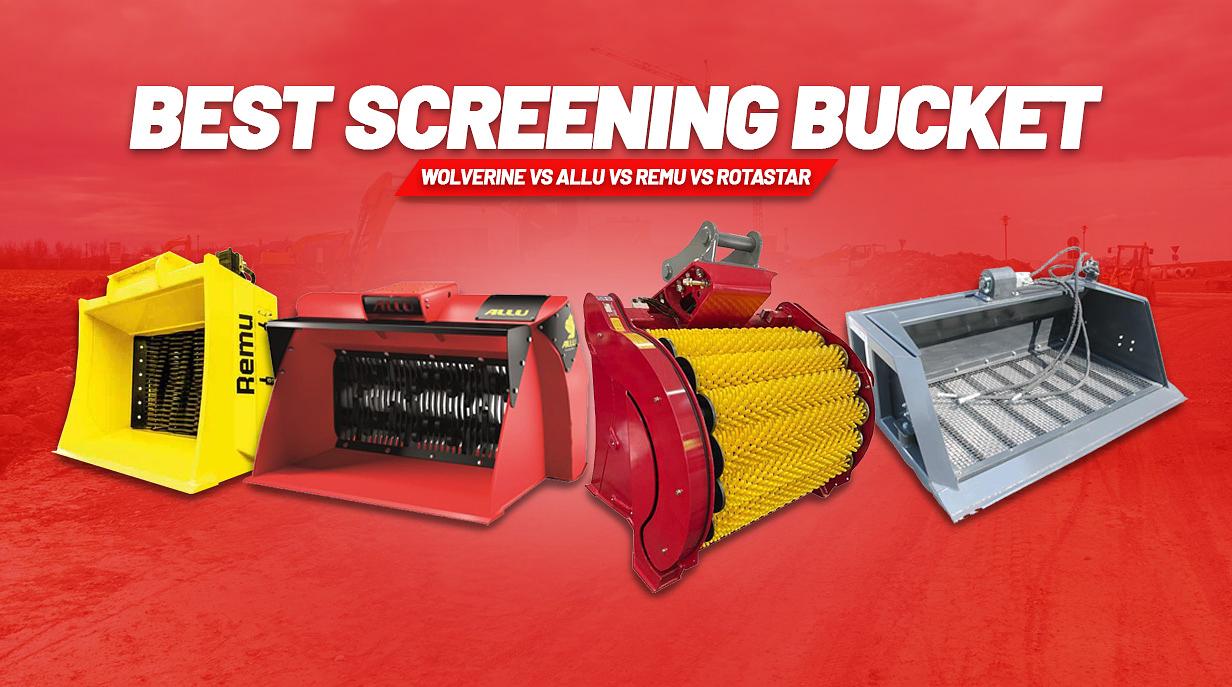
Wolverine Screening Bucket
Brand Overview
Wolverine is a US-branded manufacturer that has built a strong following among contractors and small earthwork operators. Their screening buckets are manufactured overseas and imported, which keeps pricing competitive compared to European brands.
Wolverine screening buckets use a vibrating screen design. Material is scooped by the excavator, and a hydraulic motor drives a vibrating mechanism that shakes fines through mesh openings. The fines fall through the screen. The oversize stays inside and gets dumped separately.
What sets Wolverine apart in the market is value. Their screening buckets consistently come in at a lower price point than the European brands while offering solid construction and reliable performance for the materials most US contractors work with: topsoil, dirt, sand, light demolition debris, and gravel.
Key Specs and Features
Wolverine offers screening buckets for excavators ranging from the mini class (1 to 3 tons) up through mid-size machines (15 to 25 tons). Bucket widths typically range from 24 inches on the smallest models to 60+ inches on the largest. Most models use replaceable screen panels, so you can swap mesh sizes depending on the material and the finished product size you need.
Hydraulic requirements are designed to match common excavator flow rates, which means most operators can run a Wolverine screening bucket without modifying their machine's hydraulic system. Installation is straightforward. Bolt the bucket onto the quick coupler, connect two hydraulic lines, and start screening.
What Customers Like
Wolverine screening buckets get praised for their price-to-performance ratio. Contractors regularly point to the value: you get a functional screening attachment at a price well below ALLU or Remu. Parts and support are available through US dealers. The simplicity of the design is another plus. There are fewer things to go wrong compared to more complex systems. For a contractor who screens topsoil a few times a month, that simplicity translates to lower maintenance costs and less downtime.
Where Wolverine Falls Short
Build quality is adequate for light to moderate duty, but it does not match the heavy-duty construction of premium European brands. Contractors who run a screening bucket hard, every day, on abrasive material will notice the difference over time. Screen panels may wear faster. Hydraulic motors on some models are not rated for the same duty cycle as ALLU or Remu units.
Throughput on Wolverine buckets is also on the lower end of the range. If you are trying to maximize cubic yards per hour, the premium brands generally move more material in the same timeframe.
Best For
Small to mid-size contractors who screen occasionally. Landscapers and excavation operators who want a screening bucket on a budget without sacrificing basic performance. Operators who value US-branded equipment and domestic parts availability.
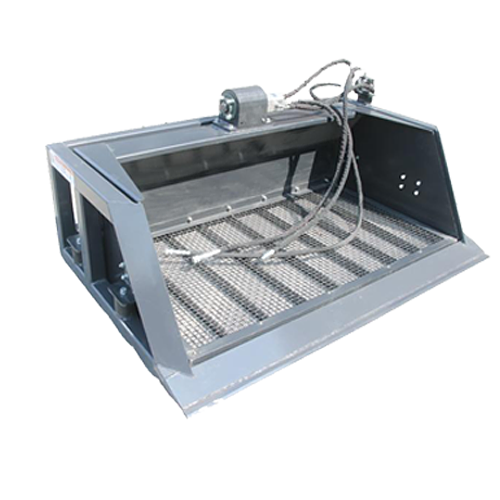
ALLU Screening Bucket
Brand Overview
ALLU is a Finnish manufacturer and one of the most recognized names in the screening bucket market worldwide. Their Transformer series is the flagship product line. ALLU has been manufacturing screening and processing attachments since 1989 and has a global dealer network.
An ALLU screening bucket uses a series of rotating drums (called TS blades) inside the bucket to screen, crush, mix, aerate, and blend material. The drums rotate in the same direction as the material flow, pulling material through and separating fines from oversize. ALLU positions their Transformer series as a processing attachment, not just a screening bucket.
The ALLU system is modular. You can change the drum configuration, spacing, and blade type to adjust for different materials and different finished product sizes. That flexibility is a significant advantage for operations that handle multiple material types.
Key Specs and Features
ALLU Transformer models cover a wide range of carriers. The D Series is designed for excavators in the 10 to 45 ton class. The DL Series handles larger carriers up to 160 tons. The M Series is built for wheel loaders, and the DL Series fits skid steers.
Bucket widths range from roughly 40 inches on the smaller models to over 100 inches on the largest. Mid-size ALLU Transformer buckets typically process 20 to 50 cubic yards per hour on topsoil, with larger models at the high end.
Screen sizing is adjusted by changing the drum configuration and blade spacing rather than swapping screen panels. This is a different approach from mesh-based screening buckets and offers more flexibility but requires understanding the drum options available for your model.
What Customers Like
Build quality is the number one comment from ALLU owners. These buckets are built heavy. The steel is thick, the drums are robust, and the hydraulic motors are rated for continuous duty. Contractors who run an ALLU screening bucket hard, day after day, report that the machine holds up well over thousands of hours.
Versatility is the other major strength. Because of the modular drum system, a single ALLU bucket can screen topsoil, process light demolition debris, mix soil amendments, and blend stabilization material. ALLU's dealer and support network is well-established. Parts are available through authorized dealers in most major markets.
Where ALLU Falls Short
Price. An ALLU screening bucket costs significantly more than a Wolverine or most other brands. Depending on the model and configuration, an ALLU Transformer can run two to three times what a comparable Wolverine bucket costs. For occasional use, that premium is hard to justify.
Complexity is the other consideration. The modular drum system is an advantage in theory, but it also means more components to understand, maintain, and potentially replace. Weight is another factor. ALLU buckets are heavier than many competitors, which means your carrier needs adequate lifting capacity.
Best For
Professional contractors and municipalities that use a screening bucket daily or near-daily. Operations that process multiple material types and need the versatility of the drum system. Buyers who prioritize build quality and long-term durability over initial purchase price.
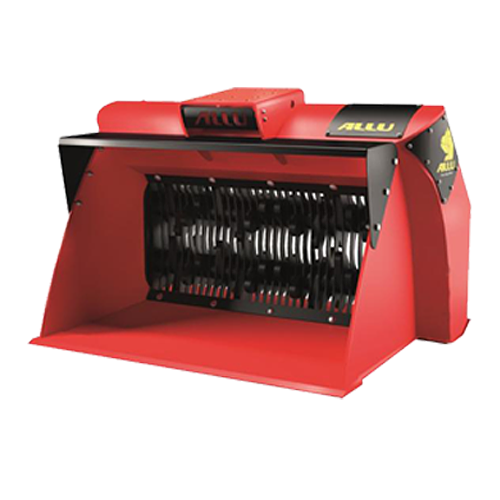
Remu Screening Bucket
Brand Overview
Remu is another Finnish manufacturer with a strong reputation in the screening bucket market. Their screening buckets use a proprietary blade screen design that sets them apart from both the drum-based systems (like ALLU) and the mesh-based systems (like Wolverine).
The Remu screening bucket uses rotating blades mounted on parallel shafts. As the blades rotate, they push material through gaps between the shafts. Fine material drops through. Oversize material stays in the bucket. The blade action is aggressive, which helps with wet and sticky materials that would clog a conventional mesh screen.
Key Specs and Features
Remu offers screening buckets for a range of carriers. Their PD (Padding Drum) series covers excavators from about 4 tons up to 45+ tons. Models are also available for wheel loaders and backhoe loaders.
Bucket widths range from approximately 30 inches on the smaller models to 80+ inches on the largest. Mid-size units process 20 to 60 cubic yards per hour on topsoil. The blade screen gap is adjustable, which lets operators change the screening size without swapping out screen panels, saving time and eliminating the cost of carrying multiple sets of screen mesh.
What Customers Like
The blade screen technology is the primary differentiator. Remu screening buckets handle wet, sticky material better than most competitors. The rotating blades actively push material through rather than relying on gravity and vibration alone. For contractors working with clay-heavy soil, damp topsoil, or organic-rich material, this is a significant practical advantage.
Build quality is on par with ALLU. Remu buckets hold their resale value well on the used market. The adjustable gap system saves 30 minutes to an hour of downtime every time you need to change the screening size.
Where Remu Falls Short
Price is the main barrier — a premium price tag similar to ALLU. Availability in the US market is more limited than ALLU or Wolverine. Parts and service may involve longer lead times depending on your location. Throughput on Remu buckets can be lower than drum-based systems on free-flowing dry material.
Best For
Contractors and municipal operations that regularly screen wet, sticky, or clay-heavy material. Operators in regions with high-moisture soil conditions. Buyers who need the screening size flexibility of the adjustable blade gap and are willing to pay for premium build quality.
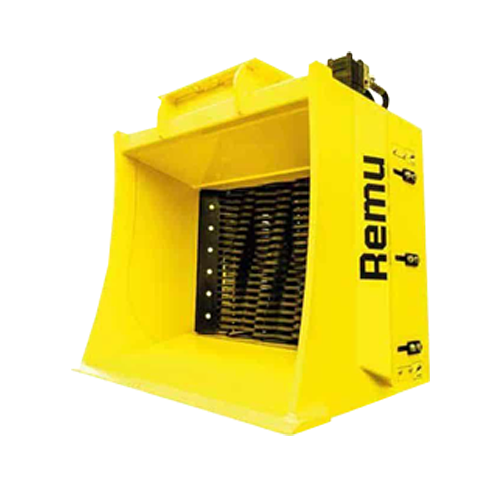
Rotastar Screening Bucket
Brand Overview
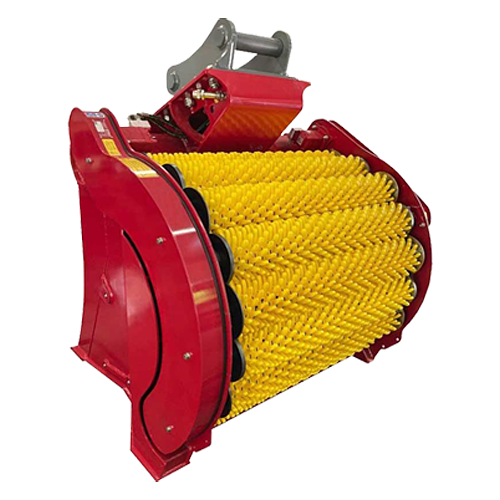
Rotastar takes a fundamentally different approach. Instead of mesh screens, drums, or blades, Rotastar uses star screen technology. Rows of rotating rubber or polyurethane stars (discs) mounted on shafts separate material by size. Fines fall between the spinning stars. Oversize rides across the top and stays in the bucket for dumping.
Star screen technology has been used in standalone screening plants for years, particularly in the wood waste, green waste, and composting industries. Rotastar packages that technology into a bucket attachment format.
Key Specs and Features
Rotastar offers screening buckets for excavators and wheel loaders from about 5 tons up to 30+ tons. Bucket widths typically range from 36 inches to 72+ inches. Throughput on mid-size models runs approximately 20 to 50 cubic yards per hour. The star screen design keeps weight lower than some competing designs, which can be an advantage when matching a screening bucket to a smaller carrier with limited lifting capacity.
What Customers Like
Material handling is the standout feature. Rotastar screening buckets excel at processing green waste, wood chips, bark, mulch, compost, and any material with stringy or fibrous content. The rotating stars do not snag on roots, vines, or wire the way mesh screens do. The self-cleaning action of the stars means less downtime — far fewer interruptions from clogged openings. Individual star replacement keeps maintenance costs manageable.
Where Rotastar Falls Short
Star screens are not the best choice for hard, abrasive material like gravel, crushed rock, or heavy demolition debris. The rubber or polyurethane stars wear quickly on abrasive material. Product sizing precision is less exact than a mesh screen. The brand has less market presence than ALLU or Wolverine in the US.
Best For
Tree service companies, land clearing contractors, and green waste processors. Compost facilities that screen finished compost with fibrous content. Any operation where stringy, wet, or organic material clogs conventional screen designs.
Side-by-Side Comparison Table
Feature Wolverine ALLU Transformer Remu Rotastar Country of Origin Imported (US-branded) Finland Finland United Kingdom Screen Technology Vibrating mesh Modular rotating drums Blade screen Star screen (rotating discs) Excavator Range 1-25 tons 10-160 tons 4-45+ tons 5-30+ tons Skid Steer Models Limited Yes (DL Series) Limited Limited Wheel Loader Models Limited Yes (M Series) Yes Yes Bucket Width Range 24"-60"+ 40"-100"+ 30"-80"+ 36"-72"+ Throughput (topsoil, mid-size) 15-30 cu yd/hr 20-50 cu yd/hr 15-40 cu yd/hr 15-35 cu yd/hr Screen Size Adjustment Swap screen panels Change drum/blade config Adjust blade gap Swap star disc sets Wet/Sticky Material Fair Good Excellent Good Green Waste/Fibrous Material Poor Fair Fair Excellent Hard/Abrasive Material Good Good Good Poor Build Quality Good Premium Premium Good Price Range Budget to mid-range Premium Premium Mid to premium US Dealer Network Strong Strong Moderate Limited Best Application General dirt/topsoil Multi-material processing Wet/sticky material Green waste/compost
Other Brands Worth Considering
MB Crusher
MB Crusher is an Italian manufacturer known primarily for their crusher buckets, but they also produce a line of screening buckets. The MB-S series covers excavators from about 7 to 35 tons. MB uses a rotary drum design with interchangeable panels. Build quality is high, and MB has a well-established global dealer network. If you already run MB crusher buckets on your fleet, adding an MB screening bucket keeps you within a single brand ecosystem for parts and support.
Epiroc
Epiroc manufactures a range of screening bucket attachments under their attachment product line. Epiroc brings the engineering and support infrastructure of a large, multinational equipment company. Their screening buckets are built to the same heavy-duty standard as the rest of their attachment lineup. For contractors already on the Epiroc platform for breakers or other attachments, a screening bucket from the same manufacturer simplifies procurement and parts management.
Blue Diamond
Blue Diamond is a US-based attachment manufacturer that offers screening buckets at a competitive price point, similar to Wolverine. Their buckets are designed for skid steers, mini excavators, and mid-size excavators. Blue Diamond targets the budget-conscious buyer who needs a functional screening attachment without the premium pricing of ALLU or Remu. Build quality is decent for intermittent use, and domestic manufacturing means reasonable parts availability.
Which Brand for Which Carrier
Excavators (Mini to Mid-Size: 1-25 Tons)
This is the most common carrier class for screening buckets. All four major brands offer models in this range, but the fit varies.
Wolverine has the widest selection for mini excavators (1 to 5 tons). ALLU's D Series starts at the 10 ton class, so it is not an option for smaller machines. Remu covers the 4 ton and up range. Rotastar starts around 5 tons.
For a mini excavator screening bucket on a machine under 5 tons, Wolverine and Blue Diamond are the most accessible options. For mid-size excavators in the 10 to 25 ton class, all brands compete and the choice comes down to material type, budget, and dealer access.
Large Excavators (25+ Tons)
ALLU dominates this segment with the DL Series, which fits carriers up to 160 tons. Remu covers up to about 45 tons. Wolverine and Rotastar do not typically offer models for the largest excavator classes. If you are mounting a screening bucket on a 30+ ton excavator, ALLU is the default choice.
Skid Steers
ALLU offers the DL Series specifically designed for skid steer carriers. Blue Diamond also manufactures skid steer screening buckets at a lower price point. Wolverine and Remu have limited options for skid steers. If a skid steer screening bucket is what you need, check ALLU and Blue Diamond first.
Wheel Loaders
ALLU's M Series is designed for wheel loaders. Remu and Rotastar also offer loader-compatible models. Wolverine's loader options are limited. Loader-mounted screening buckets are less common than excavator-mounted units, so the selection is narrower across all brands.
Pricing Tiers
Budget Tier: $8,000 to $18,000
Wolverine and Blue Diamond occupy this space. Screening buckets in this range fit mini excavators and smaller mid-size machines. Build quality is adequate for intermittent use. These buckets are the right choice when screening is a small part of your overall workload and you need to keep capital costs low.
Mid-Range Tier: $18,000 to $35,000
Larger Wolverine models, Rotastar, and entry-level MB Crusher buckets fall here. Mid-range buckets fit larger carriers, offer higher throughput, and use more robust components. This is the sweet spot for contractors who screen regularly but do not run the bucket as a primary production tool.
Premium Tier: $35,000 to $75,000+
ALLU Transformer and Remu screening buckets command premium prices. At this price, you are getting heavy-duty construction, advanced screening technology, and the engineering to support daily production use.
The price gap between a budget Wolverine screening bucket and a premium ALLU Transformer of similar size can be $30,000 or more. Whether it is justified depends entirely on how you plan to use the bucket. A contractor screening topsoil twice a month does not need to spend ALLU money. A municipality screening six days a week probably should.
Dealer and Support Availability
ALLU has the strongest US dealer network of the premium brands. Authorized dealers in most major markets carry parts and provide service. If a part breaks, you can usually source a replacement within days.
Wolverine benefits from domestic manufacturing. Parts ship from within the US, which means shorter lead times. For common wear items like screen panels, turnaround is fast.
Remu has a growing US presence but is not as established as ALLU. In some regions, getting parts or warranty service may involve shipping from a regional distributor rather than a local dealer.
Rotastar has the most limited US dealer presence of the four major brands. Replacement star discs are relatively simple components and can often be sourced aftermarket, but for major repairs, dealer access is a consideration.
MB Crusher and Epiroc both have well-developed US dealer networks backed by large international organizations. If dealer support is a top priority, these brands offer corporate-level infrastructure.
Customer Pros and Cons Summary
Wolverine Screening Bucket
Pros: Lowest price point, US-branded with domestic parts supply, simple design, good mini excavator selection, adequate for occasional screening. Cons: Build quality does not match premium brands for heavy daily use, lower throughput, screen panels wear faster on abrasive material.
ALLU Screening Bucket
Pros: Best build quality and long-term durability, modular drum system handles multiple material types, widest carrier range, strong US dealer network. Cons: Highest price point, heavier than competitors, drum configuration system has a learning curve, more machine than needed for occasional use.
Remu Screening Bucket
Pros: Best performance on wet, sticky, and clay-heavy material, adjustable blade gap eliminates screen panel swaps, premium build quality, strong resale value. Cons: Premium price comparable to ALLU, more limited US dealer network, lower throughput on dry free-flowing material.
Rotastar Screening Bucket
Pros: Best performance on green waste, wood, bark, and fibrous material, self-cleaning star screen minimizes clogging, lighter weight suits smaller carriers. Cons: Poor performance on hard abrasive material, less precise product sizing, most limited US dealer presence.
When a Screening Bucket Is Not Enough
A screening bucket is a versatile attachment, but it has a ceiling. If you are screening more than 40 to 60 cubic yards per day on a regular basis, you will feel the throughput limitation. At that point, a standalone screening machine starts to make financial sense.
Trommel screens are the most common upgrade path from a screening bucket. A portable trommel processes 50 to 300+ cubic yards per hour — an order of magnitude more than any screening bucket. Shaker screens are another option for higher-volume screening, especially on dry material.
For a deeper comparison of all screening equipment types, read our guide: which is better for topsoil — a shaker or trommel screen? For entry-level standalone machine options, see our entry-level screening equipment guide.
We carry new and used trommel screens and shaker screens in a range of sizes. If you have outgrown your screening bucket or if the volume numbers suggest a standalone machine is the right move from the start, call us at 770-433-2670 and we will walk through the options.
How to Choose the Right Screening Bucket Brand
If budget is your primary concern and you screen occasionally: Wolverine or Blue Diamond gives you a functional screening bucket at the lowest capital cost.
If you screen daily or near-daily and need the bucket to hold up under heavy use: ALLU or Remu are worth the premium. The build quality pays off over thousands of hours.
If wet, sticky material is your primary challenge: Remu's blade screen technology is purpose-built for that problem.
If green waste, wood, or compost is your primary material: Rotastar's star screen technology outperforms every other design on fibrous content.
If you need one bucket to handle many materials: ALLU's modular Transformer system offers the most flexibility.
If carrier compatibility is a constraint: Check the brand's model range against your machine specs before anything else.
Frequently Asked Questions
Which screening bucket brand is the best value for money?
For contractors who screen occasionally and need a dependable screening bucket attachment at a reasonable price, Wolverine offers the strongest value. Their screening buckets cost significantly less than ALLU or Remu and perform well for light to moderate duty applications on topsoil, dirt, and sand.
Can I use an ALLU screening bucket on a skid steer?
Yes. ALLU manufactures the DL Series specifically for skid steer carriers. It is a purpose-designed product, not an adapted excavator bucket. Blue Diamond also offers skid steer screening buckets at a lower price point.
How does a Remu screening bucket handle wet clay soil?
Better than any other brand on the market. Remu's blade screen technology actively pushes material through the separation gap rather than relying on gravity alone. Contractors in regions with heavy clay soil consistently report that Remu handles conditions that clog mesh-based and drum-based screening buckets.
What is the difference between a star screen bucket and a drum screen bucket?
A drum screen bucket (like Wolverine) uses a rotating drum with mesh or perforated openings to separate material by gravity. A star screen bucket (like Rotastar) uses rows of spinning rubber or polyurethane discs. The key practical difference is that star screens handle fibrous, stringy material without clogging, while drum screens are better for hard, abrasive material. For a full comparison of screening technologies, read our guide to choosing the right screening equipment.
How long do screening bucket screen panels last?
On clean topsoil and sand, mesh screen panels typically last 200 to 500 operating hours. On abrasive material with rocks and gravel, that life can drop to 100 to 200 hours. ALLU's TS blades and Remu's blades are made from hardened steel and tend to last longer under abrasive conditions but cost more to replace. Rotastar's rubber or polyurethane stars are inexpensive to replace individually but wear faster on rocky material.
Are there screening buckets that fit mini excavators under 5 tons?
Yes. Wolverine has the widest range of mini excavator screening buckets, with models starting at the 1 ton carrier class. Blue Diamond also offers mini excavator models. ALLU's smallest Transformer models start at about 10 tons. Remu starts at about 4 tons. If you are running a mini excavator, check Wolverine and Blue Diamond first.
Ready to Choose a Screening Bucket?
We have been helping contractors and equipment buyers match the right screening equipment to their operations since 1973. Whether you need help sourcing a specific screening bucket brand, want to compare a screening bucket against a trommel screen or shaker screen for your volume, or just want an honest opinion on what makes sense for your situation, we are here to help.
We do not manufacture screening buckets, but we can help source them and we offer trommel screens and shaker screens as alternatives for operations that need higher throughput. Sometimes the best answer is not a screening bucket at all. We will tell you that straight.
Call 770-433-2670 or email Sales@grindercrusherscreen.com. We will give you a direct answer based on your machine, your material, and your budget.