





Screening Bucket vs Trommel Screen vs Shaker Screen: Which Do You Need?
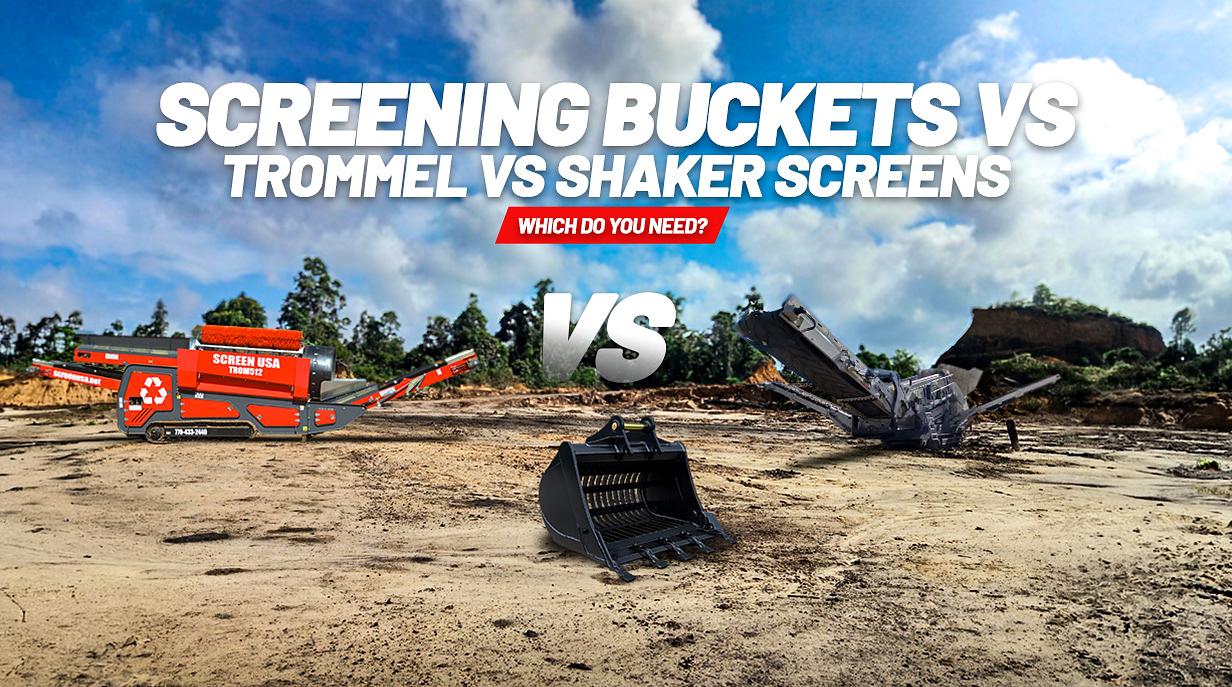
Most operators looking for screening equipment narrow it down to three options: a screening bucket that mounts on an excavator, a standalone trommel screen, or a shaker screen (also called a vibrating screen). All three screen material. All three produce a usable end product. But they are built for very different scales of work, and picking the wrong one either leaves money on the table or ties up capital you did not need to spend.
We have been selling screening equipment since 1973. We carry trommel screens and shaker screens in a range of sizes, both new and used. We work with buyers on screening buckets regularly because understanding what a bucket can and cannot do is the first step in deciding whether you need a standalone machine.
This guide is a three-way comparison covering the full range of options.
How Each Machine Works
Before the comparison table, here is a quick overview of each machine type.
Screening Bucket
A screening bucket replaces the digging bucket on an excavator (typically 3 to 20 ton class). The operator scoops raw material, and the bucket vibrates or rotates to separate fines from oversize. Fine material falls through the mesh. Oversize stays in the bucket. No separate machine, no hopper, no conveyors. The excavator does the work.
Screening buckets run off the excavator's existing hydraulics. Setup takes under an hour. When the job is done, the operator swaps back to a standard bucket.
Trommel Screen
A trommel screen is a standalone machine with a rotating drum lined with screen panels. Material enters a hopper at one end. The drum rotates, tumbling material along its length. Fines fall through the screen openings onto a discharge conveyor. Oversize material exits the far end of the drum onto a separate conveyor or stockpile.
The tumbling action is what sets trommels apart. Material lifts, drops, and scrubs against the screen surface with every rotation. This breaks up clumps and keeps screen openings clear, even on wet and sticky material.
Trommels come in every size: small portable units on tracks, mid-size machines for materials yards, and large stationary plants. A loader or excavator feeds the hopper. The trommel handles the rest.
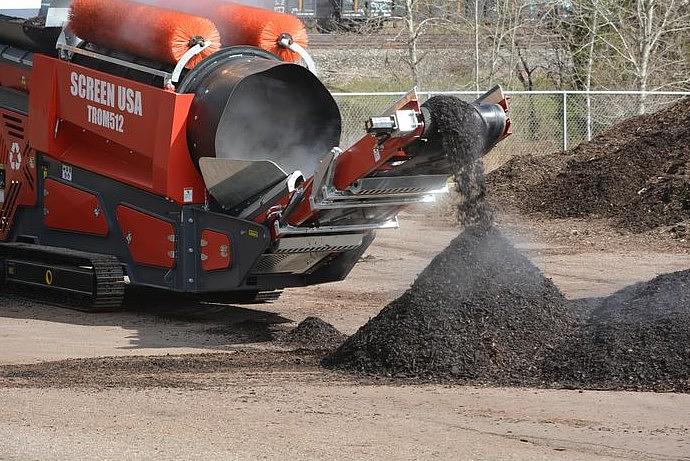
Machine above: Screen USA TROM512
Shaker Screen
A shaker screen uses a vibrating flat deck (or multiple decks) with wire mesh or perforated panels. Material feeds onto the top of the deck. Vibration moves material across the surface and forces undersized particles through the openings. Oversize rides off the discharge end.
Shaker screens are mechanically simple. The vibrating deck, driven by an eccentric shaft or motor, is the core of the machine. There are no drums, no rotating components. The design is straightforward, which makes shaker screens relatively easy to maintain and repair in the field.
Shaker screens range from small portable units to large multi-deck plants used in quarries and aggregate operations. For more on how vibrating screens work across different applications, read our vibrating screen guide.
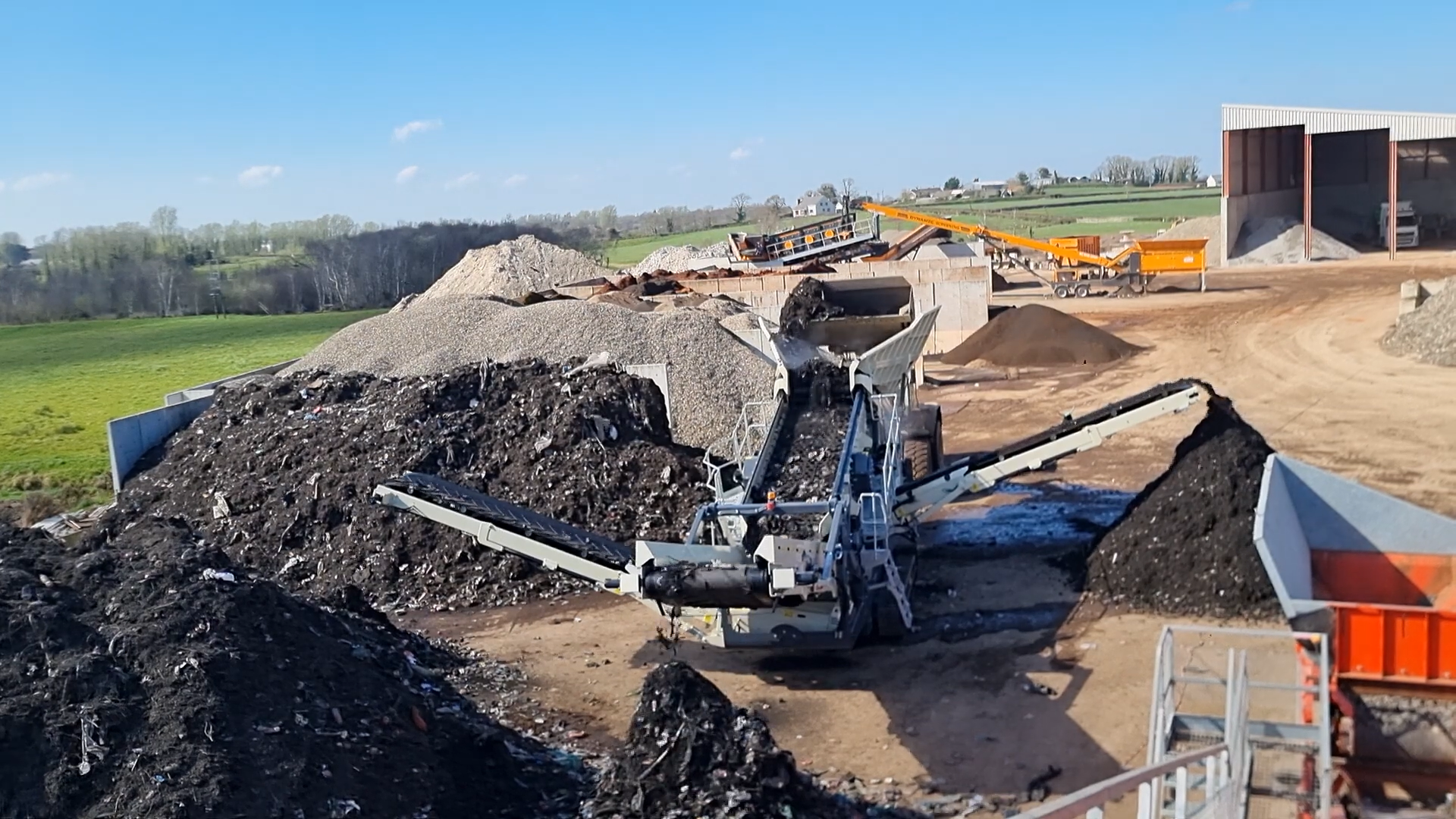
Machine above: Screen USA CD516
Three-Way Comparison Table
Factor Screening Bucket Trommel Screen Shaker Screen Throughput 15-30 CY/hr 30-600+ CY/hr 20-200+ CY/hr Capital Cost $8,000-$30,000 $50,000-$500,000+ $30,000-$200,000+ Manpower 1 operator (excavator operator) 1-2 operators (screener + loader) 1-2 operators (screener + loader) Mobility Goes wherever the excavator goes Track, wheel, or stationary Track, wheel, or stationary Product Quality Acceptable for rough work Excellent, consistent grading Very good on dry material Wet/Sticky Material Poor, clogs easily Excellent, tumbling keeps screen clear Poor to moderate, blinds on wet clay Dry/Sandy Material Good Good Excellent, highest efficiency Maintenance Low (few moving parts) Moderate (drum bearings, conveyors) Moderate (vibration mechanism, springs) Screen Changes Difficult (tight space) Moderate (drum panel replacement) Easiest (bolt-on deck panels) Setup Time Under 1 hour (attach to excavator) 1-4 hours (position, level, set conveyors) 1-4 hours (position, level, set conveyors) Multiple Product Sizes 1 product split 2-3 products 2-4 products (multi-deck) Best For Small jobs, occasional use, tight sites Daily production, wet material, compost Dry material, aggregate, high-volume dry screening A few things jump out from this table. Screening buckets are in a different category entirely from the two standalone machines. They cost less, produce less, and serve a different purpose. The real head-to-head decision for production-scale operations is between trommels and shakers, and the deciding factor is almost always moisture content.
Best Option for Topsoil Screening
Topsoil is the most common material we get asked about. The answer depends on one thing more than any other: how wet is it?
Dry, sandy topsoil. A shaker screen is the most efficient option. Dry, free-flowing material separates quickly on a vibrating deck. A properly sized shaker screen will outperform a trommel of similar capacity on clean, dry topsoil because the vibration action moves material across the deck fast. If you are in a region with sandy loam and low rainfall, a shaker screen is a strong choice.
Wet, clay-heavy topsoil. A trommel screen is the clear winner. Wet clay blinds flat-deck screens within minutes. The tumbling action inside a trommel drum continuously scrubs the screen openings clear and breaks apart clay clumps that would shut down a shaker. If you deal with rain, spring thaw, or naturally heavy soils, a trommel will keep running when a shaker screen cannot.
Mixed conditions (some wet, some dry). A trommel screen is the safer investment. It handles both conditions. A shaker screen works great six months of the year and sits idle when the mud comes.
Small volume, occasional use. A screening bucket handles topsoil fine at low volume. If you screen 20 to 50 cubic yards per week, a bucket mounted on an existing excavator gets the job done without tying up capital in a standalone machine.
For a deeper look at topsoil screening equipment, read our guide on which is better for topsoil — a shaker or trommel screen and our guide to choosing the right screening equipment for your material.
Best Option for Compost Screening
Finished compost is almost always damp and full of irregular organic material. That rules out screening buckets for any serious volume. The real choice is between a trommel and a shaker.
Trommel screens dominate compost screening. The tumbling action handles moisture without blinding the screen. It also gently separates oversized material — uncomposted wood chunks, large root pieces — without forcing soft organics through the mesh. Trommels with helix drums are especially effective for compost because the spiral action moves material through the drum at a controlled pace.
Shaker screens can work on dry, well-cured compost that has been windrowed and dried before screening. If your compost is consistently dry and crumbly, a shaker screen processes it efficiently. But most commercial compost operations deal with material at 40 to 60 percent moisture content, and that is too wet for reliable shaker screen performance.
Our recommendation for compost: a trommel screen. It is the industry standard for a reason.
Best Option for Rock and Gravel Screening
Rock and gravel screening is a different game. The material is hard, dry, abrasive, and free-flowing. Moisture is rarely a factor.
Shaker screens are the standard for aggregate operations. Vibrating screens have been the backbone of quarries and gravel pits for decades. They handle dry, granular material at high throughput, offer multi-deck configurations for producing multiple product sizes in a single pass, and have a proven track record in aggregate production. A multi-deck shaker screen can produce three or four sized products simultaneously, which is critical for operations selling multiple aggregate specs.
Trommel screens work for rock and gravel but are less common in pure aggregate applications. The throughput is competitive, but trommels typically produce only two or three product sizes per pass. For high-volume quarry operations that need to sort material into four or five size fractions, a shaker screen with multiple decks is the more practical choice.
A rock screening bucket is useful for small-scale rock sorting on construction sites. If you need to separate topsoil from rocks during excavation and the volume is low, a screening bucket does the job on the spot. For anything beyond light-duty, occasional rock screening, a standalone machine is the right call.
Volume Breakeven Analysis: When to Upgrade
The decision between a screening bucket and a standalone screener is fundamentally a volume decision. Here is how the math works.
Screening Bucket Economics
A screening bucket costs $8,000 to $30,000. It uses your existing excavator and existing operator. There is no additional labor cost, no additional insurance, no additional transport. Operating cost above what you already pay for the excavator is essentially zero.
At 15 to 30 cubic yards per hour, a full 8-hour day produces 120 to 240 cubic yards of screened material. If screened topsoil sells for $25 to $35 per cubic yard in your market, that is $3,000 to $8,400 per day in product value.
But here is the catch: your excavator is screening, not digging. Every hour the excavator runs the screening bucket is an hour it is not doing excavation work. If that excavator bills at $150 to $250 per hour on job sites, the opportunity cost adds up fast.
Standalone Screener Economics
A standalone screener (trommel or shaker) costs $30,000 to $500,000+, depending on the type and size. It requires a loader to feed the hopper, which means either dedicating a piece of iron you already own or adding a second operator. Labor for a second person runs $300 to $500 per day in most markets.
But throughput is dramatically higher. A mid-size trommel processing 100 cubic yards per hour produces 800 cubic yards in an 8-hour shift. At $30 per cubic yard, that is $24,000 per day in product value. Even after subtracting fuel, labor, and wear costs, the margin on a standalone screener at volume dwarfs what a screening bucket can produce.
The Crossover Point
Based on what we see across our customers, the crossover point breaks down like this:
Under 30 cubic yards per day: A screening bucket is the right tool. The volume does not justify a standalone machine, and the capital is better spent elsewhere.
30 to 75 cubic yards per day: This is the gray zone. If you screen 5 days a week at this volume, a used standalone screener in the $30,000 to $75,000 range starts to make financial sense. If you screen 2 to 3 days a week, a screening bucket may still be the better call.
75 to 150 cubic yards per day: A standalone screener is the clear winner. At this volume, a trommel or shaker screen pays for itself within months. The throughput advantage is decisive, and your excavator is free to do excavation work.
150+ cubic yards per day: You need a production-class trommel or shaker screen. No screening bucket can touch this volume, and the revenue per hour from a standalone machine at this scale makes the investment straightforward.
A used portable trommel in the $50,000 to $100,000 range is one of the most common entry points we see for operators moving up from a screening bucket. For guidance on entry-level standalone machines, read our guide to entry-level screening equipment.
Decision Flowchart: Finding the Right Machine
Here is a step-by-step framework to narrow down which screening equipment fits your operation.
Step 1: How much material do you screen per day?
If you screen less than 30 cubic yards per day and screening is not your primary business, a screening bucket is likely sufficient. Low cost, low complexity, no additional equipment to manage.
If you screen 30 to 75 cubic yards per day, you are entering standalone screener territory. Continue to Step 2.
If you screen more than 75 cubic yards per day, you need a standalone screener. Skip to Step 2.
Step 2: What is your material, and how wet is it?
If your material is dry aggregate, gravel, sand, or dry sandy topsoil, a shaker screen is the most efficient option. Vibrating screens excel on dry, free-flowing material and can produce multiple product sizes with multi-deck setups.
If your material is wet topsoil, compost, clay-heavy soil, or anything with high moisture content, a trommel screen is the better choice. The tumbling drum action handles moisture that would blind a flat-deck shaker screen.
If your material varies seasonally, a trommel screen is the safer all-around investment.
Step 3: Do you need to produce multiple product sizes in a single pass?
If you need three or four product sizes from one machine (common in aggregate operations), a multi-deck shaker screen is designed for that. Trommels can produce two or three sizes but generally cannot match the sorting precision of a multi-deck shaker on dry material.
Step 4: How often do you move between sites?
If you stay in one location, a stationary machine gives you the most throughput per dollar. If you move between sites regularly, a track-mounted or wheel-mounted portable screener makes transport practical. Both trommels and shakers are available in portable configurations. If you move constantly and screen small volumes at each site, a screening bucket may still be the most practical option.
Step 5: What is your budget?
- Under $30,000: Screening bucket or a used small portable screener if available in this range.
- $30,000 to $100,000: Used mid-size trommel or new/used shaker screen. This is the sweet spot for operators upgrading from a screening bucket.
- $100,000 to $250,000: New or low-hour used trommel or shaker screen. Production-class machines that handle daily volume.
- $250,000+: Large trommel plants, multi-deck shaker plants, or high-capacity production systems for materials yards and commercial operations.
What About Using Two Machines Together?
Some operations use a screening bucket and a standalone screener for different tasks. The bucket handles small on-site jobs. The trommel or shaker handles production runs at the yard.
Other operations use a shaker screen and a trommel together. The shaker handles dry aggregate and dry topsoil. The trommel handles compost and wet material. If your operation processes multiple material types at volume, running two different machines can be more efficient than trying to force one machine to do everything.
We help customers spec out these kinds of multi-machine setups regularly. Call 770-433-2670 and tell us what you are processing. We will help you figure out if one machine handles it all or if a two-machine approach makes more sense.
A Note on Skid Steer Screening Buckets
Some buyers ask about screening buckets for skid steers. These are smaller attachments designed for compact loaders rather than excavators. Throughput is lower than excavator-mounted buckets, typically 10 to 20 cubic yards per hour. They work for very small jobs and tight spaces but are even more limited in production capacity.
If you are currently using a skid steer screening bucket and finding it too slow, that is a strong signal that you have outgrown the attachment model and should look at a standalone trommel screen or shaker screen.
Frequently Asked Questions
What is the cheapest way to start screening material?
A screening bucket is the lowest-cost entry point. Prices range from $8,000 to $30,000, and the bucket runs on an excavator you likely already own. There is no additional machine to buy, insure, or transport. The trade-off is low throughput (15 to 30 cubic yards per hour) and limited product quality compared to a standalone screener. For small contractors doing occasional screening work, a screening bucket is a practical starting point. Read our guide to entry-level screening equipment if you want to explore the most affordable standalone options as well.
Can a screening bucket produce the same quality product as a trommel or shaker?
Not quite. A screening bucket produces a usable product, but the separation is not as clean or consistent as what you get from a standalone trommel screen or shaker screen. Standalone machines have larger screen areas, more aggressive separation action, and conveyors that stockpile clean product. For selling screened topsoil or compost to retail customers who expect a uniform product, a standalone screener delivers a noticeably better result.
Which is better for wet material, a trommel or a shaker screen?
A trommel screen handles wet material significantly better than a shaker screen. The tumbling action inside the rotating drum continuously scrubs the screen openings clear and breaks apart wet clumps. A shaker screen's flat vibrating deck will blind up (clog) on wet, clay-heavy, or sticky material, reducing throughput to a fraction of its rated capacity. If wet material is a regular part of your operation, a trommel is the right choice. For more detail, read our comparison: which is better for topsoil, a shaker or trommel screen?
How many operators does each machine require?
A screening bucket requires one operator — the person already running the excavator. A standalone trommel screen or shaker screen typically requires one to two operators: one to run the screener and one to feed the hopper with a loader or excavator. Some portable screeners with integrated hoppers can run with a single operator who alternates between loading and monitoring the machine, but throughput drops when one person handles both tasks.
Should I buy new or used screening equipment?
Used screening equipment typically costs 40 to 60 percent less than new. For an operator upgrading from a screening bucket to a first standalone screener, a quality used trommel or shaker screen in the $50,000 to $100,000 range is often the most practical entry point. New equipment comes with manufacturer warranties and allows you to spec the machine exactly to your needs. We carry both new and used trommel screens and shaker screens and can help you evaluate condition on used units before you buy.
Find the Right Screening Equipment
We sell trommel screens and shaker screens, new and used, in a range of sizes and configurations. Whether you are screening topsoil, compost, rock, gravel, or C&D material, we can help you match the right machine to your volume and your budget.
If you are not sure whether you need a screening bucket, a trommel, or a shaker, call us. We have been helping operators make this decision since 1973, and we will give you a straight answer based on what you are actually processing.
Call 770-433-2670 or email Sales@grindercrusherscreen.com. We will walk you through the options and help you find the right fit.