





Mini Excavator Screening Buckets: Sizing, Brands, and Best Uses
A mini excavator screening bucket is the most affordable way to get into the screening business. Bolt it onto a 3 to 10 ton excavator you already own, scoop raw material, and the bucket vibrates or rotates to separate fines from oversize. No standalone machine. No hopper to feed. No conveyors. It is screening in its simplest form.
We have been selling screening equipment since 1973. We sell trommel screens, shaker screens, and full screening systems that outproduce a screening bucket by a wide margin. That gives us a perspective worth sharing here, because a mini excavator screening bucket competes directly with the standalone machines we carry. We will be straight with you about what these buckets do well and where they fall short.
If you are a landscaper, small contractor, or utility crew looking for a low-cost way to screen topsoil, compost, or gravel on the job site, a mini excavator screening bucket may be exactly what you need. If you need volume, it probably is not. This guide covers everything you need to know to make the right call.
What Size Mini Excavator Can Run a Screening Bucket?
Most screening bucket attachments designed for mini excavators fit machines in the 3 to 10 ton class. That covers compact excavators from manufacturers like Kubota, Caterpillar, Bobcat, John Deere, Takeuchi, and Yanmar. Some of the smallest screening buckets mount on machines as light as 2 tons, but at that size you are working with a very small bucket volume and limited hydraulic power. Production is minimal.
The practical starting point is a 3 to 4 ton excavator. At that weight class, the machine has enough hydraulic flow to power the screening action and enough lifting capacity to handle the loaded bucket weight. Machines in the 5 to 8 ton range are the sweet spot for mini excavator screening. They provide a good balance of hydraulic power, lifting capacity, and bucket size without crossing into the full-size excavator category.
Above 10 tons, you are moving into standard excavator territory. Screening buckets for those machines are larger, heavier, and more productive, but the price and operating cost scale up as well. This article focuses on the mini excavator range, which is where the screening bucket attachment makes the most practical and financial sense for small operations.
One critical requirement: your mini excavator must have an auxiliary hydraulic circuit. Most modern mini excavators come equipped with auxiliary hydraulics from the factory, but some older or base-model machines do not. Without auxiliary hydraulics, you cannot power the screening bucket. Check your machine's specifications before shopping for a bucket.
Weight and Hydraulic Flow Requirements
The two factors that determine whether a screening bucket will work on your mini excavator are hydraulic flow and bucket weight. Get either one wrong, and you will have problems.
Hydraulic Flow (GPM)
Mini excavator screening buckets typically require 15 to 25 GPM (gallons per minute) of hydraulic flow from the auxiliary circuit. Some smaller models can operate on as little as 10 to 12 GPM, but performance suffers at the low end. The screening action is slower, and throughput drops.
Most mini excavators in the 3 to 8 ton class provide 15 to 25 GPM of auxiliary hydraulic flow, which matches what screening buckets need. However, the exact flow rate varies by machine model and year. Check your excavator's spec sheet for the auxiliary circuit flow rate and compare it to the screening bucket manufacturer's requirements.
Hydraulic pressure matters too. Most screening buckets require 2,500 to 3,500 PSI of operating pressure. Mini excavators in the target size range generally meet this requirement, but verify before purchasing.
If your excavator's flow rate falls below the bucket's minimum requirement, the bucket will still spin or vibrate, but slowly. Screening efficiency drops. Material sits in the bucket longer. You lose throughput and patience in equal measure.
Bucket Weight
A screening bucket for a mini excavator typically weighs 500 to 1,500 pounds empty, depending on the model and width. Add material to the bucket, and the total weight at the end of the stick increases substantially. Your excavator must have sufficient lifting capacity to handle the loaded bucket safely at full reach.
Exceeding the machine's lifting capacity is dangerous and harmful to the excavator. It stresses the boom, stick, and swing bearing beyond their design limits. Every excavator has a rated lifting capacity chart. Match the loaded screening bucket weight to that chart before you commit to a purchase.
Quick Reference: Mini Excavator Screening Bucket Sizing
Excavator Class Operating Weight Typical Bucket Width Bucket Weight (Empty) Required Hydraulic Flow Approximate Throughput 2-3 ton 4,000-7,000 lb 20-24 in 500-700 lb 10-15 GPM 5-10 CY/hr 3-5 ton 7,000-11,000 lb 24-30 in 600-900 lb 12-18 GPM 8-15 CY/hr 5-8 ton 11,000-18,000 lb 28-36 in 800-1,200 lb 15-22 GPM 10-18 CY/hr 8-10 ton 18,000-22,000 lb 32-40 in 1,000-1,500 lb 18-25 GPM 12-20 CY/hr These are general ranges. Actual specifications vary by manufacturer and model. Always verify compatibility with the screening bucket manufacturer before purchasing.
Best Mini Excavator Screening Bucket Brands
Several manufacturers build screening bucket attachments sized for mini excavators. Quality, availability, and dealer support vary. Here are the brands we see most often in the field.
Wolverine
Wolverine offers some of the most affordable screening buckets on the market for mini excavators. Their buckets are competitively priced, making them popular with small contractors and landscapers who want to try screening without a large investment. Build quality is acceptable for light to moderate use. If you are screening topsoil and compost a few days a month, a Wolverine bucket can get the job done at a price point that is hard to argue with.
ALLU
ALLU, based in Finland, builds premium screening and crushing buckets. Their Transformer series includes models sized for mini excavators starting around 4 tons. ALLU buckets use a rotating drum design with blades that screen, crush, mix, and aerate material. They are the most versatile option on this list. Build quality is excellent. Dealer support and parts availability are strong. The trade-off is price. ALLU buckets are at the top of the pricing range, but you get a product built for daily professional use.
Remu
Remu, also a Finnish manufacturer, produces screening buckets designed specifically for excavators, including models for the mini excavator class. Remu buckets use a blade-drum design that works well with wet and sticky materials, which is a common challenge when screening topsoil. Their build quality is similar to ALLU, and they have a solid reputation in Europe and a growing presence in North America. Remu is worth considering if you frequently deal with damp material.
Blue Diamond
Blue Diamond manufactures a range of skid steer and excavator attachments, including screening buckets for smaller machines. Their products fall in the mid-range for pricing and quality. Blue Diamond screening buckets are readily available through equipment dealers across North America, which makes parts and service accessible. They are a practical choice for contractors who want reasonable quality without paying premium European prices.
MB Crusher
MB Crusher is best known for their crusher buckets, but they also produce screening buckets for excavators in multiple size classes, including models for the mini excavator range. MB screening buckets use a rotating drum design similar to their crusher buckets. Build quality and dealer support are strong. MB is one of the most recognized brands in the bucket attachment space, which can help with resale value down the road.
Brand Comparison Overview
Brand Origin Design Type Mini Excavator Models Price Range Strength Wolverine Import Rotary drum 2+ ton $3,000-$6,000 Most affordable entry point ALLU Finland Rotary blade (Transformer) 4+ ton $12,000-$18,000 Versatile, premium build Remu Finland Paddle drum 3+ ton $10,000-$16,000 Excellent with wet material Blue Diamond N. America Rotary drum 3+ ton $6,000-$10,000 Good dealer availability MB Italy Rotary drum 3+ ton $10,000-$16,000 Brand recognition, resale value
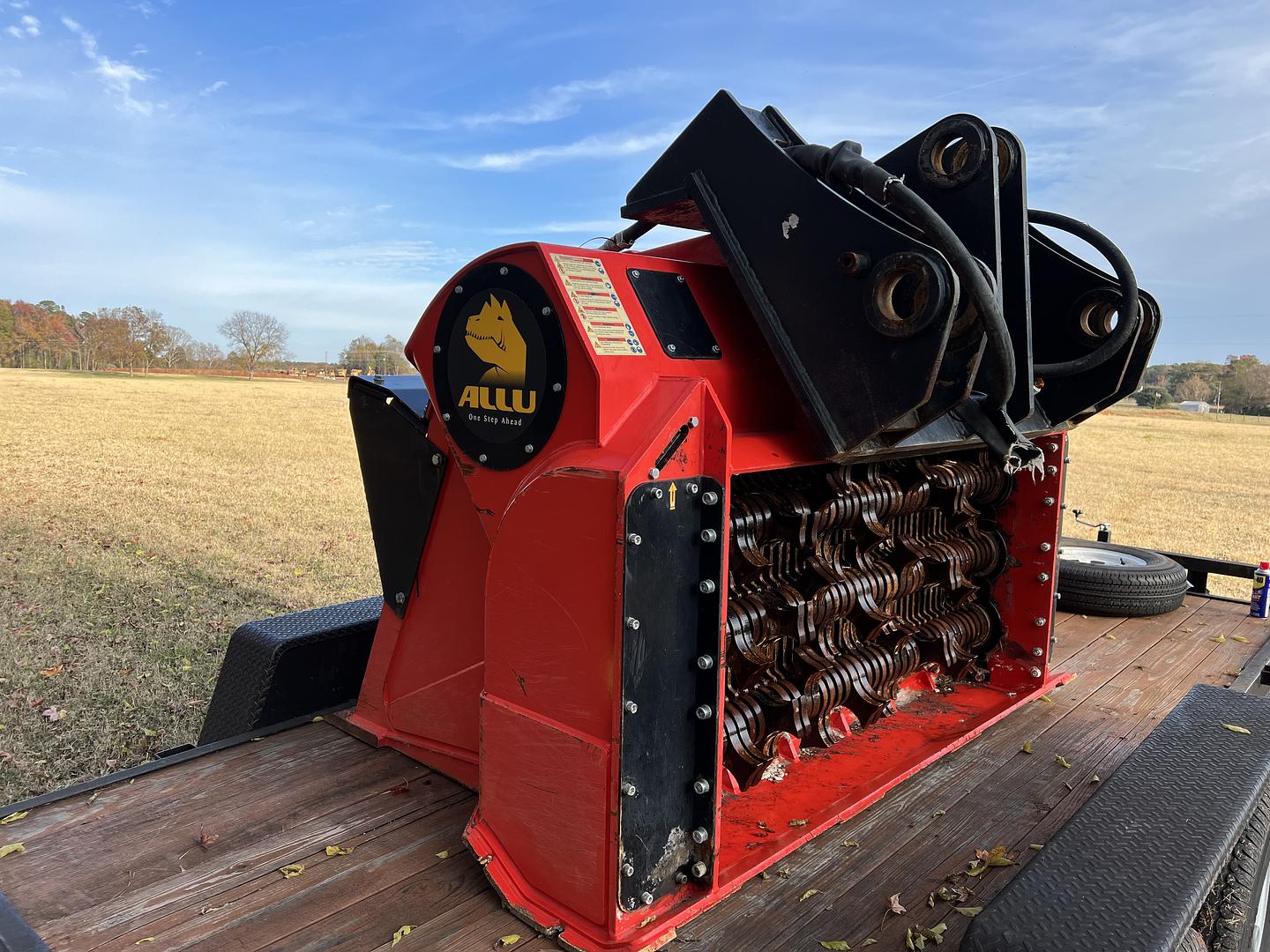
Attachment above: 2019 ALLU DH3-17
What Can You Screen with a Mini Excavator Bucket?
A mini excavator screening bucket attachment handles a range of loose materials, but it has clear limitations compared to a full-size screening machine. Here is what works and what does not.
Materials That Work Well
Topsoil. This is the most common application. A mini excavator screening bucket separates rocks, roots, and clumps from raw topsoil to produce a clean, landscape-grade product. Dry to moderately moist topsoil screens efficiently. If you are a landscaper processing site material or a small topsoil supplier, this is the primary use case.
Compost. Finished compost screens well through a mini excavator bucket. The material is light, loose, and breaks apart easily. A screening bucket produces a uniform compost product suitable for retail sale or landscape application. For more on compost screening operations at scale, read our guide on what type of screening equipment you need.
Gravel and aggregates. Small screening buckets can separate gravel by size, removing fines from stone or sorting mixed aggregate. This is useful on job sites where you need clean drainage stone or sized base material without ordering a separate delivery.
Sand. Dry sand screens quickly and efficiently through a mini excavator bucket. Removing pebbles and debris from sand for bedding, backfill, or landscaping is straightforward work for these attachments.
Light demolition debris. Separating soil from brick pieces, small concrete chunks, and mixed fill is possible if the material is not too heavy or dense. The screening bucket separates the fines from the hard debris.
Limitations vs Full-Size Screening Equipment
Here is where honesty matters. A mini excavator screening bucket is not a production machine. It is a convenience tool for small-volume work.
Throughput. A mini excavator screening bucket produces 8 to 20 cubic yards per hour under realistic working conditions. A small portable trommel screen produces 30 to 80 cubic yards per hour. A mid-size trommel handles 100 to 300 cubic yards per hour. The difference is not subtle.
Bucket volume. Mini excavator screening buckets hold roughly 0.3 to 0.75 cubic yards per scoop, depending on the model and excavator size. Each scoop must be loaded, screened, and dumped before the next cycle. This batch process is fundamentally slower than a continuous-feed trommel or shaker screen.
Wet and sticky material. Mini excavator screening buckets struggle with wet, clay-heavy soil. The screen openings clog, and the operator spends more time clearing blockages than screening. Trommel screens handle wet material far better because the tumbling drum action breaks apart sticky clumps and keeps material moving through the screen.
Heavy materials. Dense rock, wet clay, and heavy mixed debris push the limits of what a mini excavator can safely handle. The loaded bucket weight can approach or exceed the machine's lifting capacity. Stick with lighter materials like topsoil, compost, and dry gravel.
Product consistency. A screening bucket produces a usable product, but it is not as uniform as what a dedicated screening machine delivers. If your customers demand a premium, consistent grade, a standalone screener will produce a better end product.
Mini Excavator Screening Bucket vs Full-Size Screening Equipment
Factor Mini Excavator Screening Bucket Trommel Screen Throughput 8-20 CY/hr 30-600+ CY/hr Capital cost $6,000-$18,000 $50,000-$500,000+ Operators needed 1 (existing excavator operator) 1-2 (screener + loader) Mobility Goes wherever the excavator goes Track/wheel mounted or stationary Wet material handling Poor to fair Good to excellent Product consistency Acceptable Excellent Best for Small jobs, occasional screening Daily production, high-volume work The bottom line: if you screen less than 30 to 40 cubic yards per day, a mini excavator screening bucket is a practical, affordable tool. If you regularly screen more than that, a dedicated machine like a trommel screen or shaker screen will pay for itself through higher production and lower cost per yard. Read our guide on entry-level screening equipment to understand where the crossover point makes sense financially.
Pricing Expectations
Mini excavator screening bucket pricing depends on brand, size, and whether you buy new or used. Here is what to expect in the current market.
New Pricing
New mini excavator screening buckets range from roughly $6,000 to $18,000. Budget imports from brands like Wolverine start at the low end. Premium European brands like ALLU and Remu command the top of the range.
Brand Tier Typical New Price What You Get Budget (Wolverine, import) $3,000-$6,000 Basic screening capability, lighter-duty construction Mid-range (Blue Diamond, similar) $6,000-$10,000 Solid build quality, decent dealer support Premium (ALLU, Remu, MB) $10,000-$18,000 Heavy-duty build, best screening performance, strong resale The price difference between tiers is real, but so is the difference in build quality and longevity. A budget bucket that screens topsoil two days a month may last years. The same bucket running five days a week will wear out faster than a premium unit. Match the bucket to your expected use.
Used Pricing
Used mini excavator screening buckets typically sell for $3,000 to $10,000, depending on brand, condition, and age. Used premium brands hold their value better than used budget brands, which is worth considering when you calculate total cost of ownership.
When evaluating a used screening bucket, check these items carefully:
- Screen media condition. Worn, torn, or missing screen panels reduce screening efficiency. Replacement screens are an ongoing cost but are relatively inexpensive compared to the bucket itself.
- Drum or shaft bearing condition. Listen for grinding, rattling, or roughness. Worn bearings are a repair, not a deal-breaker, but factor the cost into your offer.
- Structural integrity. Look for cracks in the bucket shell, side plates, and mounting brackets. Weld repairs are common on hard-used buckets but should be inspected closely.
- Hydraulic motor. Check for leaks, slow rotation, and unusual noise under load. A failed hydraulic motor is the most expensive component to replace.
- Coupler compatibility. Confirm the bucket fits your excavator's coupler system. Pin spacing and coupler style vary by machine manufacturer.
Compared to Other Screening Options
A mini excavator screening bucket is the most affordable entry point into screening. For context:
- A mini excavator screening bucket costs $6,000 to $18,000 new
- A small portable trommel screen costs $50,000 to $150,000 new
- A used portable trommel screen costs $25,000 to $100,000
- A skid steer screening bucket attachment costs $8,000 to $25,000 new
If you already own a mini excavator, the screening bucket lets you start screening material for a fraction of what a standalone machine costs. Many operators start with a screening bucket, prove demand in their market, and upgrade to a trommel screen when volume justifies the investment. That is a smart, low-risk approach. For more on this decision, read our guide to choosing the right screening equipment.
Best Uses for Mini Excavator Screening Buckets
The operators who get the most value from mini excavator screening buckets tend to share a few common characteristics. They run small operations, work varied job sites, and need screening as one of several capabilities rather than a primary production function.
Landscapers. Landscape contractors use screening bucket attachments to process topsoil on the job site. Instead of ordering pre-screened material for delivery, they screen raw fill or existing site soil into clean material for grading, seeding, and planting. This saves material costs and eliminates the wait for deliveries.
Small utility contractors. Utility crews screening backfill material around pipes, conduits, and foundations benefit from the portability. The screening bucket goes wherever the excavator goes. Screen the material right at the trench line instead of hauling it to a separate screening area.
Small-scale topsoil producers. Operators who sell 20 to 50 cubic yards of screened topsoil per week can produce that volume with a mini excavator screening bucket. It is not fast, but the capital investment is low, and the revenue from even a small topsoil operation can pay for the bucket quickly.
Property owners and hobby farms. Landowners clearing and grading their own property use screening buckets to clean fill material, prepare garden soil, and process compost. The low cost and simplicity make it accessible for non-commercial use.
Rental fleet operators. Some equipment rental companies add screening buckets to their mini excavator rental packages. It adds value for customers and creates a new rental revenue stream at a low equipment cost.
When to Upgrade from a Screening Bucket to a Dedicated Machine
A mini excavator screening bucket stops making sense when volume exceeds roughly 30 to 40 cubic yards per day on a regular basis. At that point, the low throughput becomes a bottleneck. Your excavator is tied up screening when it could be digging, loading, or grading. Your operator is spending the whole day on screening instead of completing other tasks.
If you find yourself in that position, it is time to look at a standalone screening machine. A small portable trommel screen will process three to ten times the volume per hour that a screening bucket can handle. The higher capital cost pays back through dramatically better production rates and lower cost per cubic yard.
We carry new and used trommel screens and shaker screens in sizes that fit growing operations. If you started with a screening bucket and you have outgrown it, call us. We can help you find the right machine for the next stage of your operation.
Frequently Asked Questions
What size mini excavator do I need for a screening bucket?
Most screening bucket attachments for mini excavators are designed for machines in the 3 to 10 ton class. The minimum practical size is around 3 to 4 tons, which provides enough hydraulic flow (typically 12 to 18 GPM) and lifting capacity to run the bucket effectively. Machines under 3 tons can physically mount some smaller screening buckets, but throughput is very limited. The sweet spot for most operators is a 5 to 8 ton mini excavator, which provides good hydraulic power without being oversized for the work.
How many cubic yards per hour can a mini excavator screening bucket process?
Realistic throughput for mini excavator screening buckets ranges from 8 to 20 cubic yards per hour, depending on the excavator size, bucket model, material type, and moisture content. Dry, loose topsoil screens fastest. Wet, clay-heavy material screens slowest. Manufacturer claims sometimes cite higher numbers, but those figures reflect ideal conditions that rarely exist on a real job site. Plan your production estimates using the lower end of the range.
Can I screen wet topsoil with a mini excavator screening bucket?
You can try, but results will be poor. Wet, sticky soil clogs screen openings quickly and forces frequent stops to clear the mesh. If your material has high moisture content, you will spend more time cleaning the bucket than screening. For wet material, a trommel screen is a significantly better option because the rotating drum action breaks apart wet clumps and keeps material moving through the screen. If you must use a screening bucket with damp material, let the soil dry in a stockpile first and screen during dry weather.
How much does a mini excavator screening bucket cost?
New mini excavator screening buckets range from about $6,000 for budget models up to $18,000 for premium brands like ALLU and Remu. Used buckets typically sell for $3,000 to $10,000 depending on brand, condition, and age. If you plan to screen regularly, investing in a mid-range or premium bucket usually pays off through better durability and resale value. Browse our attachments inventory for current listings.
Is a screening bucket better on a mini excavator or a skid steer?
Both work. The choice depends on what equipment you already own and how you plan to use it. Mini excavators have the advantage of reach. The boom and stick let you scoop material from a pile and dump screened product precisely where you want it. Skid steers have the advantage of speed and maneuverability across flat work areas. If you own both machines, try the screening bucket on each and see which workflow suits your job sites better. Our screening equipment guide provides additional context on matching the right tool to your application.
When should I upgrade from a screening bucket to a trommel screen?
When you consistently need to screen more than 30 to 40 cubic yards per day, a screening bucket becomes a bottleneck. At that volume, your excavator is dedicated to screening all day instead of performing other tasks. A small portable trommel screen processes 30 to 80 cubic yards per hour, compared to 8 to 20 cubic yards per hour for a screening bucket. The trommel costs more upfront, but the production increase pays for itself quickly if you have steady demand. Many of our customers started with a screening bucket and upgraded to a trommel once their volume justified it. Call us at 770-433-2670 and we can help you evaluate whether the timing is right.
Ready to Talk Screening Equipment?
Whether a mini excavator screening bucket fits your needs or you are ready for a standalone screener, we can help you figure out the right path. We have been doing this for over 50 years. We are not going to push you toward equipment you do not need.
If a screening bucket is the right tool for your operation, we will tell you that. If you need more production than a bucket can deliver, we will steer you toward the right trommel screen or shaker screen and help you find it at a price that works.
Call us at 770-433-2670 or email Sales@grindercrusherscreen.com. We will give you a straight answer.