





Compost Screening: Equipment, Screen Sizes, and Quality Tips
Finished compost is only as valuable as its consistency. Raw compost straight from the pile contains sticks, rocks, plastic, and chunks of material that did not fully break down. Compost screening removes all of that and produces a clean, graded product you can sell or use with confidence.
Whether you run a municipal composting operation, a landscape supply yard, or a farm-scale compost program, screening is the step that turns a rough pile into a marketable product. Here is what you need to know about equipment, screen sizes, and producing quality compost.
What Is Compost Screening?
Compost screening is the process of separating finished compost by particle size. Material is fed into a screening machine that sorts it into two or more streams: the fines that pass through the screen openings and the overs that do not.
The fines become your finished product. The overs go back into the composting process for further breakdown, or they get used as bulking agent for new windrows.
Screening is a mechanical process. A loader feeds compost into the machine. The screener uses rotation, vibration, or spinning discs to move material across or through screen surfaces. Gravity and motion do the separation.
The goal is simple: produce a uniform product at a specific particle size. That uniformity is what buyers pay for.
Why Screen Compost?
Unscreened compost has limited market value. It looks rough, contains visible contaminants, and varies from scoop to scoop. Screening changes that.
Consistency. Screened compost has the same texture in every bag and every truckload. Customers know what they are getting. Consistency builds repeat business.
Contaminant removal. Screening catches rocks, plastic fragments, glass, metal, wire, and wood chunks that survived the composting process. Even well-managed composting operations produce material with some contamination. The screen is your last line of defense.
Meeting customer specifications. Many buyers have specific particle size requirements. State DOT specs for erosion control compost, USCC STA certification standards, and commercial potting soil blenders all set maximum particle sizes. Screening lets you hit those specs.
Higher sale price. Screened compost sells for significantly more per cubic yard than raw compost. The price premium more than covers the cost of screening. Finely screened compost for retail bags commands the highest prices in the market.
Stages of Compost Screening
Most operations use a two-stage screening approach. Each stage serves a different purpose.
Coarse Screening
The first pass uses a larger screen opening, typically 2 to 3 inches. The purpose is to remove large contaminants and material that has not fully decomposed.
Coarse screening catches big pieces of wood, rocks, plastic bags, wire, and clumps of uncomposted feedstock. This is a cleanup pass. The material that falls through the coarse screen is partially refined but not yet a finished product.
Some operations skip coarse screening if their feedstock is clean and well-managed. But if you accept food waste, yard waste from municipal collection, or any mixed organics, a coarse screening pass saves wear on your fine screens and produces a cleaner final product.
Fine Screening
The second pass uses a smaller screen opening, typically 3/8 to 1 inch depending on the target grade. This is where you produce the finished product.
Fine screening creates the uniform, soil-like texture that customers expect. The material that passes through becomes your saleable compost. The overs from fine screening are small sticks, bark pieces, and partially decomposed material that can go back into active composting.
Running two screening stages protects your fine screens. Large rocks and debris cause accelerated wear and damage to screens with small openings. Removing them first in a coarse pass extends the life of your fine screen panels.
Equipment for Compost Screening
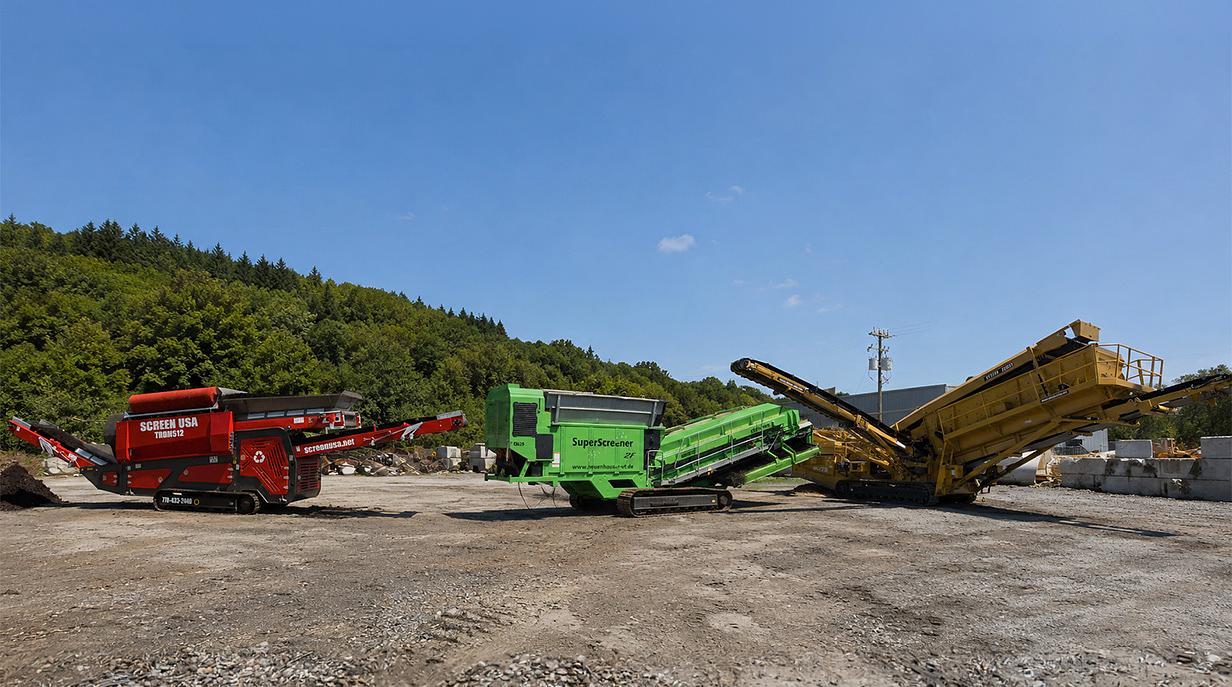
Three main types of screening equipment handle compost. Each has strengths and limitations.
Trommel Screens
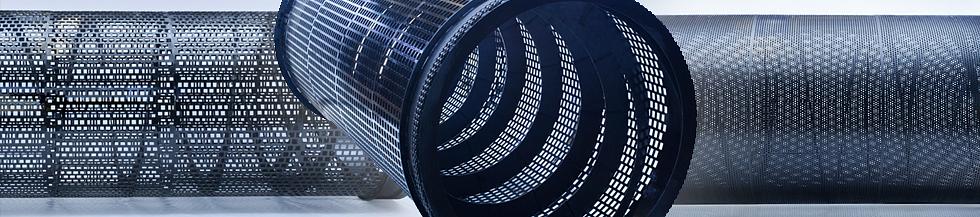
Trommel screens are the most widely used machines for compost screening. A trommel is a large rotating drum with screen openings along its length. Material enters one end, tumbles inside the drum as it rotates, and fine material drops through the screen holes. Overs exit the far end.
Trommels handle wet, sticky compost better than flat-deck screeners. The tumbling action inside the drum breaks up clumps and pushes material through the openings. Wet compost that would blind a flat screen often processes well in a trommel.
Screen panels on a trommel can be swapped to change the opening size. This lets you produce different grades from the same machine. Most trommel screen parts are readily available and straightforward to replace.
Trommels are available in stationary, portable, and track-mounted configurations. Capacity ranges from 30 cubic yards per hour for small portable units to over 200 cubic yards per hour for large stationary models.
Star and Disc Screens
Star/disc screens use rows of spinning rubber or polyurethane stars (or discs) mounted on shafts. Material is fed onto the star deck. Fine material falls through the gaps between the spinning elements. Overs ride across the top and discharge off the end.
The key advantage of star screens is their self-cleaning action. The spinning stars continuously shed material, which prevents blinding. This makes star screens excellent for very wet, sticky compost that clogs other screen types.
Star screens produce a slightly different product texture than trommels. The spinning action tends to produce a more shredded, fluffier finished compost. Some buyers prefer this texture for garden and landscape use.
Changing the screen size on a star screen means adjusting the gap between shafts or swapping star elements. This takes more time than changing trommel screen panels.
Vibrating Screens
Vibrating screens (also called shaker screens) use a vibrating flat or inclined screen deck. Material is fed onto the deck. Vibration moves the compost across the surface while fine particles drop through.
Vibrating screens work well for dry, cured compost. They offer high throughput per square foot of screen area. For dry material, they can outproduce trommels and star screens of similar size.
The drawback is blinding. Wet or sticky compost plugs the screen openings quickly. If your compost has moisture content above 40 to 45 percent, a vibrating screen will struggle. Frequent cleaning and downtime eat into production.
Vibrating screens are best suited for operations that produce well-cured, dry compost or that have the ability to stockpile and dry material before screening.
Equipment Comparison
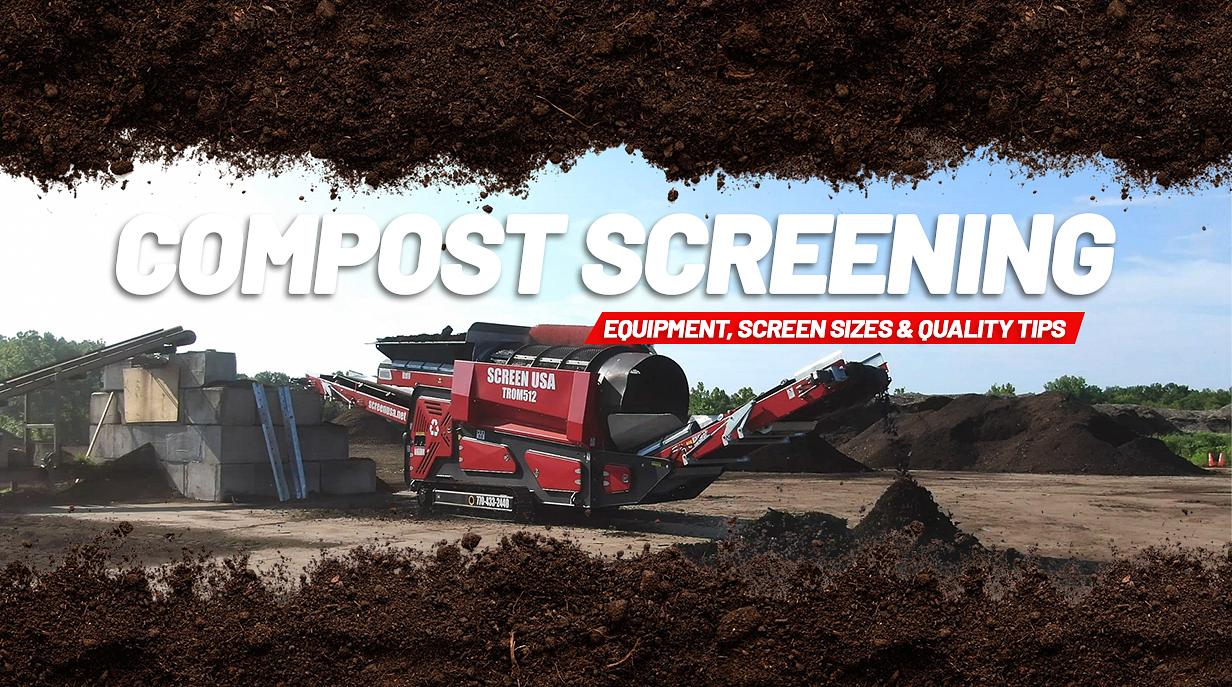
Trommel screens are the best all-purpose choice for compost screening. They handle sticky material well. Maintenance is moderate, covering screen panels, bearings, and drum seals. Throughput ranges from 30 to 200+ cubic yards per hour. Example Machine: The Screen USA TROM512 is a compact track-mounted trommel screen commonly used for screening compost, topsoil, and mulch.
Star/disc screens excel with very wet, sticky compost thanks to their self-cleaning action. Maintenance is moderate to high as star elements wear and shaft bearings need attention. Throughput ranges from 30 to 150+ cubic yards per hour.
Vibrating screens work best with dry, cured compost. They are prone to blinding with wet material. Maintenance is low to moderate, covering screen panels and vibrator bearings. Throughput ranges from 50 to 250+ cubic yards per hour. Example Machine: The Screen USA CD410 is a heavy duty, track mounted screener for difficult materials such as C&D, sand & gravel, landfill reclamation, and as a pre-screener for crushers or screener fed from a crusher.
Throughput figures depend on screen size, opening size, and material conditions. Wet material and smaller openings reduce throughput on all machine types.
Screen Sizes for Different Compost Grades
The screen opening size determines the grade and market for your finished compost. Here are the standard sizes and what they produce.
3/8-Inch Screen
This is the finest commercial compost grade. Product that passes a 3/8-inch screen has a soil-like texture. It blends well with peat, perlite, and other potting mix components.
This grade is used for bagged retail compost, potting soil blends, and greenhouse growing media. It commands the highest price per unit but has the lowest screening throughput. Producing 3/8-inch compost requires well-cured, relatively dry feedstock.
1/2-Inch Screen
Half-inch screened compost is the premium bulk product for most markets. It has a fine, uniform texture that is easy to spread by hand or with equipment.
Buyers use 1/2-inch compost as a garden amendment, raised bed soil, and topdressing for lawns and turf. This is the sweet spot for many operations: good throughput, strong demand, and a solid price premium over coarser grades.
3/4-Inch Screen
Three-quarter-inch is the standard bulk compost grade. It works for landscape supply yards, municipal projects, and general soil improvement.
This grade is coarser but still uniform. Small wood pieces and bark fragments may be visible. Buyers use it as a landscape amendment, mulch substitute, and general-purpose soil conditioner. Screening throughput is significantly higher than finer grades.
1-Inch to 2-Inch Screen
Coarse compost in this range serves specialized markets. Erosion control blanket material, bioswale media, and coarse landscape mulch all use larger particle sizes.
State DOT specifications for erosion control compost often call for material in this range. The coarse texture resists washing and holds slopes. Throughput is high and screen wear is low.
Screen Size and Grade Reference
3/8-inch screen (ultra-fine/bagging grade). Used for bagged retail compost, potting soil blends, and greenhouse media. Commands the highest price premium.
1/2-inch screen (premium bulk). Used for garden amendment, raised beds, and lawn topdressing. Commands a high price premium.
3/4-inch screen (standard bulk). Used for landscape supply, municipal projects, and general amendment. Commands a moderate price premium.
1-inch screen (coarse bulk). Used for coarse mulch, erosion control, and bioswale media. Commands a low to moderate price premium.
2-inch screen (rough screened). Used for erosion control blankets and slope stabilization. Commands the lowest price premium.
Price premiums vary by market. In most regions, 3/8-inch compost sells for two to three times the price of rough-screened material.
Throughput and Production Tips
Several factors affect how much screened compost you produce per hour.
Moisture content is the single biggest factor. Wet compost screens slowly and blinds screens faster. Ideal screening moisture is 35 to 45 percent. If your material is wetter, let it cure longer or turn the windrows with a compost turner to promote drying before screening.
Feedstock type matters. Compost made from woody feedstock screens differently than food-waste compost. Woody material tends to be drier and more fibrous. Food-waste compost is often wetter and stickier. Know your feedstock and choose equipment accordingly.
Screen opening size directly affects throughput. A 3/4-inch screen will process material roughly twice as fast as a 3/8-inch screen on the same machine. If you need high volumes of fine product, you may need a larger machine or multiple screening passes.
Feed rate is critical. Overloading the screen reduces efficiency. The machine needs time and space to separate material properly. A thin, even layer of compost on the screen surface produces better separation and fewer contaminants in the finished product. Feed slowly and steadily rather than dumping large bucket loads.
Pre-screening preparation helps. Breaking up large clumps before feeding the screen reduces jams and improves throughput. Some operations run compost through a trommel at a large opening first, then re-screen at the target size.
Trommel Maintenance for Compost Operations
Compost is abrasive, wet, and acidic. It is hard on screening equipment. Regular maintenance keeps your trommel running and your product quality high.
Screen Panel Inspection and Replacement
Screen panels are the primary wear item on any trommel. Compost wears through screen panels faster than dry soil or aggregate because of its moisture and acidity.
Inspect panels weekly during heavy production. Look for holes, tears, and areas where openings have worn larger. Worn panels let oversized material through and reduce product quality. Replace panels before they fail completely to avoid contaminating finished product stockpiles.
Keep spare trommel screen parts on hand. Waiting for parts means downtime, and downtime during peak season costs money.
Drum and Bearing Maintenance
Trommel bearings carry the full weight of the drum and its contents. Grease bearings on the schedule specified by the manufacturer. Listen for unusual noise. A rumbling or grinding sound from the bearings means they need attention before they fail.
Check drum alignment periodically. A misaligned drum causes uneven screen wear and accelerated bearing failure. Trunnion wheels or roller supports should be inspected for wear and adjusted as needed.
Cleaning to Prevent Buildup
Compost buildup inside the drum reduces screening capacity and adds unnecessary weight. Wet compost sticks to screen panels and blocks openings from the inside.
Clean the drum interior regularly. Some operators run a load of dry, coarse material through the trommel at the end of each day to scour buildup. Others use pressure washers during scheduled downtime. Keeping the drum clean maintains throughput and extends screen panel life.
Frequently Asked Questions
What screen size for finished compost?
For most bulk compost sales, a 1/2-inch screen produces the best balance of product quality and throughput. For bagged retail compost, use a 3/8-inch screen. For landscape mulch or erosion control, 3/4-inch to 1-inch works well. Match the screen size to your market and customer requirements.
Trommel vs star screen for compost?
Both work well. Trommels are more common and handle a wider range of conditions. Star screens excel with very wet, sticky compost because their self-cleaning action resists blinding. If your compost is consistently wet, a star screen may keep you running when a trommel would struggle. If you process a variety of materials, a trommel offers more flexibility.
How much compost can a trommel screen per hour?
It depends on the trommel size, screen opening, and compost moisture. Small portable trommels (4 to 5 foot diameter) typically process 30 to 60 cubic yards per hour with a 1/2-inch screen. Mid-size machines (6 to 7 foot diameter) handle 60 to 120 cubic yards per hour. Large stationary trommels can exceed 200 cubic yards per hour. Wet material and smaller screen openings reduce these numbers.
How to reduce contaminants in screened compost?
Start at the source. The cleaner your incoming feedstock, the cleaner your finished compost. Reject loads with visible plastic, glass, or metal contamination. Use a two-stage screening approach: coarse screen first to remove large contaminants, then fine screen for the finished product. Some operations add a picking line or air classifier before screening to pull out plastic film and light contaminants that screens miss.
We have sold and brokered compost screening equipment since 1973. Whether you need a new trommel, a used star screen, or replacement screen panels, we can help.
Browse compost screening equipment or call us at 770-433-2670 to discuss your operation.