





What to Look for in a Compost Turner: A Buyer's Guide
Choosing the right compost turner can make or break your composting operation. The wrong machine wastes fuel, slows production, and costs you money in repairs. The right one pays for itself in throughput and consistency.
At GCS, we have been selling and brokering compost turners since 1973. We have helped operations of every size find the right equipment. This guide covers what you need to know before buying.
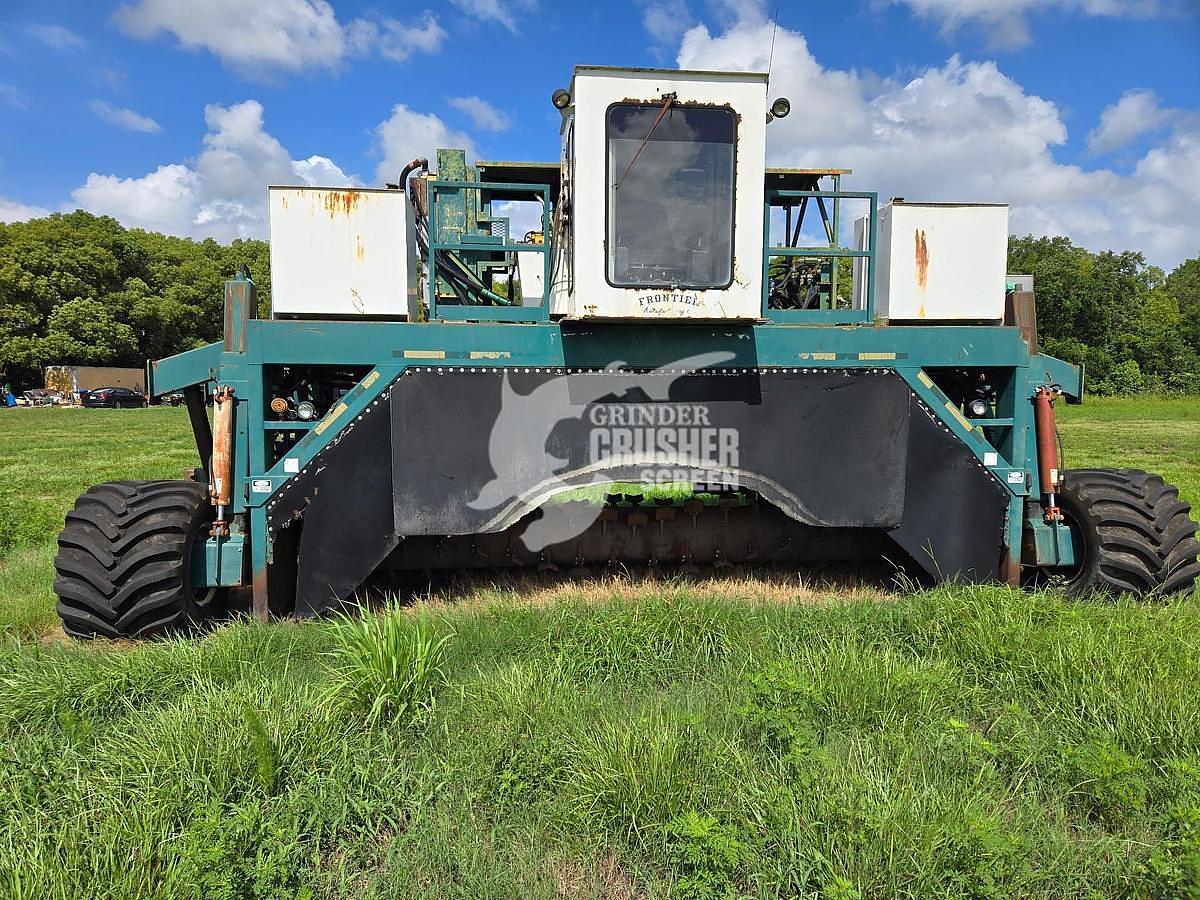
Key Questions to Ask Before You Buy
Before you look at a single machine, answer these four questions:
- What materials are you composting? Yard waste, food waste, biosolids, and manure all behave differently. Heavier, wetter materials need more horsepower and heavier-duty drums.
- How many cubic yards per hour do you need to turn? This determines the size class of turner you need.
- What does your site look like? Measure your pad dimensions. Know whether the surface is concrete, asphalt, or dirt. Note any slopes or tight corners.
- Will the turner stay on one site or move between locations? Machines that travel between sites need road-legal transport options or trailer-mounted designs.
These four answers narrow your search fast. They determine the width, horsepower, drive system, and mobility features you need.
Types of Compost Turners
Not all compost turners work the same way. There are three main categories, and each fits a different operation style.
Windrow Turners
Windrow turners straddle or work alongside elongated compost rows called windrows. They are the most common type of compost turner in North America. The machine drives over or beside the windrow, and a rotating drum lifts, mixes, and aerates the material.
Most windrow turners are self-propelled. They work well on both paved and unpaved surfaces. They are a proven, reliable design for municipal and commercial composting. Windrow turners come in a wide range of sizes, from compact units for small farms to large machines that process thousands of cubic yards per hour.
Straddle Turners
Straddle turners ride over the top of the windrow on wheels or tracks that run on either side. They handle larger windrow profiles than side-mount designs. Straddle turners are common at large-scale municipal and agricultural operations where windrow height and width are maximized. Because they straddle the full width, these machines can process windrows up to 20 feet wide and 10 feet tall in a single pass.
Elevated Face Turners
Elevated face turners work differently. Instead of processing a windrow in place, they pick material from one end of a long pile and deposit it on the other side. This design is common in enclosed composting facilities and operations with limited pad space. The compost moves forward each time it is turned.
How They Compare
Windrow turners fit municipal, commercial, and agricultural sites with open pad space. Typical capacity runs 1,000 to 5,000+ cubic yards per hour. They offer proven design, wide availability, and flexible site use. They require long, straight windrow space.
Straddle turners fit large-scale operations with tall, wide windrows. Typical capacity runs 2,000 to 7,000+ cubic yards per hour. They handle the largest windrow profiles and deliver the highest throughput. They cost more and need level ground.
Elevated face turners fit enclosed facilities and limited-space sites. Typical capacity runs 500 to 3,000 cubic yards per hour. They work in tight spaces and move compost forward automatically. They are slower and more specialized.
Self-Propelled vs. Pull-Behind (PTO-Driven)
Self-propelled turners have their own engine and drive system. They are independent machines that do not need a tractor. They offer better control and are standard for mid-size to large operations.
Pull-behind turners attach to a tractor and use the tractor's PTO (power take-off) for power. They cost less upfront. They make sense for smaller operations that already own a suitable tractor. The trade-off is less turning capacity and dependence on the tractor's power rating. Make sure your tractor meets the minimum horsepower and PTO speed requirements for the turner you are considering.
How to Choose Based on Your Compost Volume
Small Operations: Under 5,000 Cubic Yards per Year
A pull-behind, PTO-driven turner often works well here. Operations at this scale include small farms, community composting sites, and landscape companies. A tractor you already own can power the turner, keeping costs down. Look for machines with 6- to 10-foot turning widths. At this volume, you may only need to run the turner a few hours per week, so a dedicated self-propelled machine is hard to justify financially.
Medium Operations: 5,000 to 25,000 Cubic Yards per Year
This is where self-propelled windrow turners earn their keep. You need a dedicated machine that can process material efficiently without tying up a tractor all day. Look for turners with 10- to 14-foot turning widths and engines in the 200 to 400 horsepower range. Operations at this scale include regional composting facilities, mid-size municipalities, and large farms.
Large Operations: 25,000+ Cubic Yards per Year
Large-scale facilities need high-capacity self-propelled turners or straddle turners. Turning widths of 14 feet or more are common. Engines often exceed 400 horsepower. Throughput rates of 3,000 to 7,000 cubic yards per hour keep the operation on schedule. At this volume, uptime and parts availability matter as much as raw capacity. Browse our full inventory of compost turners for sale to see what is available.
Drive System: Belt vs. Hydraulic
Compost turners use either belt-driven or hydraulic-driven drum systems. Each has real advantages.
Belt drive systems are simpler in design. They have fewer hydraulic components to maintain. Belt replacement is straightforward, and belts are relatively inexpensive. Many operators prefer belt drives for lower long-term maintenance costs.
Hydraulic drive systems deliver consistent torque across a wider range of conditions. They handle heavy, wet materials well. They allow for variable drum speed, which gives operators more control. The trade-off is more hydraulic components and higher maintenance complexity.
Neither system is universally better. Your material type and operating conditions should guide the choice.
Site Surface and Traction
Your composting pad surface affects which turner you need. On concrete or asphalt, most wheeled turners perform fine. On dirt or gravel pads, traction becomes a concern.
For dirt surfaces, look for four-wheel-drive turners or track-mounted models. Track-mounted turners distribute weight over a larger area and handle soft, uneven ground better. They cost more than wheeled models, but they avoid the downtime that comes from getting stuck in wet conditions.
If budget allows, tracks are the safer choice for unpaved sites.
Operator Comfort and Safety
Compost turner operators spend 8 to 10 hours a day in the cab. Comfort is not a luxury. It affects productivity, safety, and employee retention.
Look for these features in the cab:
- Carbon filtration to block dust and odor
- Air-ride seat to reduce fatigue from vibration
- Climate control for year-round comfort
- Joystick controls for precise drum and drive operation
- Emergency exit access so the operator can get out quickly if needed
Also ask how the operator accesses the cab. Some designs require climbing steps or ladders that can be hazardous in wet conditions. A good cab layout reduces operator fatigue and keeps your crew safer over long shifts.
Maintenance: What to Ask Before You Buy
Every compost turner needs regular maintenance. The key is knowing what that maintenance involves before you commit.
Ask these questions:
- How often does the drum need greasing? Some machines need daily greasing. Others have automatic lube systems.
- What is the teeth or tine replacement process? Teeth wear out. Find out how long they last, how much they cost, and how hard they are to change.
- Are parts readily available? A machine sitting idle waiting for parts costs you money every day.
- What does the manufacturer's service network look like? Know who you can call when something breaks.
At GCS, we stock parts and provide support for the brands we sell. Call us at 770-433-2670 with maintenance questions before or after your purchase.
Top Compost Turner Brands
We work with every major compost turner manufacturer. Here is what each leading brand is known for.
Scarab
Scarab is a well-known name in windrow compost turners. Their machines are designed for heavy commercial and municipal use. Scarab turners are recognized for high throughput, durable construction, and good dealer support. They offer both wheeled and track-mounted models.
Wildcat
Wildcat manufactures compost turners with a reputation for simplicity and toughness. Their machines are popular with operations that want reliable performance without complicated systems. Wildcat turners are straightforward to maintain and hold up well in demanding conditions. The company focuses on practical features over flashy extras.
Vermeer
Vermeer is a large equipment manufacturer with a strong presence in composting. Their compost turners are backed by a nationwide dealer network, which means parts and service are easy to find. Vermeer machines are popular at municipal and commercial sites. Their CT-series turners are widely used across North America.
Backhus
Backhus is a German manufacturer known for engineering precision. Their turners are common at large-scale European and North American composting facilities. Backhus machines are built for high volume. They offer a wide range of models from mid-size to very large straddle turners.
Frontier
Frontier builds compost turners for operations of all sizes. They are known for competitive pricing and practical designs. Frontier machines appeal to budget-conscious buyers who still need solid performance. Their pull-behind and self-propelled models cover a wide range of applications.
We carry new equipment from these manufacturers and broker quality used machines from all brands. See our current compost turners for sale to check availability.
Screening Finished Compost
Once your compost is finished, it needs screening to remove oversized particles and contaminants. A trommel screen is the standard tool for this job. Trommel screens sort finished compost into uniform particle sizes for sale or use.
Matching your turner capacity to your screening capacity keeps material flowing through your operation without bottlenecks. If you are investing in a compost turner, plan your screening equipment at the same time. We can help you size both pieces of equipment together so your entire composting line runs efficiently from raw feedstock to finished product.
Frequently Asked Questions
What is a compost turner?
A compost turner is a machine that mixes and aerates composting material. It speeds up the decomposition process by introducing oxygen, releasing heat and moisture, and blending the compost for uniform breakdown. Compost turners range from small PTO-driven attachments to large self-propelled machines that process thousands of cubic yards per hour.
How often should compost be turned?
Turning frequency depends on the material, the composting method, and the stage of decomposition. Most windrow composting operations turn material every 3 to 7 days during the active composting phase. Some high-temperature processes require more frequent turning to manage heat and moisture. Your compost recipe and monitoring data should guide your turning schedule.
How much does a compost turner cost?
Prices vary widely based on size, type, and condition. Small PTO-driven pull-behind turners can start in the range of $15,000 to $50,000 used. Mid-size self-propelled windrow turners typically run from $75,000 to $250,000 used, and more for new units. Large straddle turners and high-capacity machines can exceed $500,000 new. Call us at 770-433-2670 for current pricing on specific models.
Windrow turner vs. straddle turner: which is better?
Neither is universally better. Windrow turners are more common, more affordable, and work well for most operations. Straddle turners handle larger windrow profiles and move more material per pass, but they cost more and need level ground. Your site layout, volume, and budget determine which type fits best.
Ready to Find the Right Compost Turner?
GCS has been matching operations with the right composting equipment since 1973. We sell new compost turners as a master distributor and broker quality used machines from every major brand.
Browse our current inventory of compost turners for sale, or call us at 770-433-2670. We will help you find the right turner for your operation, your site, and your budget.