





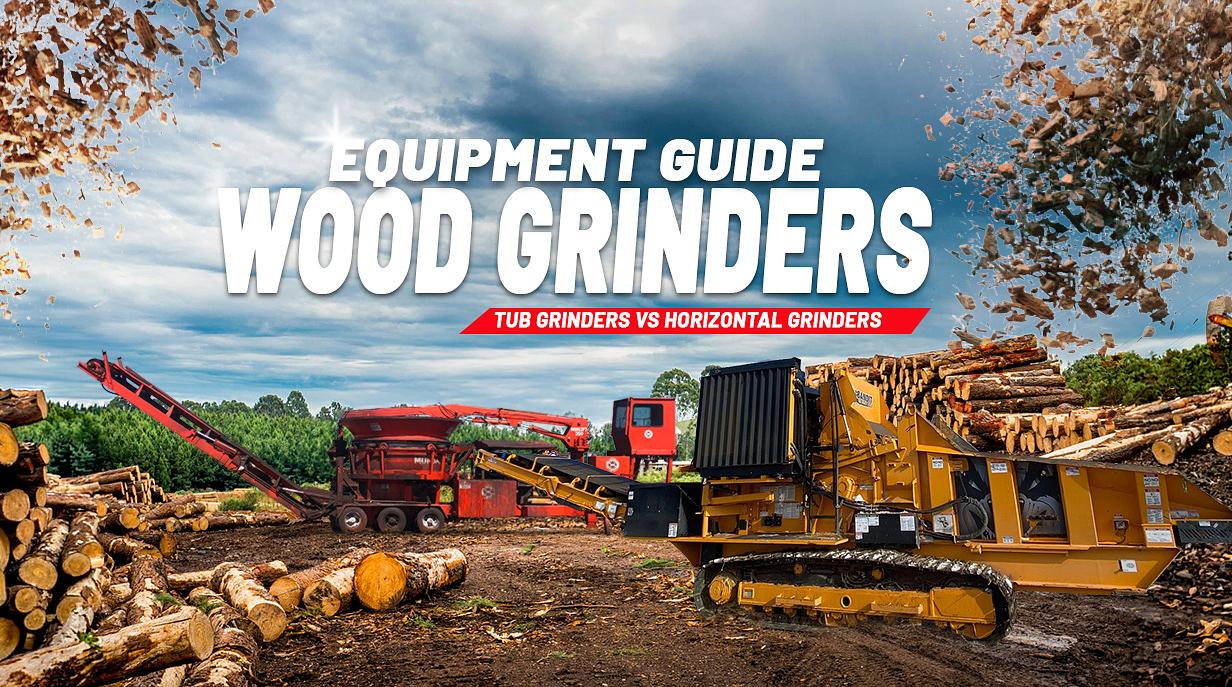
Wood Grinder Buying Guide: Tub Grinders vs Horizontal Grinders
We sell both tub grinders and horizontal grinders, and the question we hear most often is: "Which one do I need?" The answer depends on your material, your volume, and how you plan to use the finished product. This guide covers how both machines work, when to use each one, which brands hold up, and what to look for before you buy. We've been in this business since 1973 — this is what we know.
What Is a Wood Grinder?
A wood grinder is an industrial machine that reduces wood waste into smaller material. The output can be mulch, biomass fuel, compost feedstock, or recycled aggregate — depending on the screen size and application.
There are two main types of wood grinders used in the recycling and land clearing industries: tub grinders and horizontal grinders. Both use hammers to pulverize material, but they feed and process material differently. That difference determines which jobs each machine handles best.
Wood grinders are not the same as wood chippers. Chippers use sharp blades to cut material into uniform chips. Grinders use blunt hammers to pulverize and shred. Grinders handle dirtier, rougher material. Chippers produce cleaner, more uniform output. Many operations use both.
Tub Grinders — How They Work and When to Use Them
A tub grinder has a large rotating tub mounted above a hammermill. Material goes into the tub — stumps, brush, pallets, root balls, whatever you have. The tub rotates slowly and feeds material down into the hammermill by gravity. The hammers pulverize the material and force it through a screen underneath.
The tub design is what makes these machines different from everything else. You can throw irregular, oversized, tangled material into the tub without pre-processing. A pile of stumps mixed with brush and dirt? A tub grinder handles it. A horizontal grinder would choke on the same load.
Common applications for tub grinders:
- Wood waste processing — construction debris, pallets, railroad ties, demolition wood
- Land clearing — stumps, brush, root balls, storm debris
- Composting — green waste, yard trimmings, agricultural waste
- Hay and feed grinding — round bales, square bales, spoiled grain
- Pallet recycling — whole pallets ground into mulch or boiler fuel
Tub grinder strengths:
- Accepts oversized, irregular material without sorting or pre-processing
- Handles contaminated loads (dirt, rocks, small amounts of metal)
- Lower operator skill required — load the tub and let it feed itself
Tub grinder trade-offs:
- Lower throughput than horizontal grinders on clean, uniform material
- Hammer wear is higher when grinding dirty material with rocks and soil mixed in
- Output particle size is less consistent than a horizontal grinder
If your material comes off a job site, a storm cleanup, or a land clearing project — and it's mixed, dirty, and unpredictable — a tub grinder is the right machine.
Browse used tub grinders for sale
Horizontal Grinders — How They Work and When to Use Them
A horizontal grinder feeds material in a straight line along a belt or chain conveyor into a hammermill or rotor. An operator or loader places material on the infeed. The feed system pulls it into the grinding chamber at a controlled rate. The hammers or cutters reduce it and force it through a screen.
Horizontal grinders are production machines. They process clean, uniform material at high throughput rates. A well-fed horizontal grinder running clean wood can produce 50 to 150+ tons per hour depending on the size of the machine.
Common applications for horizontal grinders:
- Mulch manufacturing — consistent particle size for bagged or bulk mulch
- Biomass fuel production — wood chips and hog fuel for power plants and boilers
- Sawmill waste processing — slabs, offcuts, edgings, and trim
- Clean wood recycling — sorted construction wood, clean pallets, crating
- Land clearing — when material has been pre-sorted and is free of dirt and rock
Horizontal grinder strengths:
- Higher throughput than tub grinders on clean material
- More consistent output particle size — important for mulch and biomass buyers
- Better fuel efficiency per ton when running clean, uniform feed stock
Horizontal grinder trade-offs:
- Does not handle contaminated or irregular material well — rocks and metal cause expensive damage
- Material should be sorted before feeding
- Higher upfront cost than tub grinders in the same horsepower class
If your material comes off a sort line, a log deck, or a clean demolition site — and you need high-volume, consistent output — a horizontal grinder is the right machine.
Browse horizontal grinders for sale
Tub Grinder vs Horizontal Grinder — Which One Do You Need?
Here's a side-by-side comparison:
FactorTub GrinderHorizontal GrinderBest material typeIrregular, oversized, contaminatedClean, uniform, pre-sortedThroughputModerate (10–60+ TPH)High (50–150+ TPH)Pre-processing neededMinimal — load and grindMaterial should be sorted firstBest applicationsLand clearing, storm cleanup, hay, mixed loadsMulch production, biomass, sawmill wasteOutput consistencyVariableMore uniformHammer wear rateHigher on dirty materialLower on clean materialTypical HP range300–1,000+ HP500–1,500+ HPTypical price range (used)$50K–$350K$75K–$500K
The simplest way to decide: look at your material pile. If it's mixed, dirty, and unpredictable — tub grinder. If it's sorted, clean, and uniform — horizontal grinder.
Many operations that process high volumes own both. A tub grinder handles the rough incoming material. A horizontal grinder runs the clean, sorted wood at production speed. They serve different roles in the same yard.
Top Wood Grinder Brands
We carry equipment from every major manufacturer. Here's what we see perform well across hundreds of transactions.
Morbark
The most recognized name in tub grinders. Morbark builds heavy machines that hold their value. The 950, 1000, 1300, and 1600 tub grinder models are standard equipment in wood waste recycling and land clearing. Morbark also makes horizontal grinders — the 3800 series is a production-grade machine for biomass and mulch operations. Parts availability is strong across the U.S. Browse Morbark equipment.
Peterson Pacific
Known primarily for horizontal grinders. Peterson builds reliable machines with strong dealer support. Their horizontal grinders are common in biomass, mulch, and clean wood processing operations on the West Coast and nationwide. Browse Peterson equipment.
Diamond Z
Heavy-duty tub grinders built for aggressive applications. Diamond Z machines tend to be heavier than competing models in the same class, which translates to less vibration and longer component life. Popular with C&D recyclers and operators who grind dirty, contaminated material.
Vermeer
Solid horizontal grinders with an excellent dealer network. The Vermeer HG series is a common choice for land clearing contractors and mulch producers. Vermeer dealers are everywhere, which matters when you need service or parts quickly in the field.
Bandit
Best known for chippers, but Bandit also manufactures capable horizontal grinders. A good option for smaller operations or contractors who need a grinder that pulls double duty with other Bandit equipment.
CBI
High-end horizontal grinders built for production-scale biomass and mulch manufacturing. CBI machines are among the highest-throughput grinders available. If you're running a large-scale fuel or mulch operation, CBI is worth evaluating.
A note on brands: no manufacturer is perfect. Every machine breaks eventually. What matters as much as the brand is parts availability and service support in your area. A great grinder with no nearby dealer support is expensive downtime waiting to happen. Before you buy, check who can service the machine where you operate.
What to Look for When Buying a Wood Grinder
Whether you're buying new or used, these are the factors that matter most.
1. Engine Horsepower
HP determines what material you can grind and how fast. A 300HP machine works for hay grinding and light wood waste. A 700HP+ machine handles stumps, heavy C&D wood, and production-volume mulch. Match horsepower to your daily material type and tonnage — don't overbuy or underbuy.
2. Hammermill Configuration
Fixed hammers hit harder and work well on clean material. Swing hammers absorb impact from rocks and contaminants — better for dirty loads. Tip material matters too. Carbide-tipped hammers last significantly longer than steel but cost more upfront. For operations grinding dirty material, swing hammers with carbide tips are the standard setup.
3. Feed System
On tub grinders, tub diameter and indexing speed determine how fast material enters the hammermill. Larger tubs accept bigger material and hold more volume between loads. On horizontal grinders, infeed opening size and feed roller diameter determine what size material the machine accepts without pre-cutting.
4. Screen Options
Screens control your finished product size. Most grinders accept interchangeable screen panels with different opening sizes. Check how easy it is to swap screens on any machine you're considering. If a screen change takes 4 hours, you won't do it — and that limits your product flexibility.
5. Mobility
Track-mounted grinders move under their own power between job sites and across soft ground. Wheel-mounted units tow behind a truck — simpler and cheaper, but you need firm ground. Stationary setups maximize output at a fixed location like a recycling yard or mulch plant.
6. Buying Used — What to Inspect
A used grinder can save you significant money if you inspect it properly:
- Engine hours — low hours relative to age is good, but also look at how hard those hours were run. Ask for oil analysis history if available.
- Hammermill shaft — check for cracks, wobble, or bearing play. This is the most expensive single component to replace.
- Wear liners — inspect the liners inside the grinding chamber. Replacing liners is cheap. Replacing the chamber walls behind them is not.
- Hydraulic system — check for leaks, slow response, and overheating. Run the machine under load if possible.
- Screen cradle — a warped cradle means poor screen contact, which means oversized material in your finished product.
- Hammer condition — worn hammers are expected, but check that they wear evenly. Uneven wear can indicate a shaft balance issue.
Maintenance Tips for Wood Grinders
We see the same maintenance mistakes across hundreds of machines that come through our yard.
- Check hammer tips daily. Worn tips reduce throughput and increase fuel consumption before you notice the difference in the output pile. By the time the product looks bad, you've been burning extra fuel for days.
- Grease on schedule. Hammermill bearings are the most expensive routine replacement on a grinder. They are also the cheapest to maintain. Follow the manufacturer's greasing schedule exactly.
- Keep spare screens on hand. Screens tear. When one rips mid-job, downtime waiting for a replacement screen costs more than the screen itself. Buy a backup set when you buy the machine.
- Track engine hours, not calendar days. Service intervals are based on run time. A machine that runs 8 hours per week and one that runs 10 hours per day need different service schedules even if they're the same age.
- Inspect wear liners regularly. Liners protect the grinding chamber body. Once a liner wears through, the chamber wall takes the damage — and that's a major repair. Check liners every 200–500 hours depending on material abrasiveness.
- Monitor hydraulic fluid temperature. Overheating hydraulic fluid breaks down faster and damages seals and pumps. If your hydraulic temps run high consistently, check the cooler and fluid level before something fails.
Frequently Asked Questions
What's the difference between a wood grinder and a wood chipper?
A grinder uses hammers to pulverize material through a screen. A chipper uses sharp blades (knives) to cut material into uniform chips. Grinders handle dirtier, rougher material and produce a less uniform product. Chippers require cleaner material but produce consistent chips. Many operations use a chipper for clean logs and a grinder for mixed waste.
How much does a wood grinder cost?
Used tub grinders typically range from $50,000 to $350,000 depending on brand, model, age, and hours. Used horizontal grinders range from $75,000 to $500,000. New machines run $150,000 to $700,000+ for tub grinders and $200,000 to $1,000,000+ for large horizontal grinders. Price depends heavily on horsepower, brand, and configuration.
Can you grind stumps with a horizontal grinder?
Not recommended. Stumps are irregular, dirt-covered, and often contain rocks. That's exactly the material horizontal grinders struggle with. Use a tub grinder for stumps. The tub design accepts the irregular shape and the hammermill can handle the dirt and rock contamination.
How many tons per hour does a wood grinder process?
It depends on machine size, material type, and screen size. General ranges: small tub grinders (300–500HP) process 10–30 tons per hour. Large tub grinders (700–1,000HP) process 30–60+ tons per hour. Horizontal grinders in the 700–1,500HP range can process 50–150+ tons per hour on clean material. Throughput drops significantly with smaller screen sizes and contaminated material.
Find the Right Wood Grinder for Your Operation
We carry tub grinders and horizontal grinders from every major manufacturer — Morbark, Peterson, Diamond Z, Vermeer, Bandit, CBI, and more. Browse our current inventory:
Not sure which machine fits your operation? Call 770-433-2670 or contact us. We've been matching operators to the right equipment for over 50 years.