





Wood Chipper Buying Guide: Types, Sizes, and What to Look For
If you're looking for a wood chipper for sale, you already know these machines earn their keep. A good chipper turns whole trees, limbs, brush, and logs into clean, uniform chips — and those chips are worth money. Mulch, biomass fuel, landscape supply, erosion control — the end markets are strong and growing.
We've been selling wood chippers and recycling equipment since 1973. We carry everything from small PTO chippers for tree care crews to whole tree chippers that process 60-inch logs on a land clearing site. This guide covers the types of wood chippers on the market, how to size the right machine for your operation, what separates a chipper from a grinder, and what to inspect before you buy.
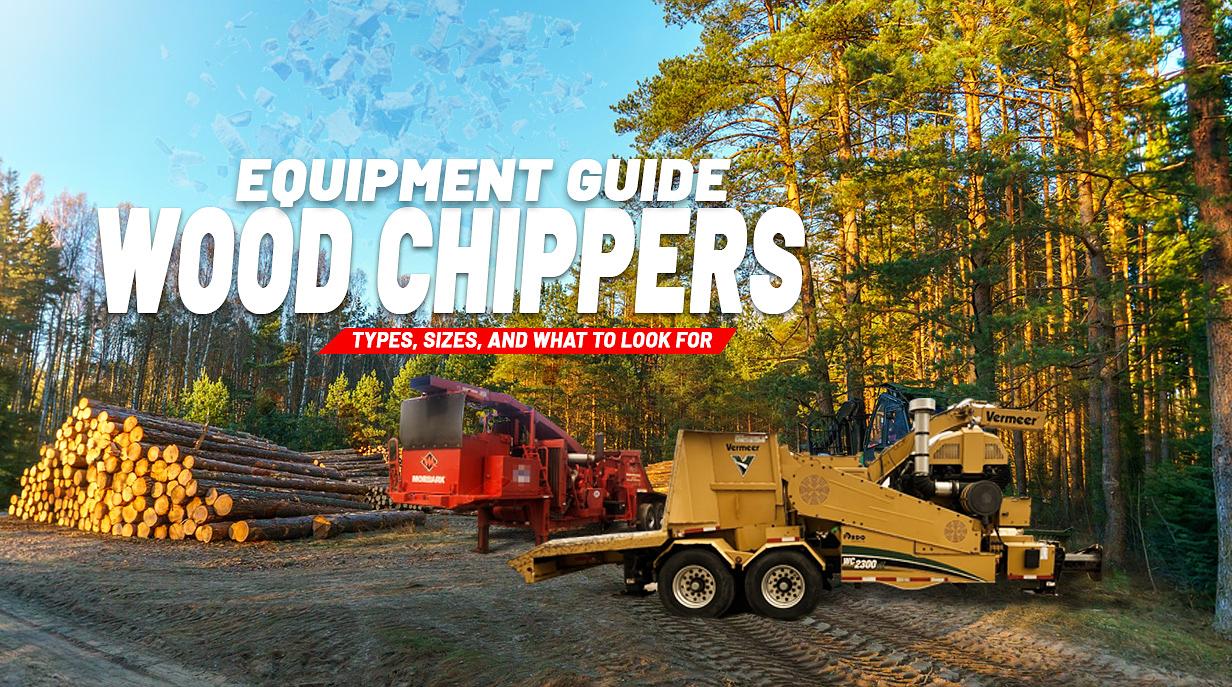
How a Wood Chipper Works
A wood chipper uses sharp steel blades — called knives — mounted on a spinning disc or drum to cut wood into chips. Material feeds into the chipper through a feed hopper or infeed tray. The blades slice through the wood at high speed. The chips exit through a discharge chute.
This is a cutting machine. The knives do the work. Sharp blades produce clean, consistent chips with minimal fines. Dull blades tear the wood instead of cutting it, producing ragged chips and burning more fuel. Blade maintenance is the single most important thing you can do to keep a chipper running well.
Chipper vs Grinder: Know the Difference
This matters. We see buyers confuse these two machines all the time, and buying the wrong one costs real money.
A chipper uses blades (knives) to cut material. The output is clean, uniform wood chips. Chippers work best on clean wood — logs, limbs, brush, tree tops. They do not handle contaminated material well. A rock or a piece of metal will damage the blades and shut you down.
A grinder uses hammers to pulverize material. The output is rougher and less uniform. Grinders handle dirty, mixed material — stumps, root balls, pallets, construction debris, storm cleanup piles. They shrug off dirt and small contaminants that would destroy chipper blades.
Here's the simple rule: if the material is clean wood that you want cut into uniform chips, use a chipper. If the material is mixed, dirty, or contaminated and you just need it reduced in size, use a grinder.
Many operations run both. A commercial wood chipper processes the clean logs and limbs into saleable chips. A horizontal grinder or tub grinder handles the dirty material, stumps, and mixed waste. They are different machines that serve different roles in the same yard.
Types of Wood Chippers
There are three main types of wood chippers used in commercial and industrial operations. Each design handles different material sizes and production volumes.
Disc Chippers
A disc chipper has knives mounted on a heavy steel flywheel disc. The disc spins at high RPM and the knives slice across the face of the material as it feeds into the machine. Disc chippers produce the most consistent chip quality of any chipper type. The chip size is highly uniform, which matters if you're selling to biomass plants, pulp mills, or landscape suppliers with strict specifications.
Disc chippers work best on clean logs and limbs that feed straight into the machine. They are less forgiving of crooked or branchy material than drum chippers. Material should be relatively straight and clean for a disc chipper to run at peak efficiency.
Best for: Biomass fuel production, pulp and paper supply, landscape chips, any application where chip uniformity matters.
Drum Chippers
A drum chipper has knives mounted along the surface of a rotating cylinder (the drum). As the drum spins, the blades cut across the infeed opening. Drum chippers accept a wider range of material shapes than disc chippers. Crooked limbs, forked branches, and brush feed into a drum chipper more easily because the drum pulls material in as it cuts.
Drum chippers produce good quality chips, though slightly less uniform than disc chippers. For most mulch and biomass applications, the difference is negligible. Where drum chippers excel is in handling real-world material that isn't perfectly straight — which is most of what comes off a tree care job or a land clearing site.
Best for: Tree care operations, right-of-way clearing, land clearing, brush processing, general purpose chipping.
Whole Tree Chippers
A whole tree chipper is a large-capacity machine designed to process full trees — trunk, limbs, and top — in a single pass. These are the biggest chippers in the industry. A large whole tree chipper can accept material up to 36 inches, 48 inches, or even 60+ inches in diameter depending on the model.
Whole tree chippers use either disc or drum designs, but scaled up to handle massive material. They are powered by high-horsepower engines (typically 500 to 1,000+ HP) and mounted on trailers or tracks for transport between job sites. A loader feeds whole trees into the infeed, and the chipper reduces them to chips in seconds.
These machines are standard equipment on large-scale land clearing, logging, and biomass harvesting operations. If you're clearing hundreds of acres or supplying a biomass power plant with chip fuel, a whole tree chipper is the production machine for the job.
Best for: Large-scale land clearing, logging operations, biomass harvesting, power plant fuel supply.
Chipper Type Comparison
FactorDisc ChipperDrum ChipperWhole Tree ChipperChip qualityMost uniformGood — slightly less uniformGood — depends on disc or drum designMaterial acceptedClean, straight logs and limbsLogs, limbs, brush, crooked materialWhole trees up to 36"–60"+ diameterCapacity range6"–30"+ diameter6"–24"+ diameter24"–60"+ diameterTypical HP range50–800+ HP50–500+ HP500–1,000+ HPBest applicationBiomass, pulp supply, uniform chipsTree care, land clearing, general chippingLarge-scale clearing, logging, biomass supplyFeed flexibilityRequires straighter materialHandles irregular shapes betterHandles full trees with limbs attachedTypical price (used)$15K–$250K+$10K–$150K+$75K–$500K+
Sizing a Wood Chipper: Power and Capacity
Getting the right size chipper means matching three things: the diameter of material you need to process, the volume you need to produce, and the power source available.
Feed Capacity
Chipper capacity is rated by the maximum diameter of material the infeed will accept. A 12-inch chipper handles limbs and small trees. An 18-inch chipper handles medium trees. A 24-inch or larger chipper handles large hardwoods and softwoods common on land clearing and logging jobs.
Buy a chipper that handles the largest material you'll regularly process — not the occasional oversized piece. If 90% of your material is 12 inches or under, don't buy a 30-inch chipper. The bigger machine costs more to buy, more to fuel, and more to maintain. A 12- to 15-inch chipper will be more productive on that material.
Power Sources
PTO-driven chippers connect to a tractor's power take-off. Common in the 4- to 12-inch capacity range. A good choice for farms, small tree care operations, orchards, and municipal crews that already own a tractor. Lower cost and simpler to maintain. Limited by the tractor's HP — most PTO chippers need 25 to 120+ HP at the PTO depending on chipper size.
Self-powered gas or diesel engine chippers have their own dedicated engine. This is the standard setup for commercial wood chipper operations and professional tree care. Engines range from 25 HP on small towable units up to 250+ HP on large trailer-mounted commercial chippers. Diesel engines are the standard for anything over about 100 HP — they're more fuel efficient and last longer under heavy daily use.
High-horsepower diesel chippers (500–1,000+ HP) power whole tree chippers and large industrial disc chippers. These machines are built for continuous production and typically use CAT, Cummins, or John Deere engines. At this power level, fuel consumption, engine durability, and service support matter more than anything else.
Horsepower Ranges by Application
- 25–75 HP: Small property maintenance, light brush, limbs up to 6–8 inches. PTO or small gas/diesel engine.
- 75–175 HP: Professional tree care, municipal crews, moderate land clearing. Medium logs and brush up to 12–15 inches.
- 175–350 HP: Commercial chipping operations, right-of-way clearing, larger trees up to 18–24 inches.
- 350–600 HP: Heavy commercial operations, logging, biomass production, trees up to 24–30 inches.
- 600–1,000+ HP: Whole tree chippers for large-scale land clearing, logging, and biomass harvesting.
Feed System Types
The feed system controls how material enters the chipper. It affects production speed, safety, and how much operator effort each load requires.
Gravity Feed
The simplest system. Material is loaded by hand or with a loader and gravity pulls it into the cutting mechanism. Common on small PTO chippers and older machines. Low cost but low production speed. The operator or loader does most of the work positioning material.
Controlled Feed Roller Systems
Feed rollers grip the material and pull it into the chipper at a controlled rate. This is the standard on modern commercial wood chippers. The rollers are hydraulically powered, and the feed rate adjusts automatically based on engine load — when the engine bogs down, the feed slows. When the engine recovers, the feed speeds up.
Controlled feed rollers are safer than gravity feed because the operator doesn't need to push material into the machine. They also produce more consistent chips because the feed rate stays matched to the chipper's capacity.
Horizontal Feed Tables
Large chippers and whole tree chippers use a horizontal feed table or infeed conveyor. A loader places whole trees or large material on the table. Hydraulic feed wheels or chains pull the material into the chipper. This is the setup on production-class machines where a loader is feeding material continuously.
What to Inspect on a Used Wood Chipper
A used commercial wood chipper saves you serious money compared to new — often 40–60% less. But a bad purchase is expensive. Here's what to check before you buy.
Knives and Anvil
This is where you start. Pull the cover and look at the blades. Worn or chipped knives are expected on a used machine and are cheap to replace or sharpen. What you're really checking is the knife holders and the anvil (the stationary counter-blade the material rests against as the knives cut). A worn or damaged anvil means torn chips instead of cut chips and it's a more expensive repair.
Disc or Drum Condition
On a disc chipper, check the disc for cracks — especially around the knife pockets. Hairline cracks grow under stress and a cracked disc is a serious safety hazard and an expensive replacement. On a drum chipper, check the drum surface and bearings. Spin the drum by hand if possible and feel for roughness or play in the bearings.
Feed System
Run the feed rollers or feed table through a full cycle. Watch for jerky motion, slow response, and hydraulic leaks. The feed system works hard — worn hydraulic motors and cylinders are common on high-hour machines. Check the feed roller surface for wear. Smooth or glazed rollers lose grip on material and reduce feed rate.
Hydraulic System
Check all hydraulic lines, fittings, and cylinders for leaks. Look for wet spots under the machine after it's been running. Check the hydraulic fluid — dark, burnt-smelling fluid means the system has been overheating and the fluid is breaking down. Ask when the hydraulic filters were last changed.
Engine Condition
Check engine hours. On diesel engines, 5,000 to 8,000 hours is mid-life for a well-maintained machine. Over 10,000 hours, budget for potential major engine work. Look for blue or black exhaust smoke — blue smoke means oil burning, black smoke means incomplete combustion. Ask for maintenance records and oil analysis if available.
Frame and Tongue
Check the frame for cracks, especially around the hitch, axle mounts, and infeed housing. These machines vibrate constantly and frame cracks develop at stress points over time. On towable units, inspect the tongue, coupler, and jack. On track-mounted units, check track tension, pad condition, and undercarriage wear.
Discharge Chute
A bent or cracked discharge chute is usually cosmetic, but check that it rotates and adjusts freely. A stuck chute is a sign of deferred maintenance — if they didn't fix the chute, what else did they skip?
Top Wood Chipper Brands
We carry chippers from every major manufacturer. Here are the brands we see most often and what they're known for.
Bandit
The most recognized name in wood chippers. Bandit builds machines from small hand-feed units up to whole tree chippers. The Bandit Beast line crosses into grinder territory for mixed material. Parts availability is excellent — Bandit has one of the strongest parts networks in the industry. If you're buying your first commercial wood chipper and want a safe choice, Bandit is hard to beat.
Vermeer
Strong across the full chipper lineup. Vermeer's BC series is popular with tree care companies and municipalities. Their larger whole tree chippers serve land clearing and logging operations. Vermeer's dealer network is one of the biggest in the equipment industry. When something breaks in the field, having a dealer within a few hours matters. That's Vermeer's biggest advantage.
Morbark
Heavy-duty chippers built for production. Morbark is well known in the forestry and biomass industries. Their large disc chippers and whole tree chippers are standard equipment on logging and land clearing jobs. Morbark machines tend to be heavier and more rugged than some competitors — they're built to take a beating. If you're running a chipper hard, day after day, Morbark holds up.
Other Brands to Know
We also carry chippers from Rayco, Woodsman, Altec, and others. Inventory changes frequently. If you need a specific brand or model, call us — we may have it coming in or know where to find it.
Common Applications for Commercial Wood Chippers
A commercial wood chipper earns money across a wide range of industries:
- Tree care and arborist work — processing limbs, brush, and tree removals on residential and commercial jobs. Chips are hauled away or left on site as mulch.
- Land clearing and site preparation — clearing trees and brush for development, roads, pipelines, and utility rights-of-way. If you're comparing chippers to mulching equipment for this work, read our forestry mulcher guide for a detailed breakdown.
- Biomass fuel production — chipping logs and forest residuals into fuel for power plants, boilers, and pellet mills. Chip quality specifications are strict — disc chippers are preferred for this market.
- Landscape supply — producing mulch and decorative wood chips for wholesale and retail landscape suppliers.
- Logging and forestry — processing tree tops, limbs, and non-merchantable wood left after harvesting. Whole tree chippers maximize the value extracted from every acre.
- Municipal and utility work — storm cleanup, right-of-way maintenance, and brush collection programs.
- Orchard and vineyard removal — chipping removed trees during replanting cycles. PTO chippers behind a tractor are common in this application.
Chipper Maintenance Basics
A well-maintained chipper runs better, burns less fuel, and lasts longer. These are the essentials.
- Sharpen or replace knives on schedule. Dull knives are the number one cause of poor chip quality and wasted fuel. Most operations sharpen knives every 8 to 40 engine hours depending on material and machine size. Keep spare sharpened sets on hand so you can swap and keep running.
- Check the anvil every time you change knives. The gap between the knife edge and anvil controls chip quality. If the anvil is worn, even fresh knives won't cut clean chips.
- Grease bearings daily. Main shaft bearings are expensive to replace and cheap to maintain. Follow the manufacturer's schedule exactly.
- Inspect feed rollers for wear. Worn roller surfaces reduce grip and slow your feed rate. Weld-on teeth or roller replacements restore performance.
- Check belt tension and condition. On belt-driven chippers, a loose or worn belt reduces power transfer to the disc or drum. Inspect belts weekly during heavy use.
- Keep spare wear parts on hand. Downtime waiting for parts costs more than the parts themselves. Stock the items that wear — knives, anvils, feed roller teeth, belts, and filters.
Find the Right Wood Chipper for Your Operation
We carry wood chippers from Bandit, Vermeer, Morbark, and other manufacturers in every size class — from small PTO units to production-scale whole tree chippers.
- Browse wood chippers for sale
- Horizontal grinders for sale
- Tub grinders for sale
- Grinder tips and wear parts
Not sure whether you need a chipper or a grinder? Call us. We'll ask about your material, your volume, and your end product — and we'll tell you which machine fits. No pressure and no sales pitch. We've been doing this for over 50 years.
Call 770-433-2670 or contact us online. We're here to help you find the right machine.