





Portable Crusher Guide: What to Know Before You Buy
If you're looking at a portable crusher for sale, you already know the basic pitch: crush material on the job site instead of hauling it somewhere else. That saves trucking costs, cuts disposal fees, and turns waste into sellable product. But buying the right portable crusher — and avoiding the wrong one — takes more than knowing the concept. You need to understand the machine types, the mounting options, the specs that actually matter, and whether new or used makes sense for your operation.
We've been selling crushing equipment since 1973. We've seen every mistake buyers make, and we've helped thousands of operators find the right machine. This guide covers everything you need to know before you spend the money.
What Is a Portable Crusher?
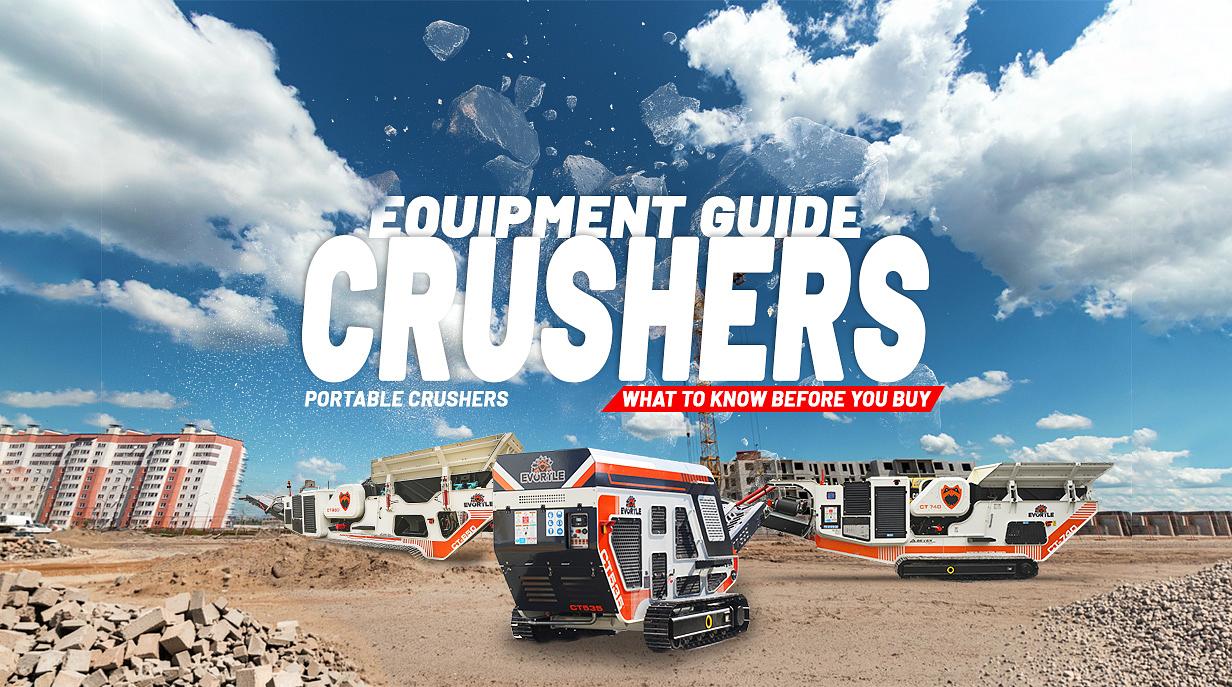
A portable crusher is a crushing plant that can move from one location to another. It includes the crusher itself — jaw, impact, or cone — plus the feed hopper, discharge conveyor, power unit, and frame, all mounted on a single chassis. Some ride on tracks. Some ride on wheels. Either way, the point is the same: bring the crusher to the material instead of bringing the material to the crusher.
The term "mobile crusher" means the same thing. You'll see both used interchangeably across the industry. Whether someone lists a machine as a portable rock crusher or a mobile crusher, they're talking about the same category of equipment.
Portable crushers range from compact units that weigh under 10,000 lbs to full-production plants that weigh 150,000+ lbs. The size you need depends on your throughput requirements, your material, and how often you plan to move the machine.
Browse our full inventory of crushers for sale
Types of Portable Crushers
Not all crushers do the same job. The crusher type determines what material you can process, what your output looks like, and what applications the machine handles well.
Portable Jaw Crushers
A jaw crusher uses two heavy steel plates — one fixed, one moving — to compress material until it breaks. Rock, concrete, or brick feeds into the top of the chamber. The moving jaw squeezes it against the fixed jaw. When the material breaks small enough to fall through the gap at the bottom (called the closed side setting), it drops onto the discharge conveyor.
Jaw crushers are the standard primary crusher. They handle the hardest feed material and the largest feed sizes. A portable jaw crusher is your first machine if you're processing raw rock, large concrete slabs, or heavy demolition debris.
Best for: Hard rock, large concrete slabs, primary crushing of quarried stone, heavy demolition debris.
Output: Coarse — typically 2" to 6" depending on the closed side setting. Often requires secondary crushing to meet finished spec.
A portable jaw crusher makes sense when you need to break down large material on site before either hauling it or processing it further with a secondary crusher or screen.
Browse jaw crushers for sale | Jaw crusher wear parts
Portable Impact Crushers
An impact crusher uses blow bars spinning at high speed to throw material against heavy anvils or aprons. Instead of squeezing material like a jaw, it shatters it. That impact action produces a more cubical, uniform product shape — which matters when your output needs to meet road base or aggregate specifications.
Impact crushers are the most popular type of mobile crusher for concrete recycling and demolition processing. They handle rebar-laden concrete better than jaw crushers because the impact action breaks the rebar free, and a magnet on the discharge belt pulls it out. One pass through an impact crusher can produce spec-grade road base from demolished concrete.
Best for: Concrete recycling, asphalt recycling (RAP), demolition processing, producing spec-grade aggregate, softer rock.
Output: Finer and more uniform than a jaw crusher — typically 3/4" to 3" depending on the setting and the number of impact zones.
If your primary application is recycling concrete or asphalt, a portable impact crusher is almost always the right first machine. For a deeper breakdown of how these machines work and which models to consider, read our complete impact crusher guide.
Browse impact crushers for sale | Impact crusher wear parts
Portable Cone Crushers
A cone crusher uses a rotating mantle inside a concave bowl to crush material by compression. Feed enters the top of the chamber, gets squeezed between the mantle and the bowl liner, and exits at the bottom at a precisely controlled size.
Cone crushers are secondary and tertiary crushers. They take the output from a jaw crusher and reduce it further to a tight gradation. You won't see many standalone portable cone crushers on recycling job sites — they're more common in quarry operations and mining where precise particle size distribution matters.
Best for: Secondary and tertiary crushing, quarry operations, producing tightly graded aggregate, mining applications.
Output: Precisely graded material — the gradation depends on the liner profile, the eccentric throw, and the closed side setting.
A portable cone crusher belongs in a multi-stage crushing train, typically downstream of a jaw crusher. If you need controlled gradation for spec aggregate, this is the machine that gets you there.
Track-Mounted vs. Wheel-Mounted: Which Do You Need?
Every mobile crusher rides on one of two chassis types: tracks or wheels. This is not a minor detail. It affects how you move the machine, where you can set it up, and how much the machine costs.
Track-Mounted Crushers
A track-mounted crusher rides on steel or rubber tracks powered by the machine's own engine. You drive it off a lowboy trailer, track it into position, and start crushing. When the job is done, you track it back onto the trailer.
Advantages:
- Self-propelled — no need for a separate truck or loader to position the machine on site
- Moves across rough, uneven, muddy ground that would stop a wheeled unit
- Repositions easily within a job site as the material pile moves
- Can climb grades and work on uneven terrain
Trade-offs:
- Higher purchase price than a comparable wheel-mounted unit
- Tracks require maintenance — tensioning, undercarriage wear, potential track replacement
- Heavier overall weight, which may affect transport permits and trailer requirements
Most production-class portable crushers sold today are track-mounted. If you're moving the machine between sites regularly and working in rough conditions, tracks are the standard choice.
Wheel-Mounted (Trailer-Mounted) Crushers
A wheel-mounted crusher sits on a trailer frame with highway-rated tires. A truck tows it to the job site. Once on site, you drop the landing gear and set up.
Advantages:
- Lower purchase price than a comparable track-mounted unit
- Simpler maintenance — tires, axles, and brakes instead of track undercarriage
- Easier and cheaper to transport between sites — no lowboy required for smaller units
- Highway towable in many configurations
Trade-offs:
- Cannot self-propel on site — needs a truck or loader to reposition
- Limited to firm, level ground for setup
- Less common in the current market — most manufacturers focus on track-mounted designs
Wheel-mounted crushers work well for operations that set up at a fixed location for weeks or months at a time and don't need to reposition the crusher frequently on site. They also work for contractors who want a lower entry cost.
Common Applications for Portable Crushers
A portable crusher for sale might be listed without much context about what it actually does well. Here's where each application fits.
Concrete Recycling
This is the single biggest application for portable crushers in the U.S. Demolished concrete goes into the crusher. Spec-grade road base, fill, or recycled aggregate comes out. An impact crusher is the standard machine for this work. The impact action produces a cubical product shape, and the machine handles rebar without problems.
One portable impact crusher on a demolition site can process hundreds of tons per day and eliminate most or all of the trucking and disposal costs that would otherwise eat into the project budget.
Rock Crushing and Aggregate Production
Quarries, mines, and construction operations use portable rock crushers to produce aggregate where they need it. A jaw crusher handles primary reduction of blasted rock. A cone crusher or secondary impact crusher brings it to final spec. Running a portable rock crusher on site means you're not paying to truck raw stone to a stationary plant and then truck the finished product back.
For a detailed walkthrough of the rock crushing process, read our guide to crushing stone.
Demolition Processing
Demolition contractors use portable crushers to process debris on the job site instead of loading it into trucks and hauling it to a landfill. Concrete, brick, block, and asphalt can all be crushed on site and either reused as fill or sold as recycled aggregate. The savings on hauling and tipping fees often pay for the crusher itself within the first few jobs.
Road and Bridge Work
DOTs and heavy civil contractors use mobile crushers to process material on highway and bridge projects. Old concrete and asphalt comes out, gets crushed on site, and goes back into the new road as base or sub-base. This reduces truck traffic, speeds up projects, and keeps material costs down.
Mining and Mineral Processing
Mining operations use portable crushers to reduce ore at the pit face or at temporary processing locations. Track-mounted jaw crushers are the standard primary crusher in this application.
Key Specs to Evaluate Before You Buy
When you're comparing any portable crusher for sale against another, these are the numbers that matter.
Feed Opening Size
The feed opening determines the largest piece of material the machine will accept. A jaw crusher with a 32" x 20" opening will take material up to about 20" on the largest dimension. If your feed material is bigger than the opening, you'll need a breaker or a bigger crusher. Undersizing the feed opening creates a constant bottleneck.
Throughput (Tons Per Hour)
Every crusher has a rated throughput capacity measured in tons per hour (TPH). This number is based on ideal conditions — clean feed, consistent material, proper setting. Real-world throughput is usually 60–80% of the rated capacity. Size the machine for the throughput you actually need, not the number that looks impressive on a spec sheet.
Closed Side Setting (CSS)
The CSS is the minimum gap at the discharge point of the crusher. It controls the maximum size of the output product. A smaller CSS produces finer material but reduces throughput. Make sure the machine can be adjusted to the CSS range you need for your finished product specifications.
Power Source
Portable crushers run on diesel engines, electric motors, or diesel-electric hybrid systems. Diesel is standard for job site work where grid power isn't available. Electric is cheaper to run and quieter — good for fixed locations with power access. Diesel-electric gives you flexibility.
Transport Weight and Dimensions
You need to get the machine to the job site. Check the transport weight, width, height, and length. Some larger track-mounted crushers require oversize load permits. Some compact models fit on a standard trailer and stay under legal road limits without permits. Know your transport situation before you buy.
Crusher Weight
Heavier crushers vibrate less and handle hard material better. Weight means stability. A machine that's too light for its application will shake itself apart and produce inconsistent output. Don't buy the lightest machine in the category unless your material is soft and your production demands are low.
New vs. Used: What Makes Sense?
This is one of the most common questions we get. The answer depends on your budget, your application, and how many hours you plan to run the machine.
Buying New
A new portable crusher comes with a factory warranty, zero hours on the wear parts, and the latest technology — updated controls, better fuel efficiency, improved safety features. You know exactly what you're getting. The downside is the price. A new production-class track-mounted impact crusher can run $300,000 to $800,000+ depending on the size and manufacturer.
New makes sense when you plan to run the machine hard for years, when uptime is critical to your operation, and when you want the manufacturer's warranty behind you.
Buying Used
A used portable crusher costs significantly less — often 40–60% less than the same machine bought new. That lower entry cost means faster payback and less financial risk if you're testing a new service line or starting a recycling operation.
The trade-off is uncertainty. You need to know what to inspect: hours on the engine and crusher, wear part condition (jaw plates, blow bars, liners, screens), hydraulic system condition, frame and chassis integrity, and undercarriage wear on track-mounted units.
We inspect and list the condition of every used machine we sell. We'll tell you what's been replaced, what needs replacing, and what kind of life you can expect from the machine. That's part of the job when you've been doing this since 1973.
Wear Parts — Plan for Them Either Way
Whether you buy new or used, wear parts are a recurring cost. Jaw plates on a jaw crusher. Blow bars and aprons on an impact crusher. Mantles and bowl liners on a cone crusher. Budget for these parts and make sure they're available for the machine you buy. An obscure brand with hard-to-find parts will cost you more in downtime than you saved on the purchase price.
Browse jaw crusher parts | Browse impact crusher parts
Top Portable Crusher Brands We Carry
We sell equipment from a range of manufacturers. Here are three brands our buyers should know.
Komplet
Komplet builds compact portable crushers designed for contractors who need to crush on site without hauling in a full-size plant. Their machines are small enough to fit on a standard trailer, light enough to move without oversize permits, and tough enough to handle concrete, brick, and soft rock. If you're a demolition contractor or a small recycling operation, Komplet machines are worth a hard look.
McCloskey International
McCloskey is one of the biggest names in crushing and screening worldwide. Their jaw and impact crushers are production machines — built for quarries, large recycling yards, and high-volume demolition projects. If you need to move serious tonnage, McCloskey has the iron to do it.
Evortle
Evortle builds compact crushers that punch above their weight class. Their CT535 jaw crusher weighs 14,331 lbs — one of the heaviest machines in its size class. That extra weight means less vibration, more stable crushing, and better output consistency. For contractors who need a compact machine that doesn't compromise on performance, Evortle delivers.
We also carry crushers from Metso, Terex, Sandvik, Keestrack, and other manufacturers. Our inventory changes constantly as machines come in and sell. If you don't see what you need listed, call us — we likely know where to find it.
How to Buy the Right Portable Crusher
Here's the process we walk every buyer through:
- Define your material. What are you crushing? Concrete, rock, asphalt, demolition debris? The material determines the crusher type.
- Define your output. What size product do you need? Road base? Aggregate? Fill? The output spec determines the CSS range and whether you need one machine or two.
- Define your volume. How many tons per day? Per week? This determines the size class you need. Don't oversize and don't undersize.
- Decide on mobility. How often will you move the machine? Every week? Every month? Once a year? This determines track vs. wheel and the size you can practically transport.
- Set your budget. New or used? How much capital can you put to work? What's your payback timeline?
- Check parts availability. Before you buy any machine, make sure wear parts are available and affordable. Call us — we'll tell you straight.
Ready to Buy? Talk to Us.
We've been matching operators with the right crushing equipment for over 50 years. We sell new and used portable crushers from top manufacturers, and we stock the wear parts to keep them running. Whether you're buying your first mobile crusher or replacing a machine you've run for 20 years, we can help you find the right fit.
Call 770-433-2670 to talk with our equipment team. Tell us what you're crushing, what you need to produce, and what your budget looks like. We'll point you to the right machine.
Browse all crushers for sale | Contact us for a quote