





Air Curtain Burners vs. Grinding: Which One Do You Need?
If you are processing wood waste from land clearing, forestry, construction, or disaster cleanup, you have two main options: burn it or grind it. Both get the job done, but they work differently, cost differently, and make sense in different situations.
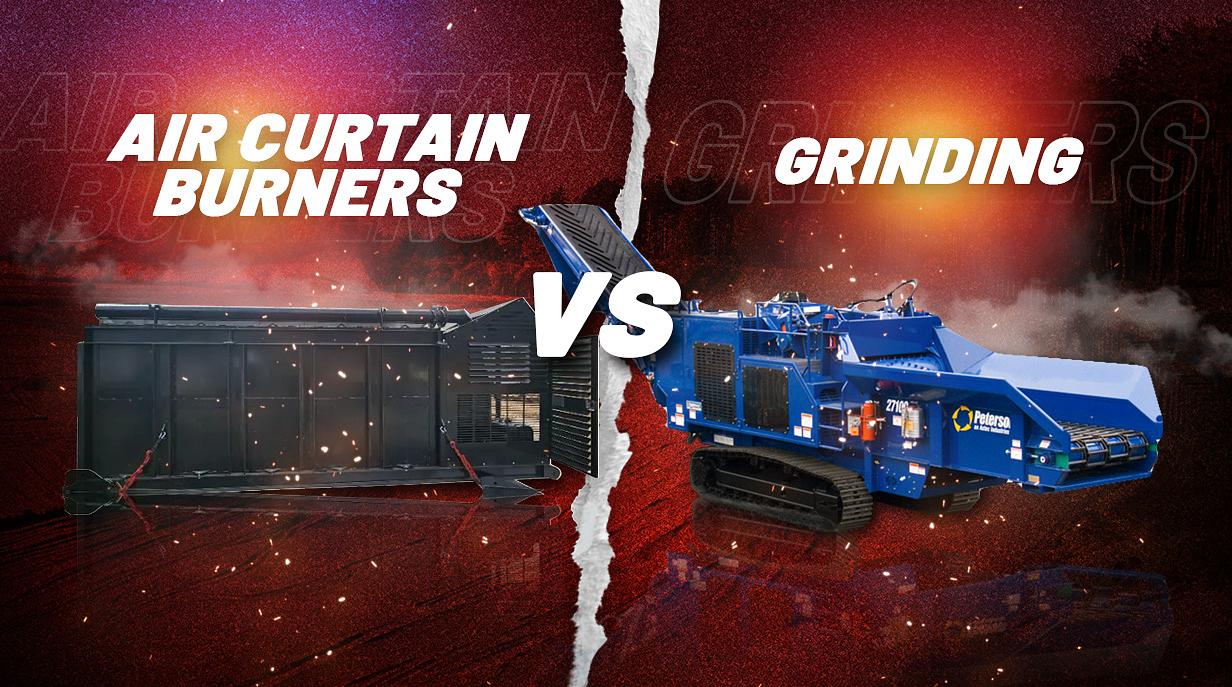
Here is a straightforward comparison to help you figure out which one fits your operation.
What Each Machine Does
An air curtain burner is a controlled combustion system. It uses a high-velocity wall of air to contain smoke while burning clean wood waste and vegetative debris at high temperatures. The material is reduced to a thin layer of ash. Nothing is left to haul, stockpile, or manage.
A horizontal grinder is a size reduction machine. It uses a spinning drum with carbide-tipped hammers to break wood waste into smaller pieces. The output is a reusable product: mulch, biomass fuel, compost feedstock, erosion control material, or hog fuel.
The fundamental difference: a burner eliminates material. A grinder transforms it.
When an Air Curtain Burner Makes More Sense
You have no market for the end product. If there is no buyer for ground material in your area, or the material is too low-value to justify the cost of grinding, hauling, and stockpiling, burning is the simpler path.
The material is clean wood and you want it gone. Land clearing debris, forestry slash, storm damage, and agricultural waste are all candidates for burning when the goal is disposal, not reuse.
Speed matters more than product. An air curtain burner can process a large clearing site in days. There is no product pile to manage afterward, no trucks to coordinate, and no end market to worry about.
The job is remote. Hauling ground material out of a remote forestry site or rural clearing job adds significant cost. Burning eliminates the material on site with nothing left to move.
Disaster debris response. In emergency cleanup situations, air curtain burners process storm and wildfire debris faster than grinding operations because the material disappears entirely. There is no need to find a destination for thousands of yards of ground wood in the middle of a disaster zone.
When Grinding Makes More Sense
The end product has value. If you can sell mulch, biomass fuel, or compost feedstock to local markets, a grinder turns waste material into revenue. The equipment cost is offset by product sales.
The material is mixed or contaminated. Air curtain burners are restricted to clean wood and vegetative debris. If your material stream includes treated lumber, painted wood, construction debris, or mixed waste, grinding is the only option. Grinders handle a wider range of material types.
You need a specific end product. Road base, erosion control blankets, playground surfacing, and colored landscape mulch all start as ground wood. A grinder gives you control over the output size and consistency.
Regulations restrict burning. Some areas have seasonal burn bans, air quality restrictions, or local ordinances that limit when and where you can operate an air curtain burner. Grinding has no air quality permitting requirements.
You are already running a grinding operation. If you have an established market, customer base, and distribution for ground products, adding more grinding capacity usually makes more sense than adding a burner.
Can You Use Both?
Yes, and many large operations do. The combination covers the full range of material a land clearing or forestry contractor encounters.
The grinder processes the merchantable wood waste: clean logs, limbs, and brush that produce sellable mulch, biomass, or compost feedstock. Material with value goes through the grinder.
The air curtain burner handles everything else: stumps, root balls, dirty brush, low-grade debris, and material that is not worth the cost of grinding and hauling. Material with no end market gets burned.
This approach maximizes the value of the good material while eliminating the rest quickly and cleanly. On large clearing projects, running both machines at the same time can cut total project time significantly compared to using either one alone.
Cost Comparison
The economics depend on your specific situation, but here are the main cost factors to consider:
Air curtain burner costs: equipment purchase or rental, diesel fuel (1 to 3 gallons per hour depending on unit size), an operator, and permitting. There is no product to haul, stockpile, or manage after burning. The cost structure is simple.
Grinder costs: equipment purchase or rental, diesel fuel (15 to 40+ gallons per hour for a large horizontal grinder), an operator, loader to feed the grinder, trucking to haul the product, and a site to stockpile it. The cost structure is more complex, but product sales can offset or exceed the operating costs if the market is there.
For pure disposal with no product revenue, burning is almost always cheaper per ton. For operations where the ground product generates revenue, the math shifts in favor of grinding.
Not Sure Which Direction to Go?
Call 770-433-2670 and talk to our team. We sell both air curtain burners and horizontal grinders, so we do not have a reason to push you toward one over the other. We can walk through your material type, volume, location, and end-use goals and help you figure out which machine fits your operation.
GrinderCrusherScreen has been in the equipment business since 1973. We know both sides of this equation and can give you a straight answer.