





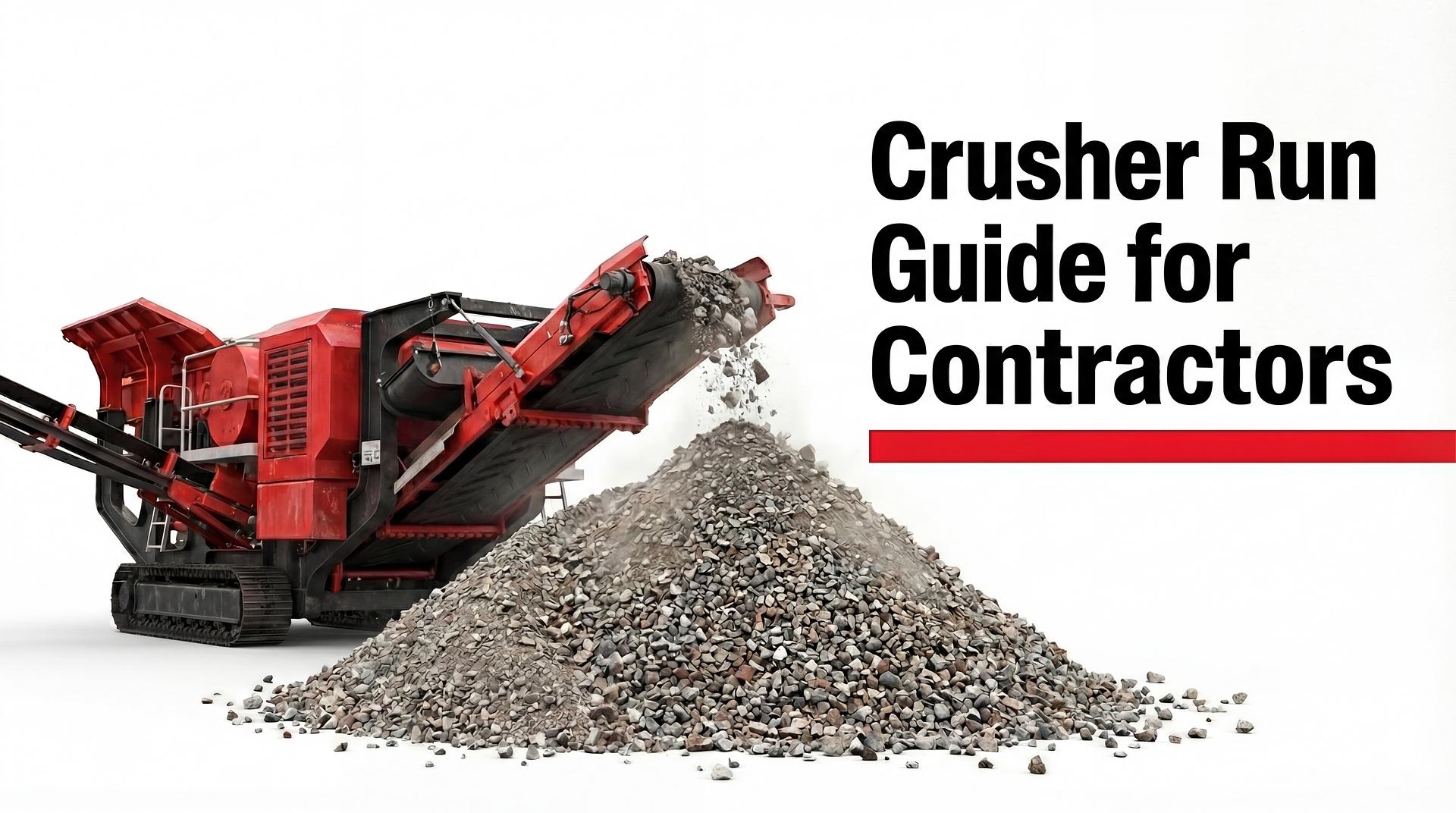
This guide is designed for contractors and construction professionals who need to understand how to produce, use, and install crusher run for high-performance base material. Knowing how to properly select, create, and install crusher run can improve project durability, reduce maintenance, and support long-term performance of driveways, walkways, patios, and other heavy-use surfaces.
Crusher run is a dense grade aggregate base material made from a combination of crushed stone and stone dust. Contractors use this mix because it compacts into a stable layer that carries repeated loads on heavy-use projects.
What Is Crusher Run?
Crusher run is a mix of crushed stone in graded sizes and stone dust in one load. The stone portion usually ranges from fines up to about 1–2 inches, with the dust filling the voids between larger pieces.
This mix creates a low-void, high-density base once compacted. The result is a base material with strong stability for driveways, walkways, patios, and pads that see regular traffic. For a broader look at all crushed stone grades and how they compare, see our crushed stone grades guide.
Why Contractors Use Crusher Run Base
Contractors use crusher run because one material can serve as a base for many project types. The combination of angular
stone and stone dust creates an interlocking structure under compaction.
This structure reduces shifting and rutting under traffic. It also provides a predictable base that works well under gravel, asphalt, pavers, and concrete. Crusher run is one crushed stone base option among many.
Crusher Run vs Dense Grade Aggregate and Quarry Process
Dense grade aggregate and quarry process are common trade names for the same general type of graded base. These names often appear along with graded aggregate base and crusher run on price sheets.
All of these refer to a compactable mix of crushed stone and stone dust, produced so the material includes a full range of sizes from fines to a defined top size. Local specs may control exact gradation, but the behavior in the field is similar.
Stone Dust, Crushed Stone, and Mix Composition
Crusher run depends on the combination of crushed stone and stone dust in the mix. The crushed stone provides structure, while the dust creates the binder that fills gaps and locks the base together.
If the mix is all stone with no dust, it behaves like a clean gravel and does not compact as tightly. If the mix has too much dust and very little stone, the base can hold water and lose strength. A balanced combination produces a strong, compactable base.
Common Crusher Run Sizes and Typical Depths
Common crusher run sizes for base work are 3/4 inch minus and 2 inch minus. In both cases, “minus” means the material includes everything from the top stone size down to stone dust in one mix. Different crushed stone sizes change how a base drains and compacts.
Base depth depends on the project. Walkways and small patios commonly use 3–4 inches of compacted base. Residential driveways often need around 6 inches, while heavier driveways and small commercial projects can run 8–12 inches or more, built in layers.
Using Crusher Run for Driveways, Walkways, and Patios
Crusher run is commonly used as the base material under gravel driveways. The compacted mix holds the top gravel layer in place and resists washouts and ruts.
Contractors also use crusher run under pavers for patios and walkways. A compacted crusher run base supports the pavers, keeps joints tight, and helps prevent settling and rocking over time.
Estimating Tons and Cubic Yards for Your Project
Orders for crusher run usually come by the ton or by the cubic yard. A typical planning number is about 1.3 tons per cubic yard, though this can vary with moisture and stone type.
To estimate, calculate the volume in cubic yards using project length, width, and depth in inches. Convert depth from inches to feet, find cubic feet, divide by 27 to get cubic yards, then multiply by the tons-per-yard factor to get an order in tons.
How to Create Crusher Run With Your Crushers and Screens
You can create crusher run on your own spread by controlling how you crush and screen the material. A primary crusher
handles the first reduction, and secondary crushers and screens refine the final sizes. Recycled concrete can be processed into a base similar to crusher run. Contractors can crush stone for base material with the right setup.
By adjusting crusher settings and screen openings, you can control the mix of larger stone and stone dust that ends up in the finished base. The goal is a graded mix that compacts hard while still draining well enough for your project conditions.
Best Practices for Installing a Crusher Run Base
Good performance comes from correct installation as much as from the material itself. Start with a firm subgrade, stripping soft material and fixing any pumping spots before you place base.
Place crusher run in layers, compact each layer to the target depth, and check grade and slope as you work. Control moisture so the mix compacts but does not pump under the compactor. A well-installed crusher run base gives stable support for gravel, pavers, and concrete and reduces maintenance on finished driveways, walkways, and patios.
New and Used Crushers and Screeners From GrinderCrusherScreen
Crusher run starts with the right crusher and screen combination, and that is where GrinderCrusherScreen comes in. The company has supplied recycling and aggregate equipment since 1973 and focuses on helping contractors create dependable base material with the machines they already trust.
GrinderCrusherScreen sells new and used crushers that handle concrete, asphalt, and rock for base production. The lineup includes track-mounted and stationary jaw crushers, impact crushers, and cone crushers that can crush feed down to the sizes you need for dense grade aggregate and quarry process base.
The company also offers a wide range of screeners that shape the final crusher run mix. Contractors can choose from trommel screens, incline screens, and scalping screens to separate out top sizes, control stone dust content, and hit target gradations for specific projects.
With decades of field experience, the GrinderCrusherScreen team helps contractors match crushers and screeners to their material, volume, and base specs. The result is a setup that can create consistent crusher run, improve project efficiency, and reduce reliance on outside aggregate supply. For a broader look at all crushed stone grades and how they compare, see our crushed stone grades guide.